Yash Sinkar
Senior Software Engineer with a deep focus on infrastructure and system reliability, I specialize in...
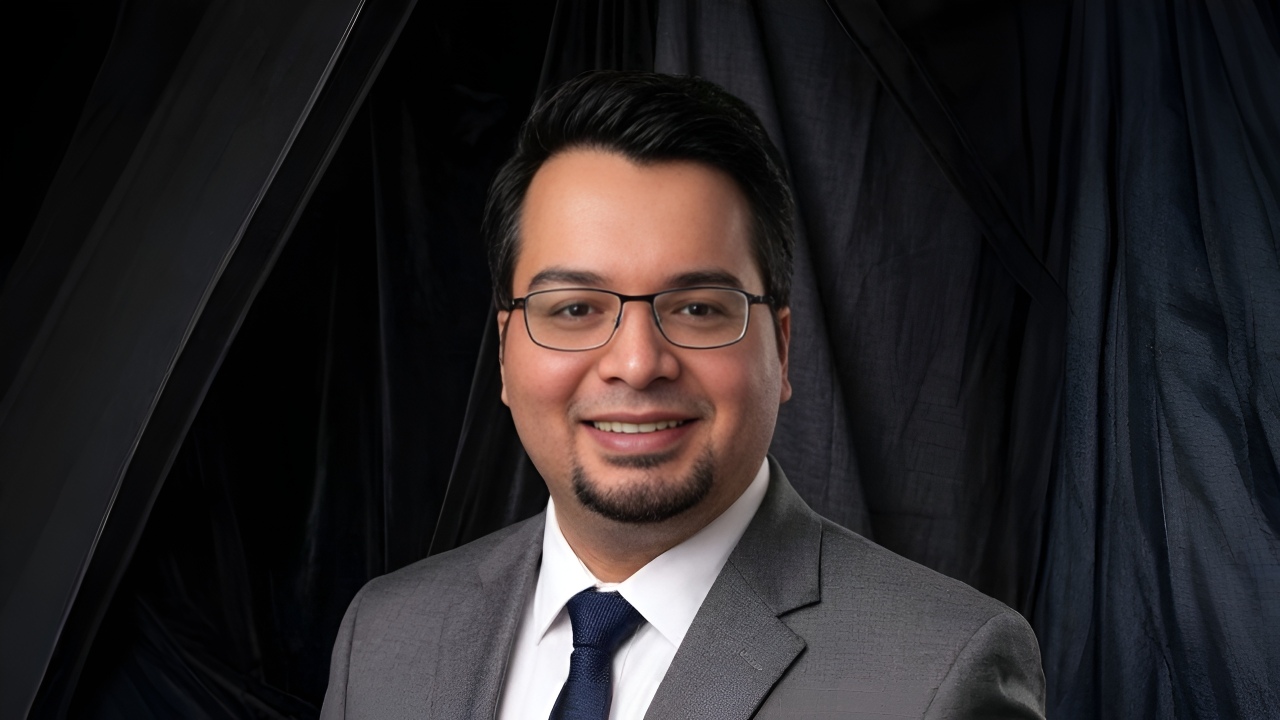
Yash Sinkar is an infrastructure engineer at Meta with over 11 years of experience in large-scale hardware and software systems. He architects FAVA, a global factory automation and validation platform that enables reliable testing and deployment of next-generation AI hardware across Meta’s worldwide ODM network.
Thank you so much! It is an absolute honor to be recognized by the TITAN Business Awards. I am an infrastructure engineer with over 11 years of professional experience in the tech industry. Currently, I work at Meta, where I architect and develop FAVA (Factory Automation & Validation Application), which is the unified global test automation platform deployed across our entire Original Design Manufacturer (ODM) partner network spanning three continents.
My role sits at the critical intersection of hardware engineering, software automation, and global manufacturing operations. Essentially, my team and I are responsible for building the foundational infrastructure that validates all next-generation AI hardware—ensuring it transitions seamlessly and reliably from design to mass production at scale.
As an organization, Meta’s infrastructure operates at an immense global scale, serving billions of users. Our hardware strategy has undergone a massive, consequential shift over the last few years: moving from traditional, general-purpose server validation to handling highly specialized, tightly coupled AI training clusters and specialized silicon ecosystems.
I felt incredibly thrilled and deeply humbled. Validating infrastructure is often a behind-the-scenes effort, so learning of this win was a validation of years of hard work. Professionally, this award validates the massive shift we've driven in hardware automation—moving from traditional validation to managing specialized AI-era hardware pipelines. Personally, it stands as a testament to the power of perseverance and teamwork in solving some of the industry's most complex, global-scale engineering challenges.
I wanted to showcase how modern software engineering and automation can revolutionize traditional hardware manufacturing at a global scale. I felt confident because our entry highlighted a tangible, massive impact: programmatically validating a global fleet of 15M+ servers across three continents. Additionally, our multi-source silicon strategy—seamlessly validating industry standards alongside Meta’s custom MTIA and network ASICs—demonstrated a forward-thinking solution to global supply chain challenges
The definitive turning point was transitioning from traditional networking and compute validation to architecting the infrastructure for the AI hardware boom. I realized that standard, siloed testing methodologies could not scale to meet the tightly coupled nature of next-generation AI training clusters.
This realization shaped my path by forcing me to design FAVA as a completely unified, software-defined, and silicon-agnostic platform. It shifted my focus from merely running tests to building production-grade intelligence into global manufacturing.
Our biggest challenge was overcoming the extreme fragmentation of testing environments across different silicon vendors and global ODM factories. Every hardware variant traditionally required its own siloed software stack. We overcame this by completely decoupling our core test infrastructure stack from specific hardware layers. By building a highly modular, distributed automation framework and integrating telemetry APIs, we created a single source of truth that unified all factory floors.
We plan to use this momentum to push the boundaries of AI-powered manufacturing intelligence. This means deepening our native LLM and machine learning integrations to achieve fully predictive, self-healing factory testing workflows. To inspire the industry, I want to champion the "Hardware-Software Co-design" philosophy. I hope to demonstrate to upcoming engineers that software infrastructure plays just as vital a role in the AI revolution as the silicon itself.
The greatest benefit is the opportunity to step back from day-to-day operations and objectively evaluate your work through a high-level strategic lens. Competing forces you to articulate your technical achievements in terms of global business value. It helps benchmark your innovation against the best in the world, validating that your team is moving in the right direction.
This achievement belongs entirely to the brilliant cross-functional engineering and global operations teams at Meta. I want to give a special acknowledgment to our hardware validation partners and global ODM teams. Their resilience on the factory floor and willingness to adopt our unified FAVA platform across three continents were critical to turning this architecture into a massive operational success.
The dominant trend is the explosive diversification of custom AI silicon and the massive scale of distributed compute fabrics. General-purpose hardware is no longer enough; data centers require highly specialized, hyper-scaled accelerators. We are adapting by ensuring our automation infrastructure remains entirely silicon-agnostic and embedding machine learning natively into our SRE workflows. We are building testing systems that think, categorize errors, and optimize releases autonomously.
I would tell someone starting out to never limit themselves to just one silo. Don’t be "just" a hardware engineer or "just" a software engineer. The most valuable innovations happen at the intersection of disciplines. Master the fundamentals of infrastructure, embrace automation early, and always build solutions with global operational scalability in mind.
Focus heavily on hard metrics and global scale. Don't just say your framework is fast; explain how it enabled the verification of millions of servers across multiple continents. Frame your submission as a narrative of overcoming a critical industry-wide challenge. Clearly connect your technical innovation to broader business resilience and strategic independence.
We are heavily focused on scaling our support for Meta’s next-generation custom silicon ecosystems, including the latest iterations of the MTIA chips. A major upcoming goal is to fully transition our factory floor operations from automated testing to intelligent testing. We are rolling out advanced LLM-driven diagnostic tools to instantly analyze multi-gigabyte hardware error logs and provide automated repair recommendations in real-time.
The AI revolution is not just a software breakthrough; it is a massive hardware manufacturing challenge. To support the future of technology, the global business community must continue to invest deeply in robust, scalable software infrastructure and automation. Building the physical foundation for tomorrow's AI requires relentless innovation at the factory level today.
Read the interview about Building Responsible AI at Scale: Swaroop Borukar on Enterprise Innovation by clicking this link here.