From plastic caps to urban luminaires | 2023
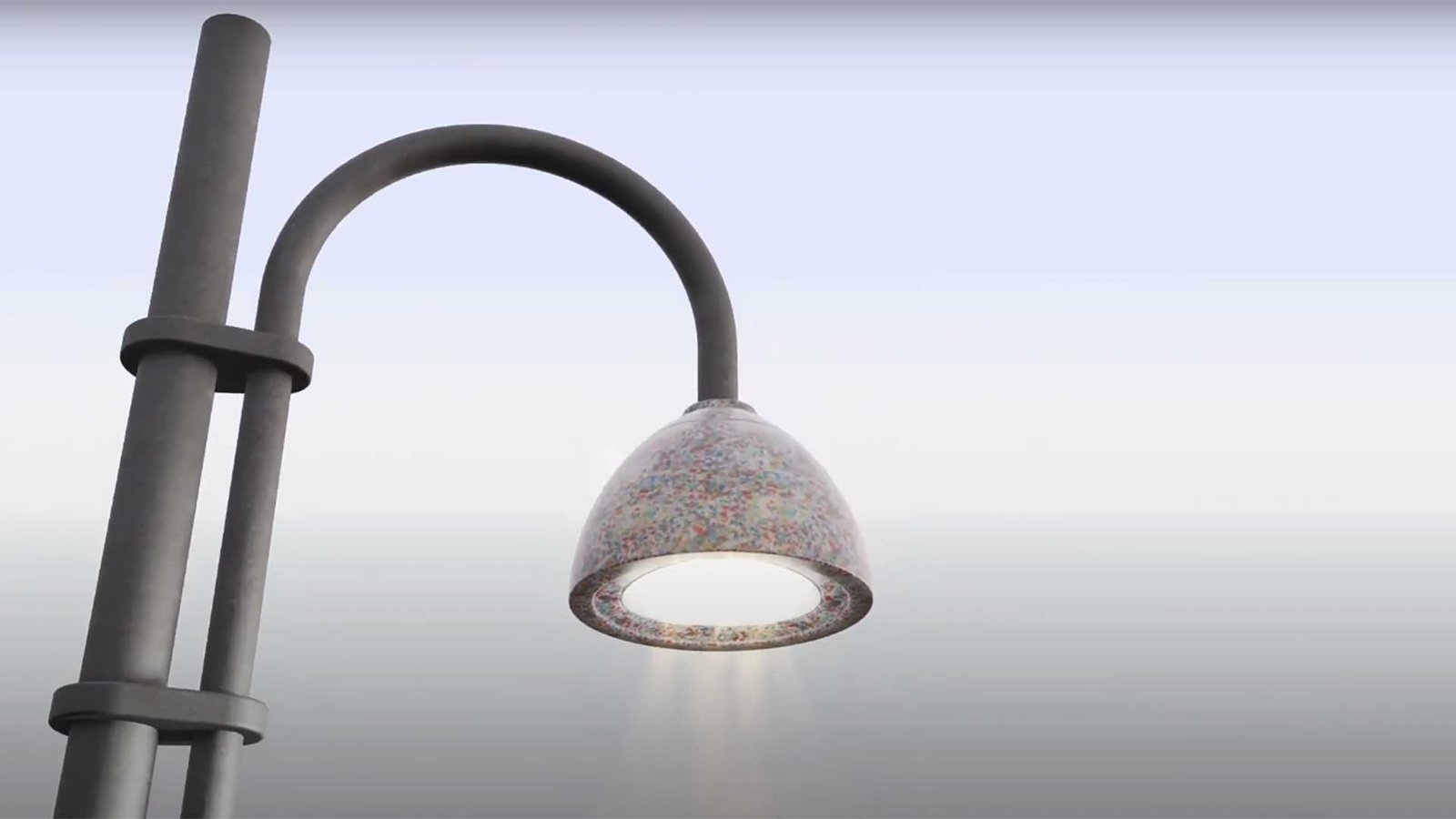
Vieste is a sustainable LED luminaire for urban lighting coming from the desire to respect...
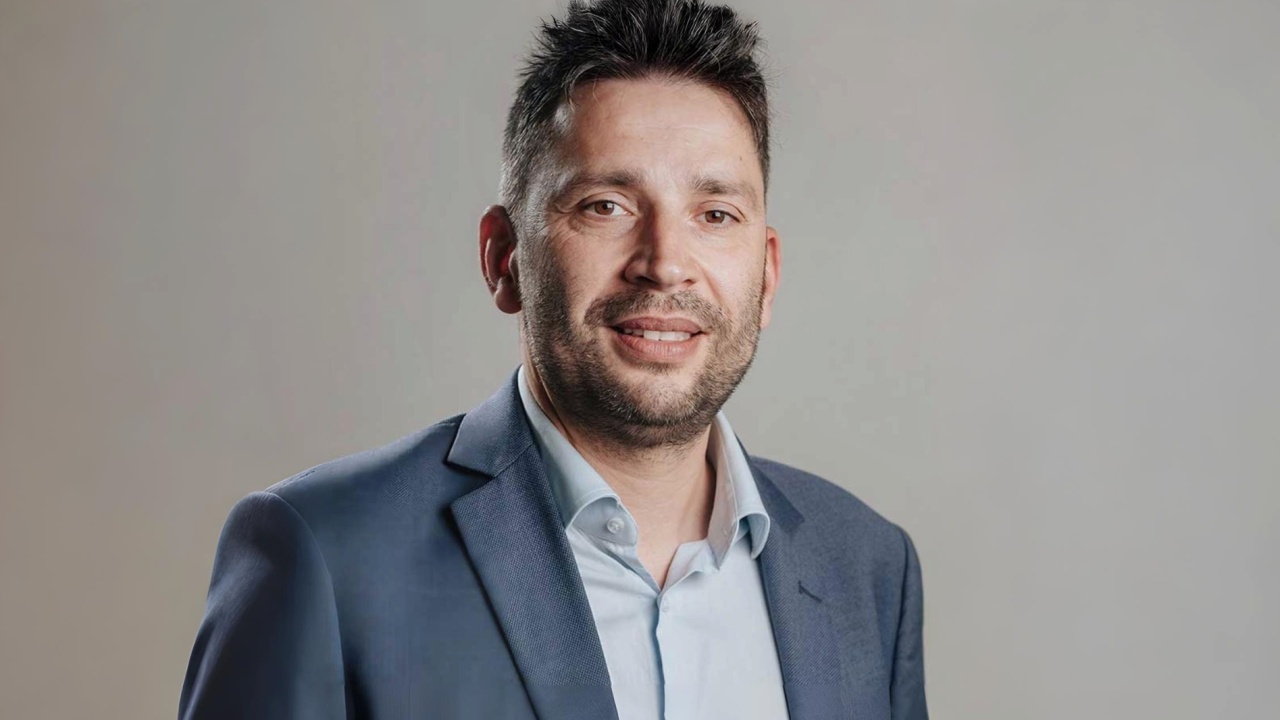
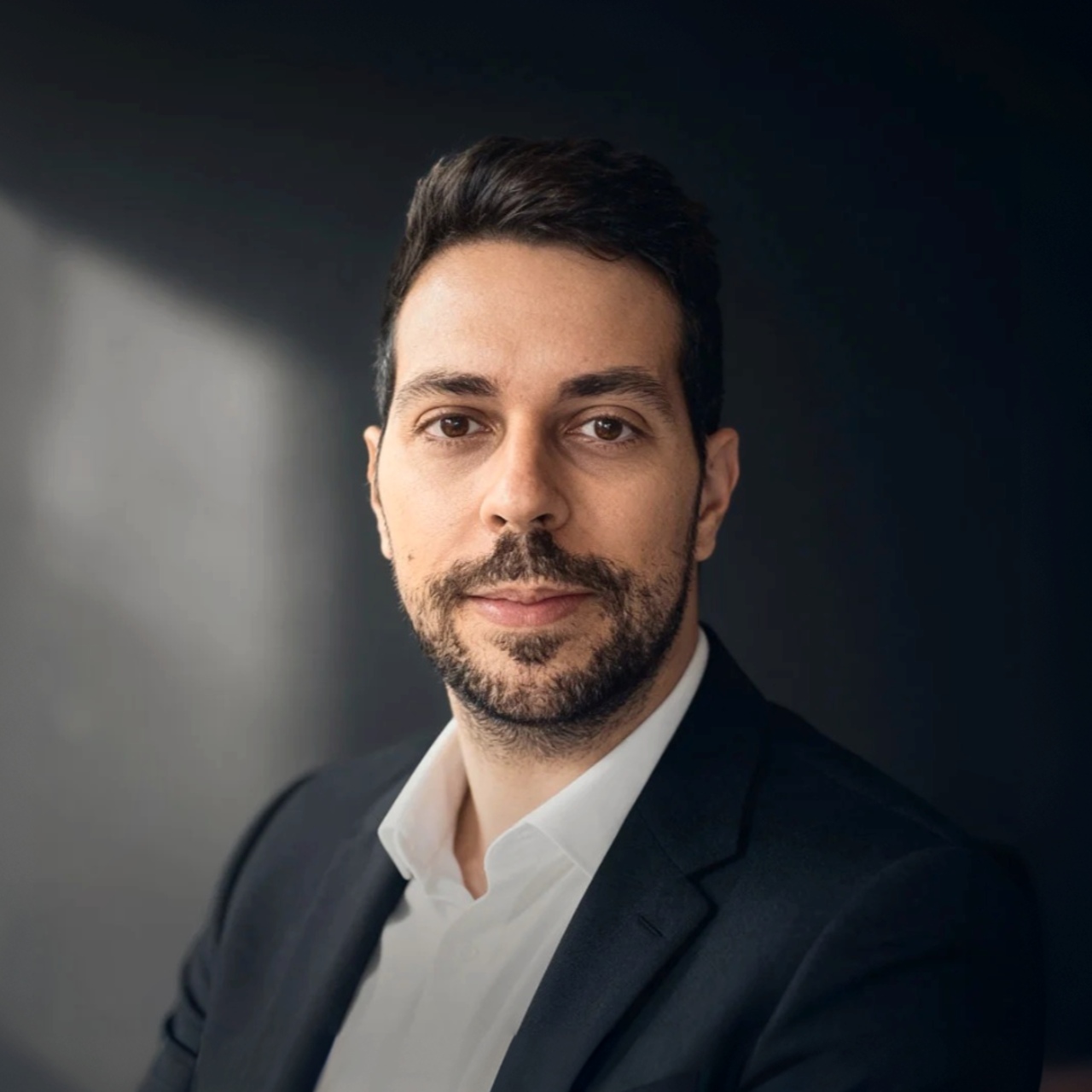
My name is Alessandro Deodati and I am an engineer with a Master’s degree in both Automation and Mechanical Engineering. I am the co-founder of Niteko Srl, a company that manufactures LED lighting fixtures for outdoor lighting where I am Head of the R&D Department which deals with strategy and innovation especially in sustainable lighting.
I wanted to change the paradigm of designing urban lighting fixtures by putting eco-design and circularity at the heart of my projects because I think that the circular economy model is the path that needs to be followed by everyone in order to contribute to safeguard our planet.
A design based on the efficient use of resources and materials makes it possible to both reduce environmental impact and quantity of waste related to the manufacturing of the product itself, and to work on its durability, reparability and possibility of upgrading and recycling at the end of its service life.
I am Head of Research & Development at Niteko Srl, an Italian company that manufactures LED lighting fixtures for outdoor lighting. I have always been committed to researching and studying new materials with a low environmental impact in order to replace the use of traditional die-cast aluminium in urban lighting, and to designing new kind of shapes that overcome the limits of the traditional molding technologies.
For me, design means giving expression to creativity by interpreting it through the constant search for new shapes in the name of a continuous improvement that aims at a sustainable development.
As an engineer, I would say functional design with an eye on aesthetic sensitivity, curiosity and open-mindedness towards transversal disciplines. In this way, in urban lighting – my field –design helps to create more inclusive cities which can be defined people-friendly because they are able to both develop the comprehension of their places and to welcome people.
I think the ability to re-interpret the past without debasing it or, even worse, misrepresenting it; aiming at manufacturing techniques that allow producing individual batches (as in the craftsmanship of the past) as long as the manufacturing process makes it possible to achieve a high customization. In this way, the product becomes a “point of contact” between the user and the system offering solutions.
Moreover, today we are facing a climate and environmental crises, so designing industrial products means taking up the sustainability challenge, which can be traduced in the idea of a project that considers the “circular” dimension of the economy, namely “Cradle to Cradle”. For product designers, this dimension evokes another aspect: time as a design variable. Thinking in advance, what it will come after, with the aim of recovering, recycling and reusing.
I would say industrial design playing with shapes, colors and frameworks and giving the works a new and interesting sense, never putting functionality in the background: every object – besides being aesthetically pleasing – has also to work properly.
According to me, a design process is not aimed at putting forward again the formal outline of new architectural and contemporary luminaires, but must affirm its own autonomous architectural identity with a brave vision, while adopting a language able to relate with its urban role: a connection between the old and new urban architecture.
My process starts from the knowledge of the places where the designed object will be installed and from the definition of its architectural and functional needs. Here, its characteristic lines are outlined starting from their functional physical limits and then they take shape into more or less articulate geometries.
Later, I move on to the prototyping phase and I create all the possible solutions always paying particular attention to the search for balance between sustainability and architectural needs by looking for innovative technical solutions in full compliance with the environments.
Sure, Italy offers ideas everywhere. We are surrounded by this sense of “beauty” and we just cannot do without it. In fact, we look for it in every object we design.
I would also add that Italy is absolutely the country where design has developed thanks to the presence of many artistic influences, and where it found its expression in different ways precisely to reflect the many Italian identities. For example, the design of Castiglioni: dynamic and original but functional in the first place.
It means a prestigious award which we are very proud of. It underlines how the efforts made by my team and me – to constantly improve products from an environmental-impact point of view – can find its form of expression with a design that that does not necessarily follow the “old”, but finds instead its own specific connotation.
This work encloses the 3R of circularity: reuse, repair and recycle.
The design project of our urban luminaire starts from recycling, which characterizes its texture by giving it a sort of essential and inimitable identity at the same time. It is a project aiming at harmoniously merging with urban contexts with soft and simple geometries, always in an identity-oriented manner.
The biggest challenge was to make it truly feasible to replace old production technologies – such as aluminium die-casting – with the rotomolding of innovative and experimental blends from second-life recycled plastic materials.
It certainly gave greater prominence to the fact that we have obtained an aesthetically pleasing luminaire while using secondary raw materials which is a recognition that goes beyond, in this sense, the award itself.
The fact that artificial light gives people the possibility to live beyond the hours of natural light, to choose what to show off and what to hide in the dark, thus defining meeting areas in a city. Or the possibility of influencing an environment and people’s moods within an environment by using particular gradients or light effects.
Italy has a millenary culture. Wherever you are, it is inevitable to come across a place of historical importance characterized by relevant artistic and architectural features which definitely influence the identity of Italian design, full of examples of creativity.
Design has always been at the service of society. Its main task has been, and will be, to find aesthetic and functional solutions to everything we experience.
I imagine the design of the future more and more attentive to sustainability and to zero impact, not only to carbon emissions but also to the territories in which it will be installed or will interact, also due to its production chain.
The speed of design will be increasingly possible thanks to the technologies available on the market. 3D printers or rotomolding, all this will make it possible for a new object to be studied, manufactured and placed on the market in a short time and with significant cost reductions, thus encouraging companies to innovate more easily and with fewer risks.
Design is changeable just like the society we live in. It follows us and anticipates us. Its future will be what we will be.
If I had to give and advice to someone aspiring to launch into a challenge such as the MUSE Design Awards, I would say to be impressive with his/her project by following those trends that are now cornerstones of the contemporary world and by broadening his/her horizons, in order to understand what is innovating and evolving in other countries. Because these are the starting points for personal research and for designing.
Follow as many available courses and models as possible, including famous designers and architects, travel to different countries and explore different sectors so as to discover new technologies to be reapplied in other contexts, where they are not yet used.
The inspirations in my life range from art to nature. The shapes in nature are different; they change continuously and can always be an inspiration for me for concepts and shapes, for versatility and colors.
I can also be inspired by a series of apparently anonymous objects that lend themselves to be revisited in an iconic key, in which there is a combination of functionality and minimalism to be re-interpreted in a new way.
I would say seeking beauty in the simplicity of functional forms by letting their elegance speak, an elegance integrating both in the spaces created by people for people and in the landscapes.
Read more about this interview with Ryan Bennett from the United States, the Silver Winner of the 2023 MUSE Design Awards.