Merge
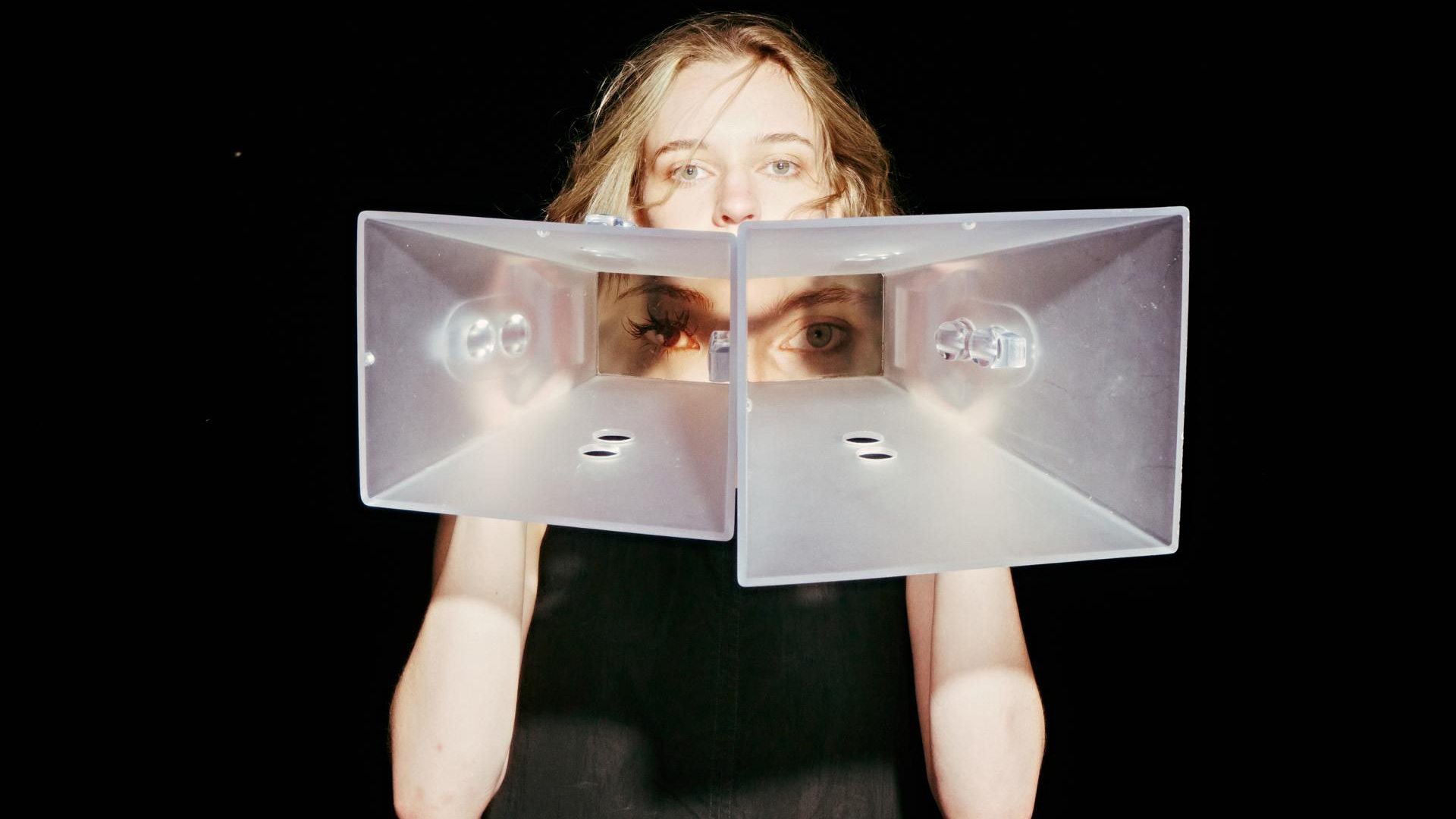
Merge is a modular wearable sculpture conceived as a portable spatial structure surrounding the body....
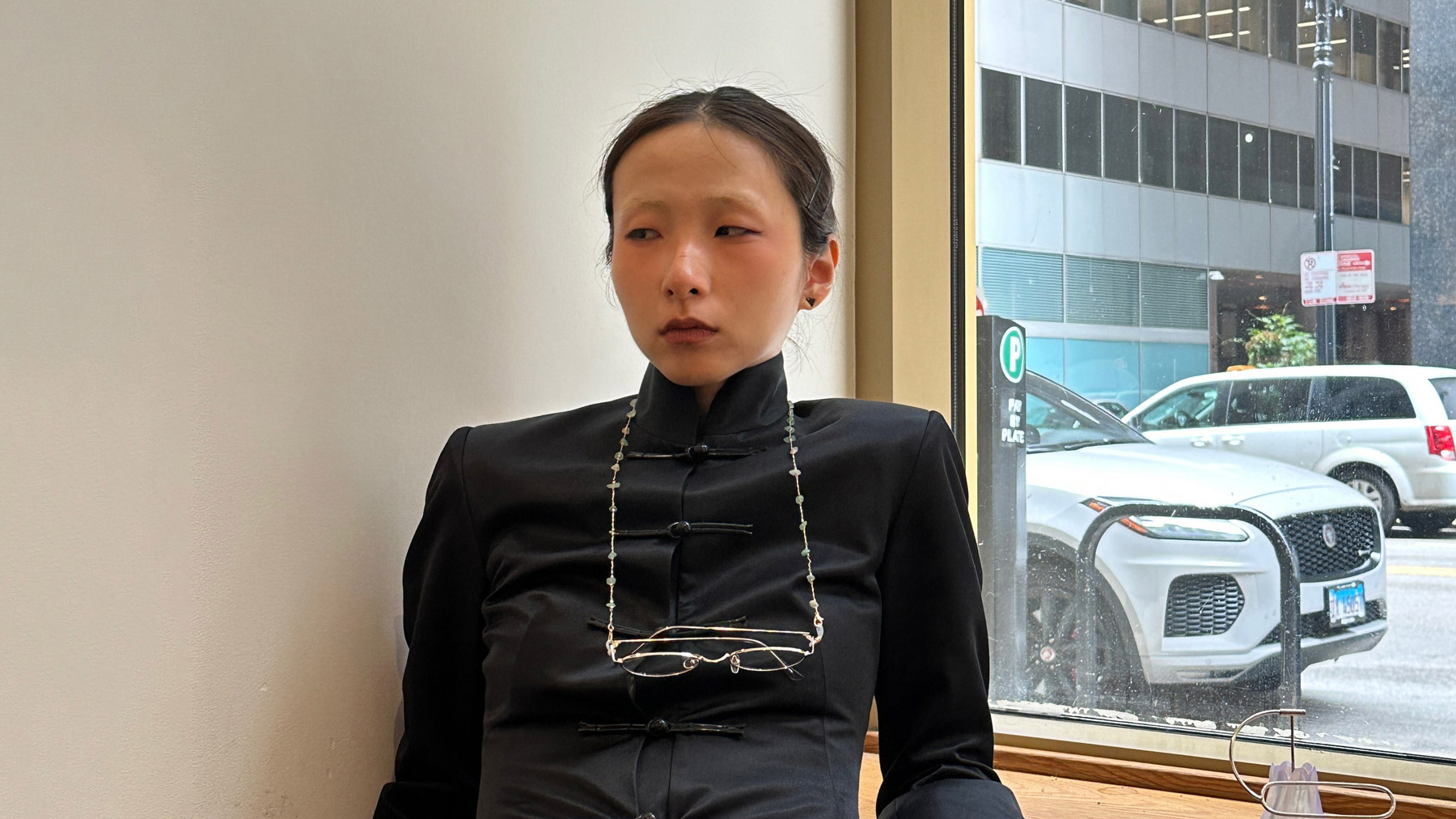
Shu Wang is an interdisciplinary artist working across wearable sculpture, contemporary jewelry, and installation, creating pieces that challenge how the body moves and exists, turning emotion, structure, and social tension into forms that reshape our sense of space and self.
I’m an interdisciplinary artist working across wearable sculpture, contemporary jewelry, and installation. My practice explores the body as a site where emotion, structure, and social tension meet.
What drew me to this field wasn’t design in the conventional sense, but a fascination with how objects shape our bodily experience. A piece worn on the body can alter posture, extend or restrict movement, and shift the boundary between protection and exposure.
I see design as a way to materialize these invisible frameworks—the ones that shape how we carry ourselves, adapt, and negotiate space with others.
It means a great deal, especially because my work has always existed between categories—not quite traditional jewelry, not quite sculpture, and not quite fashion. Being recognized under Conceptual Fashion affirms that this in-between space is not a limitation, but a position in its own right.
Merge, the winning piece, reflects this convergence of material, body, and identity. Receiving this recognition within a framework that values both conceptual rigor and bodily experience feels like the work has found an audience that meets it on its own terms.
On a practical level, as an independent artist working across disciplines and borders, this recognition helps extend the reach of the work beyond the spaces I can physically access. It also opens up conversations that might not otherwise happen.
As an independent practitioner, the impact is less about a single moment and more about building cumulative momentum. Each recognition in a different context—whether a design award, an art platform, or an exhibition—reinforces that the in-between space I work in is legible across diverse audiences.
It increases visibility across disciplines, which is important for projects that don’t fit within a single category. It also opens up opportunities for collaboration, particularly with those interested in the intersection of body, object, and system, where much of my future work is heading.
Experimentation isn’t just part of my process; it’s the engine. I rarely begin with a fixed outcome. Instead, I work through materials and structures, allowing constraints to guide the direction.
In Merge, the modular system emerged through repeated testing of connection mechanisms, exploring how individual units could interlock securely while remaining flexible enough to be reconfigured. The final form was not predetermined, but developed through iteration.
What interests me is the tension between control and adaptability—how a system of rigid parts can produce something fluid and open-ended. It’s a logic I continue to return to across my work.
Probably my background in materials engineering. It’s not something people typically associate with wearable sculpture, but it fundamentally shapes how I think. I approach material not only as a medium for expression, but also as a system with its own logic, limits, and behavior.
That said, the work doesn’t start from engineering alone. It usually begins with something felt—a moment of restriction, a shift in posture within a social situation, or the awareness of adjusting oneself to fit a space.
The work emerges where these two registers meet—the structural and the somatic. Engineering gives me a language of systems, while lived experience determines which systems are worth questioning.
That it’s not linear, and that uncertainty isn’t a flaw in the process; it is the process.
There’s often an expectation that good design moves efficiently from concept to execution. But in my experience, the most meaningful work comes from staying with ambiguity longer than is comfortable, testing, undoing, and rethinking the premise itself.
What appears resolved at the end is usually the result of many adjustments and reconsiderations that remain invisible. This is especially true for work that sits between disciplines, where there is no established template to follow and the process has to be developed alongside the outcome.
I’ve worked on both sides—self-directed projects where I set the parameters, and collaborative or commercial work shaped by a brief, budget, or brand identity. They require different approaches, but the underlying principle is the same: clarity in the core concept.
When working with external constraints, I approach it as a negotiation rather than a compromise. A well-defined concept can absorb adaptation without losing its integrity. Knowing what is essential and what is flexible makes that possible.
Some of my strongest ideas have come from working within tight constraints. Limitation, when engaged honestly, doesn’t weaken a concept; it pressurizes it.
One of the main challenges was balancing precision and adaptability within the modular system. The structure needed to remain stable and secure when worn, while also allowing for multiple configurations and reassembly. This required multiple rounds of prototyping, refining tolerances and connection points until the system could hold its form without restricting its ability to transform.
Beyond the technical, there was also a conceptual challenge: knowing when to stop. A modular system is inherently open-ended; it can always be reconfigured. At a certain point, I had to determine what constituted a resolved state—not as a final form, but as a moment where the tension between structure and openness felt held rather than unresolved.
I step away from trying to solve the problem directly. Physical movement, changing environments, or working with materials without a clear goal often helps reset my perspective.
Sometimes I’ll learn a new technique or process unrelated to the project at hand. It opens a different entry point, and often the original problem begins to resolve itself through that detour.
It’s less about finding an immediate solution and more about shifting how I see the problem. Once that shifts, the work usually begins to move again.
My work is shaped by an ongoing awareness of how we navigate external structures, social expectations, spatial conditions, and the unspoken rules that govern behavior.
I’m interested in how these forces, though often invisible, continuously shape how we move, behave, and position ourselves. Many of my projects begin with a bodily experience—a moment of adjustment, pressure, or subtle discomfort—which I then translate into structure.
I don’t see structure as purely restrictive. I’m interested in how it can be negotiated, reconfigured, or used to create space for agency.
Focus on developing a clear perspective rather than following trends. What you choose to pay attention to, and how consistently you return to it, matters more than trying to produce something new each time.
Over time, a sustained line of inquiry becomes more valuable than short-term visibility. It gives your work direction and makes it legible to others.
I’m interested in collaborating with practitioners who work at the intersection of body, structure, and interaction, especially those who approach design as something beyond the purely functional.
I’m drawn to practices where form is not fixed, but activated through movement, interaction, or reconfiguration. That kind of dialogue between different ways of thinking about structure could open new possibilities for how the body and object relate.
“How do you define what you do—is it art or design?”
This is a question I return to often, not because I need a definitive answer, but because the tension itself is productive. My work involves concept and form, function and expression, the wearable and the sculptural. It doesn’t resolve neatly into a single category.
I don’t think of art and design as opposites, but as different modes of attention. Design asks how something works within a system, while art asks what that system means. My practice exists where these two questions overlap. I’m less interested in choosing a side than in maintaining the space where both can operate at once.