The Urban Gallery
Providence is a city defined by creativity. Throughout its downtown, large-scale murals transform ordinary building...

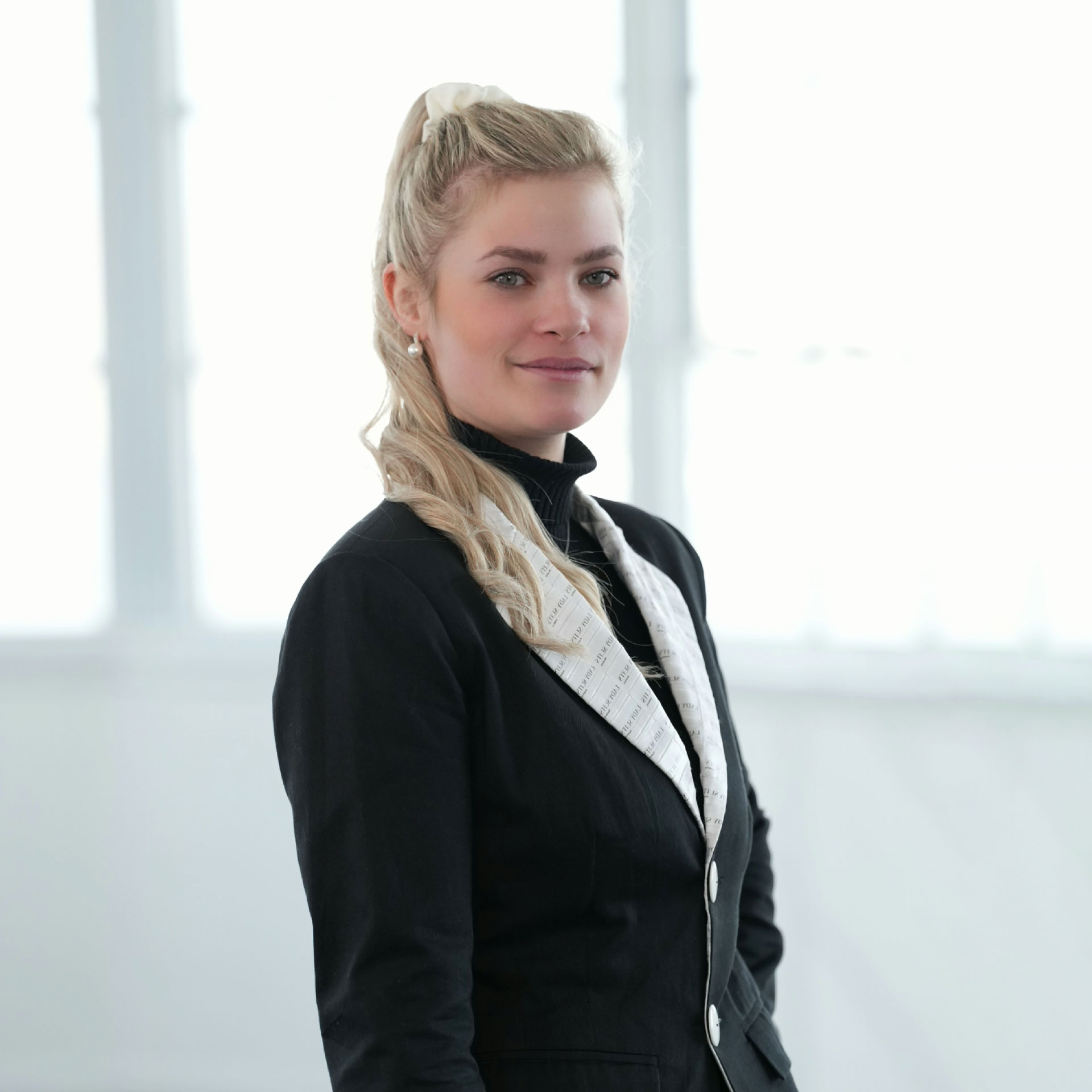
Zitong Hui is a landscape architect whose work is guided by a deep appreciation for the relationship between people, place, and the environment. Through context-driven design, she creates landscapes that honor a site's identity and strengthen community connections.
Thank you! My name is Zitong "Shirley" Hui, a landscape architect based in the United States. I received my Master of Landscape Architecture from the Rhode Island School of Design, following an undergraduate education in urban planning. I have approximately four years of professional experience in landscape architecture, working on a range of projects across the United States.
My interest in design began with a fascination for the relationship between people and the environment. I believe landscape has the power to hold memory, heal wounds, and bring people together. I was drawn to landscape architecture because it can serve as a language—one that communicates care, evokes emotion, nurtures the human spirit, and remains deeply integrated with its surroundings while respecting a site's history, current conditions, and cultural context.
The goal is not simply to create something visually compelling, but to identify the most appropriate response for that particular place.
Being recognized by the MUSE Design Awards is both an honor and a meaningful affirmation of my design approach. I believe meaningful design begins with listening: understanding a site's history and existing conditions, as well as the people, activities, and relationships that shape it.
The award is especially meaningful because it recognizes The Urban Gallery—a project that responds thoughtfully to Providence's urban mural context. This approach reflects my design philosophy that every site has its own identity, and that the best design solutions emerge from understanding and responding to that unique context.
Receiving this recognition encourages me to continue exploring adaptive reuse and context-driven design. It reinforces my belief that thoughtful design can reveal new possibilities within existing environments and create lasting value for both communities and cities.
For me, winning an award serves as a powerful affirmation of my core design philosophy. International recognition from a respected design award validates my work and encourages me to continue pursuing innovative, adaptive, and context-driven design.
I think experimentation is not about using technology for its own sake. It is about using new methods to better understand a place and make more informed design decisions.
One example is the Clifton Center entrance plaza project at the University of Pennsylvania. The plaza is located beneath a building overhang and an elevated bridge, creating highly unusual environmental conditions with limited sunlight and distinct microclimates. I used computational tools such as Rhino and Grasshopper to analyze solar exposure and environmental performance across the site.
These studies helped identify areas suitable for different planting communities and informed a landscape strategy that responded to the site's unique conditions.
For The Urban Gallery, I drew inspiration from large-scale murals, street art, and the visual energy I experienced during the three years I lived in Providence. Inspiration doesn't always come from iconic buildings or famous landscapes. Sometimes the most meaningful ideas come from places that people overlook every day.
As a designer, I think our role is to discover the hidden potential in those ordinary environments and reveal new possibilities through thoughtful design.
Only after carefully listening to the place can designers begin to propose elegant solutions.
I see this balance not as a compromise or a battle to be won, but as a process of alignment. For example, if a client expresses their expectations or critiques through specific solutions, such as, "Move this plaza here," or "Use this specific material," instead of taking those directives literally, I always try to dig deeper to find the root cause of their concern.
Once I understand that core need, I can propose an alternative, sophisticated design that meets their functional requirements while maintaining the ecological integrity and spatial poetry of the original concept.
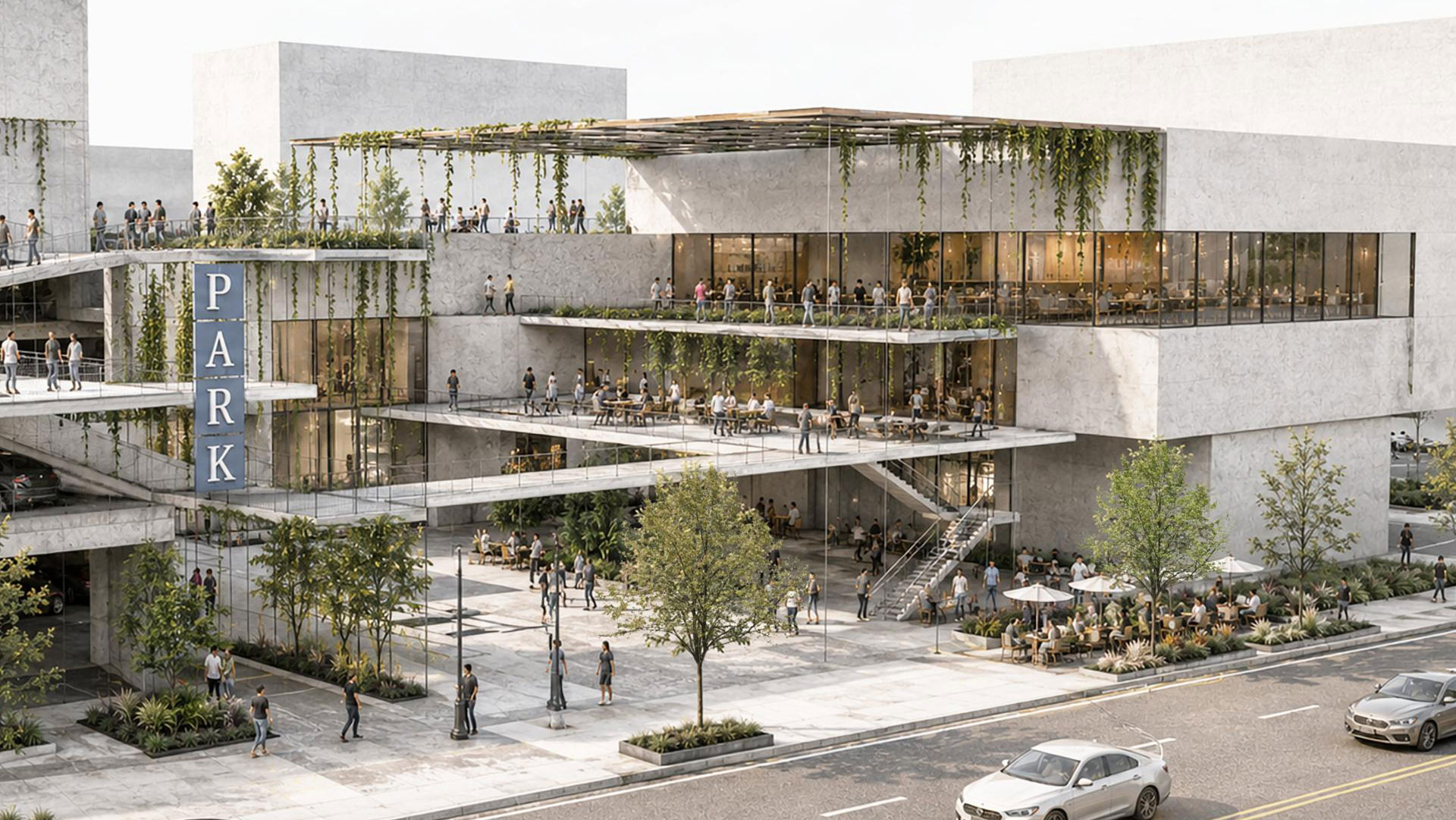
One of the biggest challenges of this project was reimagining an existing parking structure as a vibrant public destination without erasing its original identity. Parking garages are typically designed for efficiency rather than human experience, so the question was how to transform a purely functional space into one that people would actually want to spend time in while revealing its untapped potential.
For me, an elegant solution is a response to context. By carefully studying the site's circulation, spatial relationships, and surrounding urban context, I explored how landscape, public art, and pedestrian spaces could work together to reshape the experience of the site. Large-scale murals became an important design element, creating a strong visual identity while helping connect different parts of the project and encouraging people to engage with the space in new ways.
I usually step away from the computer and spend time observing real places. Walking through cities, visiting parks, museums, or even ordinary streets helps me notice how people interact with space in ways that drawings alone cannot capture. These everyday observations often spark new ideas and remind me that design is ultimately about people and their experiences.
My educational background in urban planning and landscape architecture, together with my professional experience in the United States, has shaped the way I approach design across different cultural and environmental contexts. These experiences have taught me to balance ecological performance, public life, and long-term resilience while remaining sensitive to local character.
I am also passionate about exploring how emerging technologies can support the design process. I see computational design and artificial intelligence not as replacements for creativity but as tools that help designers better understand complex environmental systems, evaluate possibilities, and make more informed decisions.
Always stay curious and never stop learning new technologies. At the same time, embrace these advancements without losing your ability to think critically.
It would be Kate Orff—her perspective has deeply influenced the way I think about design. Kate Orff is an American landscape architect, urban designer, and the founding principal of SCAPE, a New York-based practice recognized internationally for ecological and climate-responsive design.
I greatly admire her ability to integrate ecology, climate resilience, and public space into landscape architecture while creating places that are both environmentally responsible and socially meaningful. Her visual communication is also provocative and convincing.
The question I wish people would ask is: "How do you think landscape architecture will evolve in the age of artificial intelligence?"
My answer is that I don't believe AI will replace designers. Instead, it will definitely change the way we design. Landscape architecture deals with incredibly complex systems, from ecology and climate to human behavior and urban infrastructure. AI and computational design can help us analyze these systems more efficiently, simulate different scenarios, and make more informed decisions.
However, technology cannot replace empathy, creativity, or an understanding of culture and place. Those qualities remain uniquely human. I see AI as a powerful design partner that allows us to spend less time on repetitive tasks and more time thinking critically about the social and environmental impact of our work.
Ultimately, I believe the future of landscape architecture lies in combining human creativity with intelligent technologies to create places that are more resilient, sustainable, and deeply connected to the people who use them.