The Music Zen Temple
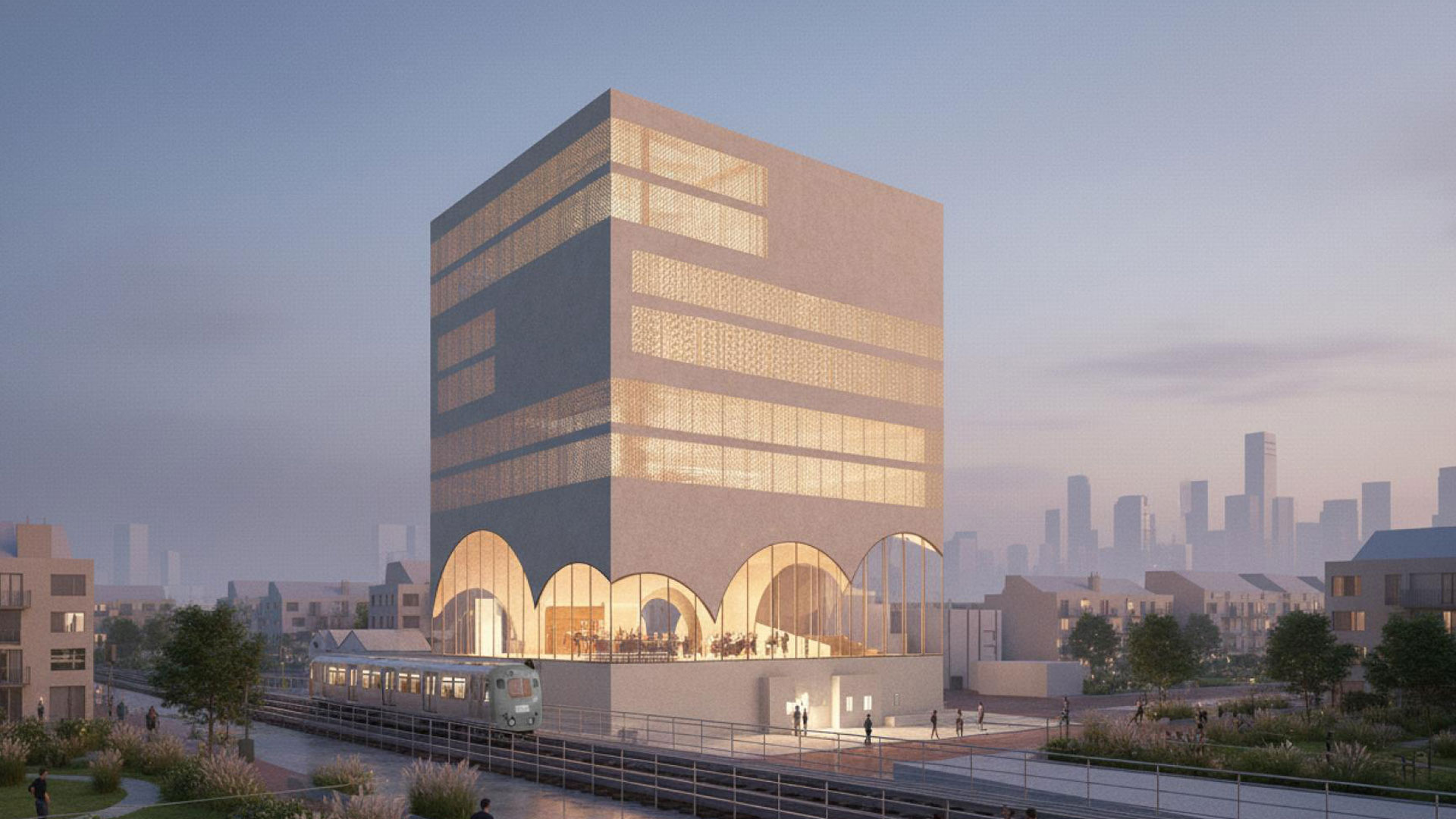
This project envisages the creation of a Music Zen Temple, a home for local musicians,...
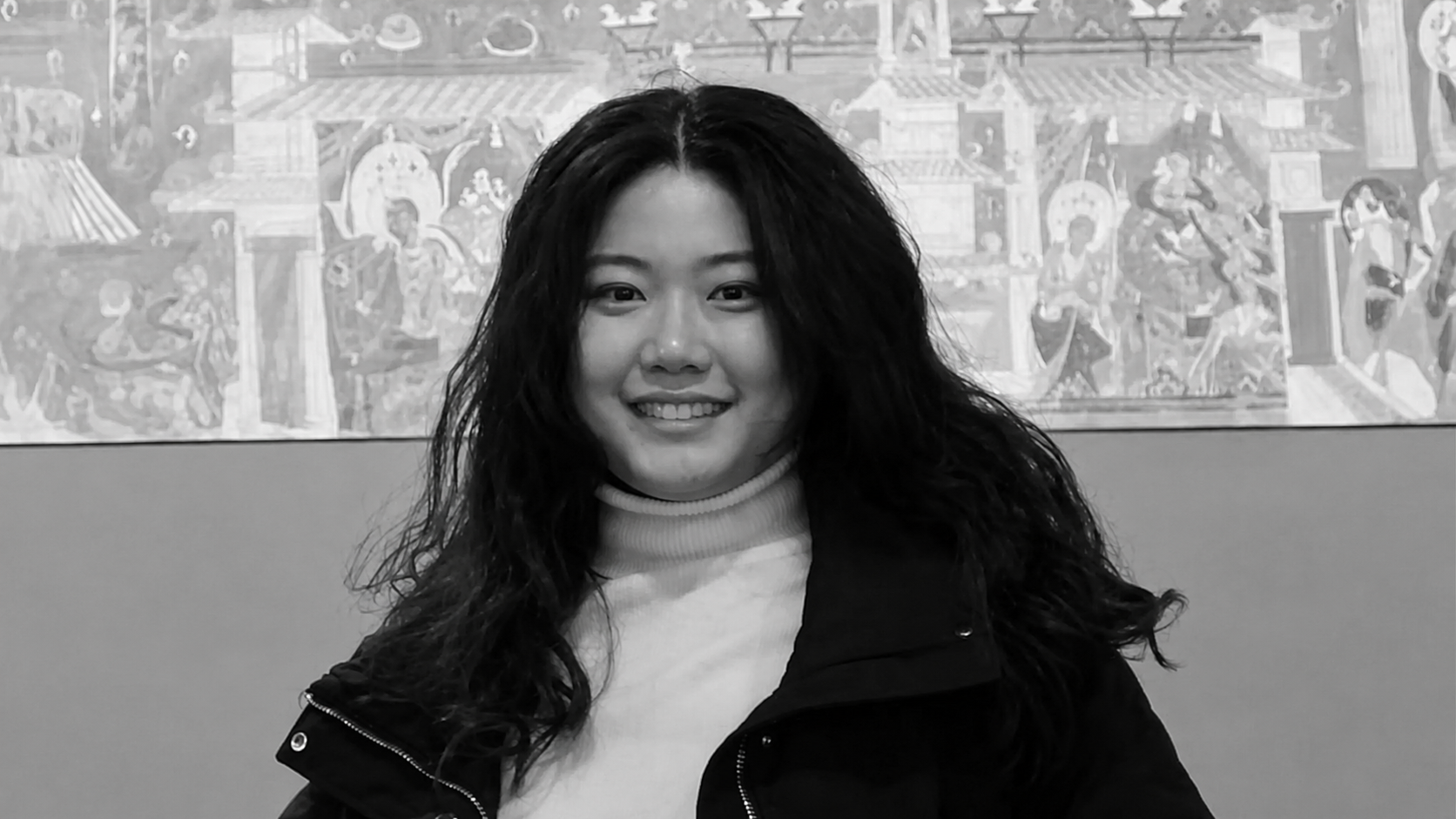
Xiayu Zhao is an architectural designer driven by a curiosity for how architecture can shape human experience, blending imagination, research, and spatial thinking to explore new possibilities for the built environment.
I have been working as an architectural designer for the past two years, following seven years of formal education in architecture across both undergraduate and graduate studies. Looking back, it has been nearly ten years since I first decided, at 18, to pursue architecture as a lifelong path. That sense of commitment and curiosity has only grown stronger.
For me, design has always been a more natural way of thinking than writing or speaking. I tend to process ideas visually, through drawings and spatial imagination. As a child, I was deeply influenced by science fiction films such as Blade Runner and Avatar. I was fascinated by those immersive, unfamiliar worlds and would often imagine myself living within them—sometimes in an organic treehouse suspended high above the ground, sometimes in a compact cyberpunk apartment reminiscent of the Nakagin Capsule Tower.
I still remember the scenes in Blade Runner: airships moving through a dark, dense Los Angeles, the overwhelming scale of the city, and the powerful presence of skyscrapers. Those images shaped my early imagination and made me wonder what the future of architecture could be. Since choosing this path, that question has stayed with me: What should architecture become next?
Being recognized by the MUSE Design Awards is both encouraging and grounding. The award celebrates innovation and original work across disciplines while providing emerging designers with global visibility.
For me personally, it strengthens my confidence and motivates me to continue challenging myself. Working in practice has taught me that real-world projects often involve compromise due to budgets, regulations, and other constraints, and that strong ideas do not always make it through.
Because of that, this recognition feels especially meaningful. It gives those ideas a platform beyond the project itself. I hope my work can reach other designers, even in a small way, and perhaps inspire someone to approach a problem differently somewhere else in the world.
This achievement has given me a strong sense of confidence at an early stage in my career. It has also motivated me to keep moving forward, developing new ideas and contributing more actively to competitions and design explorations within my team.
Experimentation is essential to my design process. We often say that the first intuitive idea can be powerful, but I do not take that for granted—I test it.
For example, in a previous research project, our team explored single-surface concrete casting as a way to reduce material waste from traditional formwork. We also investigated how spatial depth could improve the structural performance of concrete shells and developed modular systems for more efficient on-site assembly.
We conducted multiple structural evaluations, particularly on beam patterns, and many iterations failed. Through that process, however, we eventually identified a solution that achieved both structural stability and material efficiency. For me, experimentation is not just about innovation; it is about verification.
In my first year of undergraduate study, I designed a house for the Mad Hatter from Alice in Wonderland. At the time, I was immersed in fantasy and science fiction, and I imagined what might happen if this character were transported into the world of Blade Runner 2049.
In my version, he became a judo master living in a spiral tower in the desert. The space unfolded upward in a continuous spiral, shaping his daily routines of training, movement, and living.
Looking back, it was completely unconstrained and not particularly architectural in a conventional sense. Yet that kind of imagination—free, speculative, and slightly irrational—is something I still value and strive to preserve.
Design is not a linear process. Often, form emerges before the concept is fully articulated.
At the beginning of a project, it is almost impossible to understand every constraint or identify the right idea immediately. A form may initially arise from intuition, personal experience, or aesthetic judgment, while still responding to the site and its context.
As the project develops, certain qualities within the form begin to reveal a deeper concept. When that alignment emerges, it becomes a sign that the design is moving in the right direction, and the process of refinement continues from there.
Clients often rely on solutions that feel familiar and safe. As architects, however, we are trained to challenge conventions and explore better alternatives, even when they may be less familiar.
The key is communication. We must translate design ideas into terms that align with a client’s priorities. For example, when proposing a timber structure instead of steel or concrete, it is important to demonstrate not only its design value, but also its cost efficiency, construction speed, and environmental benefits.
Ultimately, it is about building trust through evidence and perspective rather than simply advocating for a design preference.
The Music Zen Temple is a mixed-use project that brings together programs with very different acoustic and spatial requirements.
One of the main challenges was organizing spaces such as a theater and recording studios, which generate significant noise, alongside musician residences that require privacy and quiet. The goal was to maintain visual connections while achieving effective acoustic separation.
Through discussions with my tutor and a structural engineer, we explored the idea of using sand as both a structural and acoustic buffer. We proposed filling the interstitial space between the theater dome and the recording studios with sand, while also incorporating sand layers within the studio floors.
This approach not only improves sound insulation but also creates a calm, meditative communal environment for musicians. Although practical construction challenges remain, the strategy demonstrates how a single material can address both technical performance and user experience.
Traveling and conversations are the two most effective ways for me to recharge creatively.
Travel places me in unfamiliar environments, where my senses become more alert and open. Even when I am not consciously thinking about design problems, my subconscious begins making connections. When I return, I often discover new directions to explore.
Conversations work differently. Explaining my ideas to others helps me recognize gaps or inconsistencies in my thinking. It is not only about receiving feedback, but also about clarifying my own reasoning through dialogue.
My education deepened my understanding that architecture is not only about visual impact, but also about human experience.
I still remember a question from my first tutor: “Have you considered when the passage is open?” That question highlighted how design decisions can affect safety, behavior, and everyday life. Architecture has the power to shape how people feel and, in some cases, even protect them.
Projects such as Paimio Sanatorium by Alvar Aalto demonstrate how design can actively support healing. Every detail was carefully considered to improve the patient experience and aid recovery.
At the same time, I am deeply interested in sustainability. My thesis explored the adaptive reuse of an abandoned reservoir, transforming it into a community space while preserving the existing structure. The interventions were intentionally lightweight and reversible, minimizing environmental impact.
Growing up in a city affected by pollution made me more aware of architecture’s environmental responsibility. I hope to contribute, even in a small way, to creating healthier and more sustainable built environments.
Having strong ideas is important, but equally important is the ability to communicate them effectively.
As designers, we often rely on drawings rather than words. I have seen many talented designers struggle not because they lack good ideas, but because they find it difficult to express them clearly through visual representation. Simply replicating reference diagrams is not enough.
We need to develop our own methods of communication that respond to the unique needs of each project. Writers tell stories through words; designers tell stories through drawings.
There are many architects I admire, including Alvar Aalto, Peter Zumthor, and Carlo Scarpa.
If I had to choose one, it would be Carlo Scarpa. His mastery of materials and detailing is extraordinary. He had a remarkable ability to reinterpret familiar elements in unexpected ways, creating solutions that feel both precise and poetic. Every project offers something new to learn from.
I wish people would ask: “What kind of experience do you want people to leave with after being in your space?”
For me, architecture is not only about solving problems or creating form—it is also about shaping memory. A building may be visually striking, but what stays with people is how it makes them feel: whether they feel calm, curious, protected, or even slightly unsettled.
In many projects, I am less interested in a single grand idea and more focused on the sequence of experiences—how someone moves through a space, how light changes over time, and how materials are touched, heard, and perceived. These subtle moments often define a project more than its overall image.
If I had to answer that question, I hope my work creates spaces that people do not simply see, but genuinely experience—places that remain with them long after they leave.