Lumi - Digestive AI Health Companion
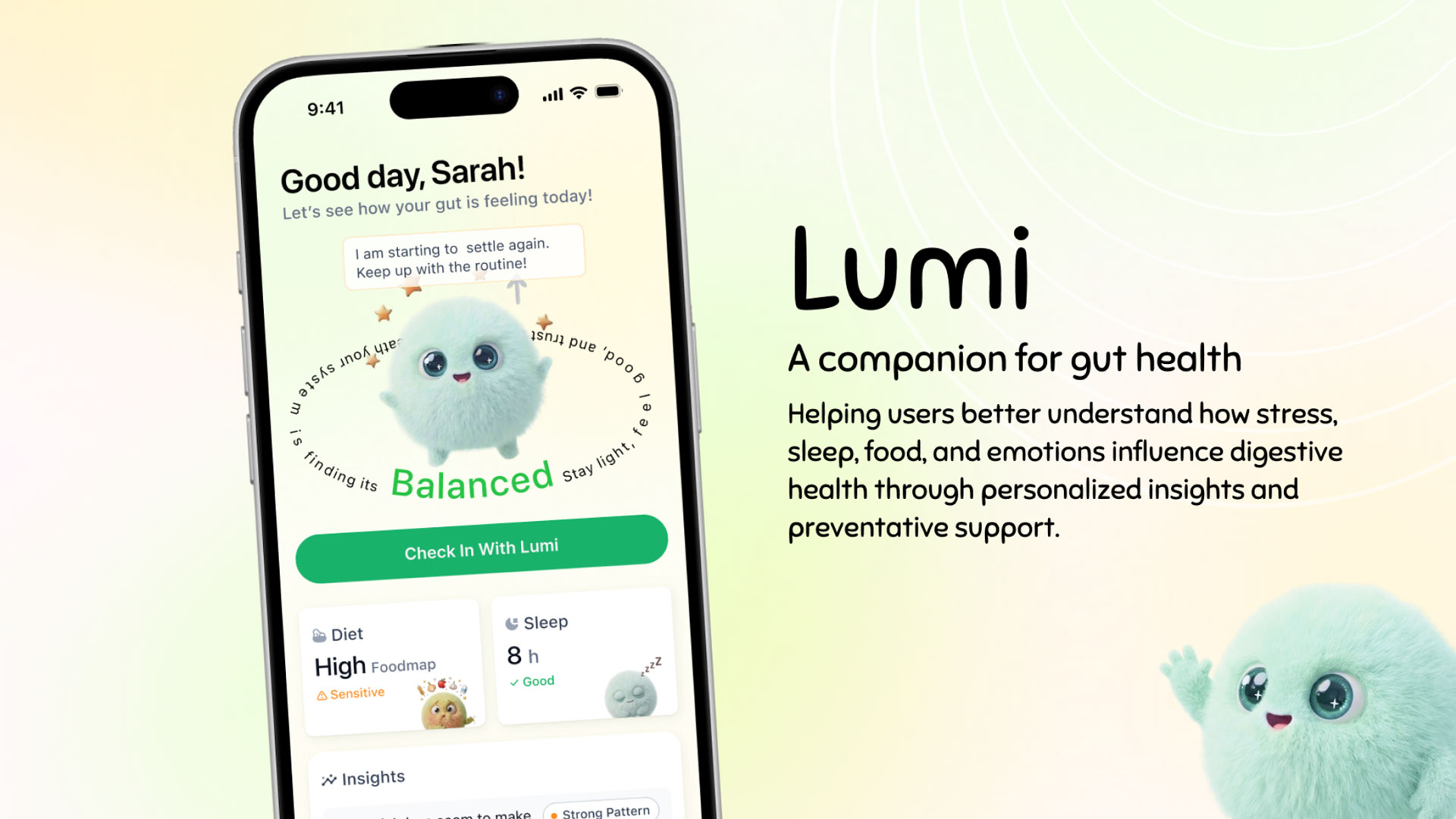
Lumi is an AI-powered gut–brain companion designed to support people living with chronic digestive discomfort...

Yumei Feng is a product designer and AI innovator creating human-centered AI experiences that bridge healthcare, accessibility, and emerging technology. Her work focuses on designing thoughtful solutions that empower underserved communities through innovation and empathy.
I am a San Francisco–based product designer and AI innovator currently working with leading AI startups, where I focus on designing human-centered AI experiences for enterprise and healthcare applications. With a background spanning consulting and emerging technology, I previously worked at Deloitte, contributing to digital transformation and user experience initiatives for Fortune 500 clients, including Meta and Johnson & Johnson.
My work explores the intersection of artificial intelligence, empathy, and accessibility, with a particular focus on underserved communities. I created projects such as Easymed, an AI-powered medication interaction checker designed to help older adults safely navigate drug-drug and drug-food interactions, and Lumi, an AI companion focused on digestive health and emotional well-being.
My work has received international recognition, earning multiple global design awards.
A large part of my motivation comes from personal experience. I lived with Irritable Bowel Syndrome for more than six years, and it significantly affected many aspects of my daily life, from my physical well-being to my emotional health.
That experience made me realize how many people quietly live with chronic conditions that are often misunderstood or overlooked. It became a driving force behind my work, inspiring me to create technology that not only solves practical problems but also empowers and supports people emotionally.
Many of my projects are also inspired by the needs of underserved communities. For example, the idea for Easymed originated during a visit to a senior care facility, where I saw how difficult it could be for older adults to manage multiple medications safely and confidently. Witnessing those real-world challenges firsthand reinforced my belief that design and AI should reduce stress, improve accessibility, and enhance quality of life.
The impact has been incredibly meaningful to me. Beyond the awards and recognition, the most rewarding part is knowing these initiatives help bring greater visibility to overlooked challenges while encouraging more human-centered conversations about healthcare, accessibility, and emotional well-being.
My project is both a creative AI agency and a digital health initiative dedicated to empowering individuals living with digestive discomfort and chronic gastrointestinal conditions. The platform explores how artificial intelligence and human-centered design can come together to create more accessible, empathetic, and emotionally supportive healthcare experiences.
As the lead designer, I was responsible for the end-to-end product design process. My role included conducting user research to better understand the emotional and practical challenges faced by people living with digestive conditions, identifying opportunities where AI could provide meaningful support, and translating those insights into product strategy and experience design. I also led the creative direction, interaction design, user flows, visual systems, and overall product experience.
Much of the inspiration came from my own experience with digestive health challenges. I understood firsthand how isolating and frustrating these conditions can be, which shaped many of my design decisions—particularly my focus on creating experiences that feel approachable, supportive, and emotionally aware rather than overly clinical.
In many ways, my project reflects both my professional background in AI product design and my personal commitment to creating technology that meaningfully improves people's quality of life.
One of the most meaningful pieces of feedback I received came from individuals living with chronic digestive conditions who shared that Lumi made them feel less alone in navigating their health journey. Many people silently struggle with digestive disorders for years, trying to identify patterns related to food, stress, sleep, and daily habits.
One user shared that my project helped them recognize patterns in their routines and encouraged them to take a more proactive approach to managing their health rather than feeling overwhelmed or anxious. Another described the experience as more empathetic and approachable than traditional health tools, which often feel overly clinical and difficult to engage with consistently.
What impacted me most was realizing that people were not only looking for information, but also reassurance and emotional support. Those conversations reinforced my belief that healthcare technology should do more than analyze symptoms—it should help people feel understood, empowered, and supported throughout their everyday lives.
The inspiration for my project came largely from my own experience living with Irritable Bowel Syndrome and chronic digestive discomfort for many years. I experienced firsthand how physically and emotionally exhausting these conditions can be, especially when symptoms are unpredictable and difficult to explain to others.
Over time, I realized that many others were navigating similar challenges in silence, often without the emotional support or accessible tools needed to better understand their health.
Through my project, I wanted to explore how AI and human-centered design could create a more compassionate healthcare experience—one that feels approachable, supportive, and empathetic rather than purely clinical. My goal was to show that healthcare technology should not only focus on efficiency or diagnosis, but also on emotional well-being and empowerment.
Ultimately, I created the project to help people feel more understood and more in control of their daily health journey. I hope it demonstrates how thoughtful design and emerging technologies like AI can meaningfully improve quality of life, particularly for communities whose experiences are too often overlooked.
One of Lumi's most distinctive creative elements is its character. It was intentionally designed not to feel like a traditional medical app, but as an AI health companion that users can develop an emotional connection with over time. The goal was to create an experience that is warm, approachable, and reassuring for people living with chronic digestive conditions.
It has a human-like personality—playful, empathetic, and interactive—which transforms health tracking into something more engaging and less intimidating. Rather than simply presenting symptom data, it checks in with users daily, asks how they are feeling, and provides personalized insights through natural, conversational interactions.
From a creative perspective, I wanted to combine emotional storytelling with AI-driven health insights. Bringing together empathy, companionship, and intelligent symptom analysis is what makes the experience unique. I believe healthcare technology is most impactful when it is designed to be human-centered, emotionally supportive, and genuinely empowering rather than purely functional or clinical.
My project helps improve health awareness by encouraging individuals to better understand the daily patterns that influence their digestive health, including stress, sleep, diet, and lifestyle habits. Many people living with chronic digestive conditions struggle to identify these triggers, often leading to frustration, anxiety, and a sense of losing control over their well-being.
Through daily check-ins, conversational interactions, and AI-powered insights, it encourages users to reflect more consistently on their symptoms and habits in a way that feels approachable rather than overwhelming. The project was designed to support small but sustainable behavior changes by making health tracking more engaging, emotionally supportive, and easier to maintain over time.
Beyond symptom tracking, I also wanted the project to raise awareness of the emotional challenges associated with chronic digestive conditions, which are often overlooked. Many individuals quietly live with stress, isolation, and uncertainty as part of their daily lives.
By creating a more empathetic and human-centered AI companion, I hope my project encourages more open conversations while helping people feel understood, supported, and empowered throughout their health journey.
One of the most important elements I incorporated into my project's visual storytelling was empathy. Rather than presenting digestive health in a cold or overly clinical way, I wanted the experience to be approachable, comforting, and emotionally engaging. That vision was reflected through the project's visual language, including soft gradients, calming colors, playful interactions, and the consistent presence of the Lumi character.
The character became a central storytelling element because it helped humanize the technology. Instead of interacting with a medical tool, users engage with a supportive companion that understands their challenges. This emotional connection makes the experience more relatable while encouraging greater trust and engagement.
I also placed a strong emphasis on subtlety and accessibility. Living with chronic digestive conditions can already be stressful and overwhelming, so every visual element was intentionally designed to reduce anxiety and create a sense of calm. By combining emotionally driven storytelling with AI-powered health insights, I wanted to communicate healthcare in a way that feels both innovative and deeply human-centered.
Receiving recognition from the TITAN Health Awards means a great deal to me and to my project. Digestive discomfort and chronic gastrointestinal conditions affect millions of people, yet they are often overlooked or minimized in broader healthcare conversations. Many individuals quietly live with these challenges without feeling fully understood or supported.
This honor is especially meaningful because it reinforces the importance of bringing greater empathy, awareness, and innovation to this space. To me, it reflects an appreciation not only for the technology behind my project, but also for its human-centered approach to healthcare and emotional well-being.
The award is also an important milestone that motivates me to continue advancing the project through deeper user research, ongoing refinement, and new opportunities to expand its impact. Above all, I hope this recognition encourages more people to feel seen, supported, and reminded that they are not alone in their health journey.
My work has consistently focused on designing for underserved and often overlooked communities. Before Lumi, I created Easymed, a healthcare initiative designed to help older adults safely manage medication interactions, which also received recognition at the TITAN Health Awards in 2024. That experience reinforced my belief that design and AI can play a meaningful role in improving accessibility, confidence, and quality of life for those who are frequently underserved by traditional healthcare systems.
I chose to enter this project because the project is deeply personal to me. After living with digestive discomfort for many years, I understood firsthand how physically and emotionally exhausting these conditions can be.
For a long time, I believed there was a lack of holistic, empathetic solutions in this space. As AI continues to advance and awareness of chronic health conditions grows, I felt it was the right time to create something that could genuinely support and empower people navigating these challenges every day.
One of the biggest challenges in developing my project was recognizing how deeply personal digestive health can be. Conditions such as Irritable Bowel Syndrome vary widely, with symptoms, triggers, and emotional experiences differing from person to person. What works for one individual may not work for another, making it essential to design an experience that feels relevant, adaptable, and supportive for a diverse range of users.
As a result, the project evolved into a more holistic approach rather than focusing on a single symptom or trigger. We carefully considered how stress, sleep, diet, lifestyle habits, and emotional well-being interact to influence digestive health. The goal was not simply to collect data, but to help users uncover meaningful patterns and insights over time.
Another important challenge was integrating AI in a way that feels helpful, trustworthy, and empathetic rather than overwhelming. Creating an experience that balances intelligent insights with emotional support required extensive research, continuous iteration, and thoughtful design. While it remains an ongoing journey, it has also been one of the most meaningful and rewarding aspects of building my project.
Winning this recognition has been incredibly meaningful for both my career and personal growth as a designer working at the intersection of AI and healthcare. Above all, it reaffirmed my belief that human-centered, empathy-driven healthcare experiences are not only important, but truly valued within the industry.
The award has brought greater visibility to the challenges I care deeply about addressing, particularly chronic digestive conditions, accessibility, and underserved communities. It has also created new opportunities to share my work, connect with innovators across healthcare and AI, and continue exploring how emerging technologies can foster more supportive and emotionally aware experiences.
On a personal level, this honor reinforced my long-term mission as a designer: to create technology that not only functions effectively, but genuinely improves people's quality of life. It has motivated me to continue advancing my work through research, user testing, and experimentation while advocating for greater empathy and inclusivity in healthcare innovation.
Real human impact: Healthcare has one of the most direct and meaningful influences on people's lives. It encompasses life-changing, and sometimes life-saving, moments that affect individuals from every background. Regardless of a person's age, profession, or circumstances, illness and physical discomfort are universal experiences that can profoundly shape quality of life, emotional well-being, and daily living.
The need for empathy alongside innovation: Unlike many industries that focus primarily on efficiency or convenience, healthcare demands a careful balance between technological innovation and human understanding. People are often at their most vulnerable when interacting with healthcare systems, making empathy, trust, accessibility, and emotional support just as essential as the technology itself.
The complexity of human health: Health is shaped by countless interconnected factors, including lifestyle, stress, sleep, environment, mental health, and genetics. This makes healthcare both uniquely challenging and deeply rewarding, as meaningful solutions rarely follow a one-size-fits-all approach. For chronic conditions such as Irritable Bowel Syndrome, identifying patterns and providing personalized support requires a holistic, adaptive understanding of each individual's experience.
Growing up in China before studying and building my career in the United States has given me a unique perspective on healthcare and innovation across different cultures. One aspect that stands out in China is the scale and speed of technological adoption. Digital health platforms, AI-driven services, and mobile-first experiences are rapidly integrated into everyday life, creating exciting opportunities to expand accessibility and improve care at scale.
Studying and working in the United States introduced me to a strong emphasis on research, patient-centered care, and interdisciplinary collaboration. I have been especially inspired by the way design, technology, psychology, and healthcare come together to create more holistic and meaningful user experiences.
Experiencing both environments has profoundly shaped my approach to design. I strive to combine the speed and technological ambition I observed in China with the human-centered, research-driven mindset I developed in the United States. I believe this cross-cultural perspective enables me to create healthcare experiences that are both innovative and deeply empathetic.
I believe the healthcare industry will move toward a more personalized, proactive, and technology-driven future over the next five to ten years. As AI, wearable devices, and data analytics continue to advance, care will become increasingly tailored to each individual's unique needs, behaviors, and lifestyle rather than relying on generalized approaches.
I also expect a significant shift from reactive care, where treatment begins after symptoms become severe, to more preventive and continuous models of care. Emerging technologies will become better at identifying patterns early, helping individuals better understand their health while providing more personalized guidance for nutrition, stress management, sleep, and chronic condition management.
At the same time, I believe emotional well-being and human-centered design will play an even greater role in healthcare innovation. As AI becomes more integrated into everyday life, the most meaningful solutions will combine intelligence with empathy, accessibility, and trust.
Ultimately, I believe the future of healthcare lies in creating deeply personalized experiences that empower individuals to take a more active role in their long-term well-being.
I would recommend building a strong foundation in healthcare, technology, and human-centered research. One of the most important skills in this field is understanding people's experiences, challenges, and behaviors rather than focusing solely on the technical aspects.
For designers and innovators entering the industry, I believe resources on user research, psychology, accessibility, and healthcare systems are invaluable. I would also encourage staying informed about emerging technologies such as AI, digital health platforms, wearable devices, and preventive healthcare, as these areas are rapidly shaping the future of the industry.
Beyond formal education, some of the most meaningful insights come from direct observation and conversations with the people you hope to serve. Many of the ideas behind my own projects were inspired by personal experience and by listening to individuals living with chronic conditions or facing barriers to healthcare access. Empathy and curiosity remain essential qualities in this work.
I also encourage interdisciplinary learning that brings together design, technology, and healthcare. Some of the most meaningful innovations emerge when people from different backgrounds collaborate to solve complex human challenges.
One of my greatest sources of inspiration has always been the resilience of the people around me. Through my own experience living with Irritable Bowel Syndrome and conversations with others facing chronic conditions, I have seen how people continue to move forward despite discomfort, uncertainty, and daily challenges. Those experiences continually remind me why empathy and human-centered design matter so much.
Professionally, I have also been inspired by individuals working at the intersection of design, technology, and social impact—people who use innovation not simply to create products, but to genuinely improve quality of life. My experiences in consulting, AI startups, and healthcare innovation have reinforced the importance of combining creativity with responsibility, compassion, and empathy.
More broadly, I admire those who remain curious and optimistic about the future while caring deeply about human well-being. I believe technology is most meaningful when it helps people feel supported, understood, and empowered, and that belief continues to guide my work every day.
I believe one of the greatest keys to success is remaining genuinely curious and empathetic. Many of the best ideas come from paying close attention to the people around you, listening to their experiences, and seeking to understand challenges that are often overlooked. For me, the most impactful work has always grown from a combination of personal experience, observation, and a desire to create solutions that genuinely improve people's lives.
I also believe it is important to embrace nonlinear paths and uncertainty. My own journey has taken me from consulting to AI startups and healthcare innovation, and many of the most valuable opportunities came from staying open to learning, adapting, and exploring unfamiliar spaces. Especially in emerging fields such as AI and digital health, curiosity and experimentation are essential for continued growth.
If I could leave one piece of advice, it would be to create with empathy and intention. Technology alone is not enough—the most meaningful innovations are the ones that help people feel understood, supported, and empowered. Even the smallest thoughtful design decisions can make a meaningful difference in someone's everyday life.
I am incredibly grateful for the recognition from the TITAN Health Awards and for the opportunity to share the story behind Lumi. Above all, I hope people take away the message that many invisible health challenges deserve greater empathy, awareness, and support. Chronic digestive conditions affect millions of people, yet many still feel isolated or overlooked in their experiences.
I also hope that my project encourages broader conversations about how AI and emerging technologies can be applied responsibly and compassionately in healthcare. While technology continues to advance rapidly, I believe the future of healthcare must remain deeply human-centered. The goal should not only be to build smarter systems, but also to help people feel more understood, empowered, and cared for.
Finally, I would like to thank everyone who supported my project, shared their experiences, or participated in research and testing throughout its development. Their openness, trust, and generosity were instrumental in shaping the project into what it is today.