Rainy Tokyo
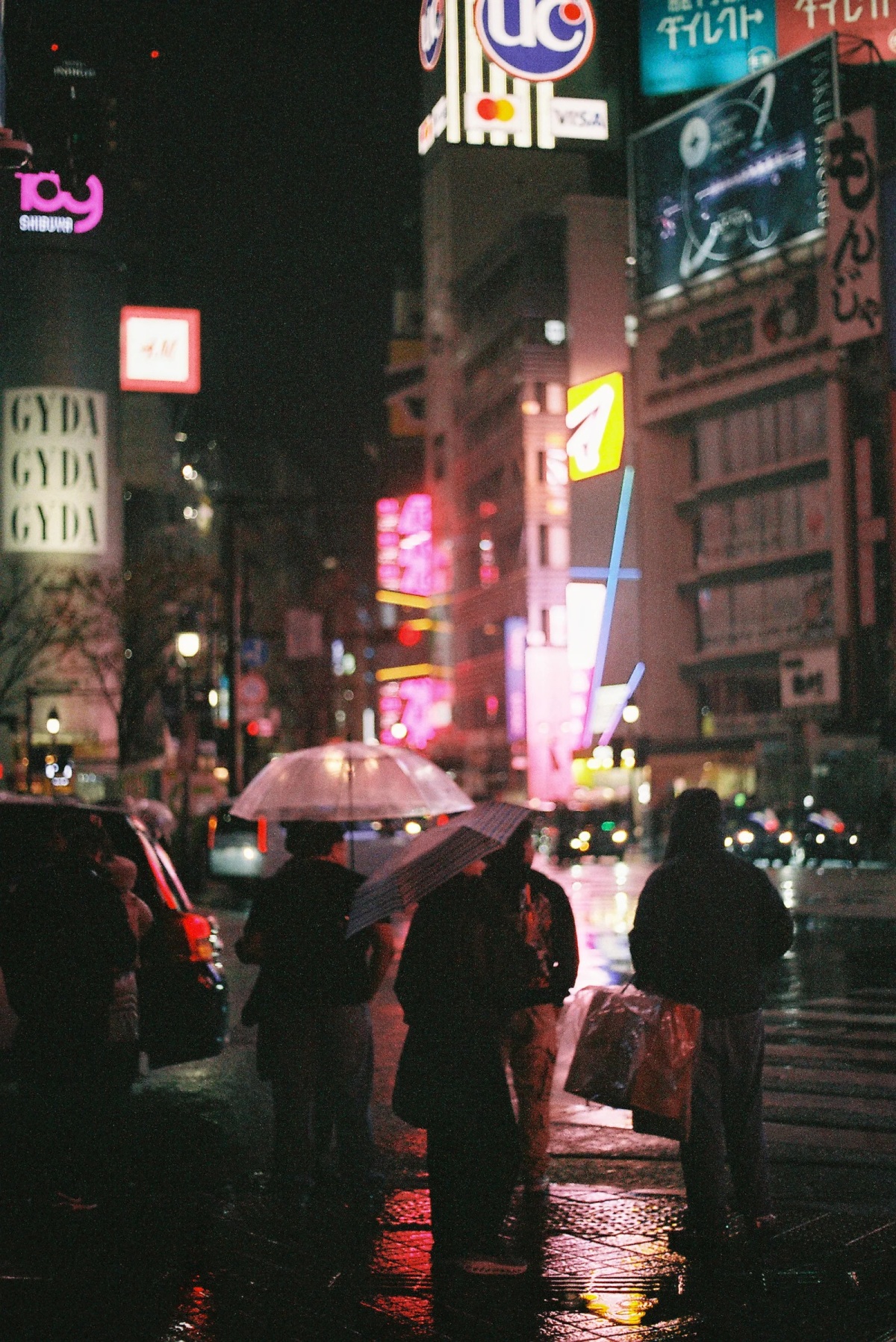
A rainy night in Tokyo, where the city briefly feels suspended between reality and fiction....
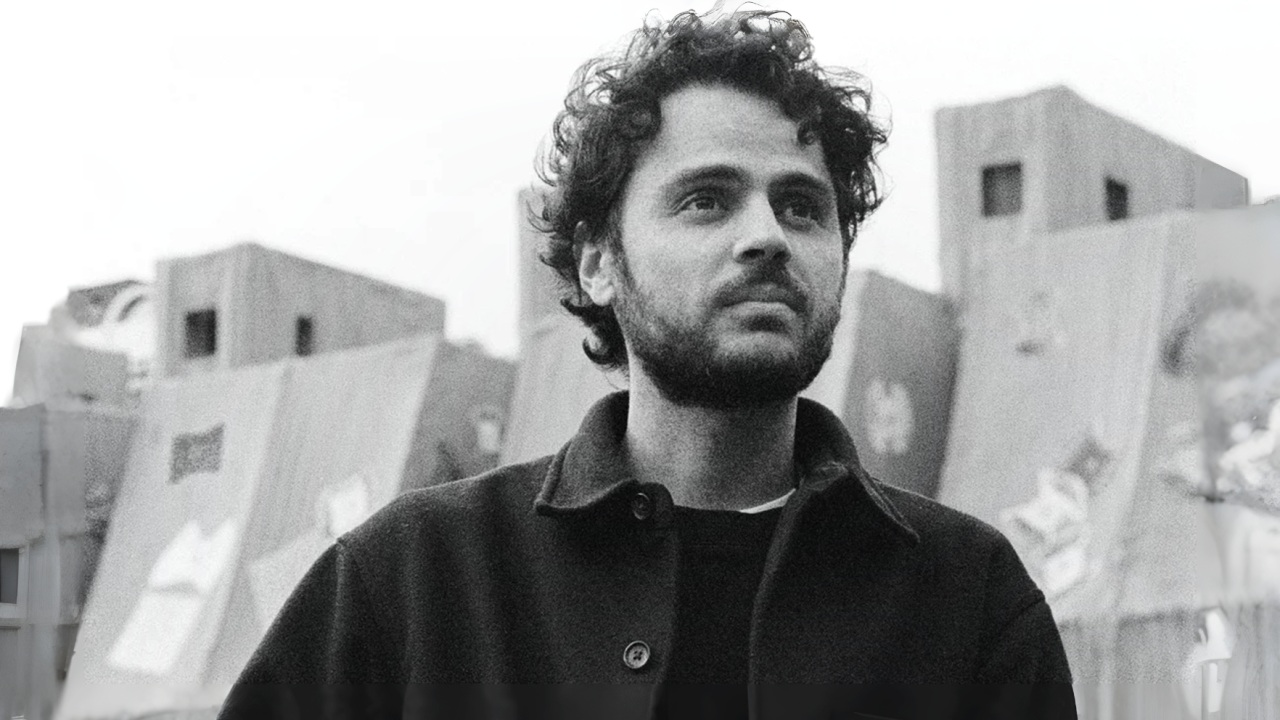
Zé Pedro is an architecture-trained photographer whose imagery is defined by atmospheric light, cinematic composition, and emotional depth. Rather than prescribing a single narrative, his photographs invite viewers to complete each story through their own experiences and imagination.
Thank you. Winning Gold at the London Photography Awards is particularly meaningful because photography sits within a broader visual practice for me, rather than alongside it. I studied architecture in Lisbon and collaborated with Aires Mateus before moving to London. That foundation taught me to think about light, atmosphere, and how space holds emotion.
Over the years, I moved from designing spaces to constructing them through other means. First through cinematic environments built in CGI, and increasingly through photography. Photography actually started for me here in London. The city has a particular quality of light and rhythm that pulled me toward the camera. I picked up an Olympus OM10 and started shooting. Walking the streets and trying to find the same atmospheric weight I'd been chasing in CGI for years. London is where it started.
The work matured on a trip to Tokyo earlier this year. The rain-soaked nights there had a filmic, dreamlike quality. The city and the film stock seemed to render together. The Rainy Tokyo work came out of those extended night walks. Low light, no tripod, no plan. Just trying to record what the city was showing me.
What's clearer to me now is that the camera, the render engine, and the architectural drawing are all the same tool, ways of constructing atmosphere, of holding a moment of perception.
The Rainy Tokyo series came out of a strange feeling I had while walking through the city at night. Tokyo arrives in your imagination long before you arrive there. Through films, photography, anime, music videos. By the time you actually walk those streets, the city has already been imagined in your head. The work was about the relation between the real and the imagined ideal.
I shot the series across a week of night walks with my friends and with my OM10. The rain helped; it gave the streets that slick, cinematic depth, the kind of atmosphere I'd been trying to construct in CGI for years. Here it was just happening around me.
Winning the LPA (London Photography Awards) Gold means a lot, particularly at this stage. Photography is still something I'm growing into as an artist; it sits alongside the cinematic CGI work as a more recent strand, and recognition from an international body validates the direction. It gives me confidence to keep developing the work with more seriousness and ambition, and it makes me want to push further, to keep walking, keep shooting, and to think about how the photography sits within larger projects.
Honestly, it was difficult to decide on just one. I had other photos I really liked from earlier work. But the Tokyo series was the most recent body of work I had, and out of those frames, this one was the strongest. The one I was most happy with. I also asked my girlfriend and my family for their favourites, which helped me make the decision.
I love this photo in particular because it tells a story. The rain, the person standing alone waiting to cross the street, the noise and chaos of the neon lights around them. There's a tension in it. Chaos and calm sit together, the busy city and the loneliness of one figure inside it. That's the kind of contradiction I find most interesting in photography: when a single frame can hold two opposite feelings at the same time.
My mum gave me an analogue camera when I moved to London. That's what really started it.
From there, my journey began. Shooting London through an analogue eye, walking the streets, learning to see the city slowly. Film teaches you to think before each frame, because the roll is limited. You only have so many shots, so you start paying attention in a different way. The discipline that has stayed with me. Even now, I shoot less than I would on digital, but each frame matters more.
Atmospheric urban photography, especially at night. There's something specific to how a city behaves after dark. The light becomes selective, the noise softens, and certain moments suddenly carry more weight than they would in daylight.
Film and low light are part of it too. Working on film at night forces you to commit before you really know what you have, which I think suits this kind of photography. You're trusting that the atmosphere is there, even when you can't fully see it.
An Olympus OM10 with a 50mm lens, loaded with Kodak Portra 400. That's the setup that does almost everything I want. The OM10 is light enough to carry on long night walks, and Portra 400 handles low light with a colour palette that feels almost cinematic to me, the way it renders neon, rain, and skin tones together.
I want my work to tell a story, but I don't want the viewer to be limited by mine. The story I had in my head when I took the photograph is just the starting point. What I really care about is that the viewer feels their own story when they look at it, that they bring something of themselves into the frame and complete it on their own terms.
Trusting the film. I was handheld in the rain at night, often at shutter speeds that probably shouldn't work, with no way to see what I was actually getting. You can compose carefully, expose carefully, breathe slowly when you press the shutter, but in the end, you're committing to a frame you won't see for weeks.
The other challenge was patience. The shot came from a specific moment I was imagining: the right person, the right pause, the right light in the rain.
Cities at night, particularly when they're wet. There's a quality that emerges when neon, rain, and concrete come together. The city becomes more cinematic, more legible as an atmosphere rather than just a place. Tokyo is the strongest version of this I've found so far, but London has its own version, especially in winter.
Beyond the cities themselves, I'm drawn to the people inside them. The solitary figures who are part of the scene but somehow apart from it. There's a particular kind of solitude that big cities produce, and that's often what I'm photographing without fully realising it: the person waiting at the crossing, the figure at the edge of a frame, the moment of stillness inside motion.
Honestly, my influences come more from cinema than from photography. I love film, and the names I keep returning to are Nicolas Winding Refn and Wong Kar-wai, for the way atmosphere carries the entire story in their work. On the cinematography side, Roger Deakins and, more recently, Greig Fraser, for everything they understand about light and composition. What they all share is a conviction that cinematography isn't decoration. It is the story.
That's what's in my head when I'm out with the camera. I'm not thinking "photograph" so much as how this would be lit, framed, held. The way light and shadow build a feeling, how composition guides the eye, how colour carries emotion. The camera is just my way of testing those instincts against the real world.
Tokyo, specifically, was shaped for me by Japanese cinema and anime long before I ever picked up a camera. By the time I arrived there, the city was already half-imagined in my head.
Submit, even when you're not sure. I think most photographers, myself included, undervalue their own work and assume it isn't ready for external eyes. But you'll never know what an experienced jury sees in your work unless you give them the chance to see it.
My advice for excelling would be to focus more on narrative rather than technicality.
Walk more! Photography improves much faster when you spend time being in places: paying attention, getting tired, getting bored, getting surprised. Also, get references from other visual arts. Painting, cinema, illustration.
For my photography, editing is intentionally minimal. Whenever I need i can adjust the saturation and exposure, but overall I want the work to look like film, with grain, slight imperfection, the colour of Portra, rather than something polished into a different medium.
I think a lot about this because I work in CGI as well as photography, so I see both sides of the question. My honest view is that AI won't change photography itself. The actual act of being somewhere, seeing something, and pressing the shutter is the thing photography is about, and AI can't really do that for you.
Where I do think AI will change things is in post-production. It's already much easier to remove unwanted elements from a frame, add things in, and clean up imperfections. That's mostly useful, but it raises real questions about how much you should rely on it.
For me, working on film already pushes me in the opposite direction. Minimal post-processing, accepting what the negative gives you. In some ways, choosing analogue is a quiet choice against where the technology is heading.
Hong Kong at night, with my analogue camera, and no time limit. The city has been built up in my imagination for quite a long time. That particular quality of humidity, neon, density and melancholy, and I haven't yet had the chance to photograph it myself. I'd want to walk the older neighbourhoods slowly, just being there, letting the city show me what it wants to show me rather than going in with a plan.
Beyond Hong Kong, I'd love to spend more time in Japan generally. Tokyo gave me a great experience, but Japan is much bigger than its capital. Kyoto in winter, the smaller coastal towns, the quieter cities. I think there's a different kind of light there that I haven't met yet, slower and stranger than what Tokyo offers. The photograph is just what remains. The attention is what stays.
Click here to read about Capturing Time, People, and Everyday Life with Jason Chu Ka Tak, winner of the 2026 London Photography Awards.