WOMAN
Un ritratto intenso che esplora la forza espressiva del volto umano attraverso contrasti netti e...

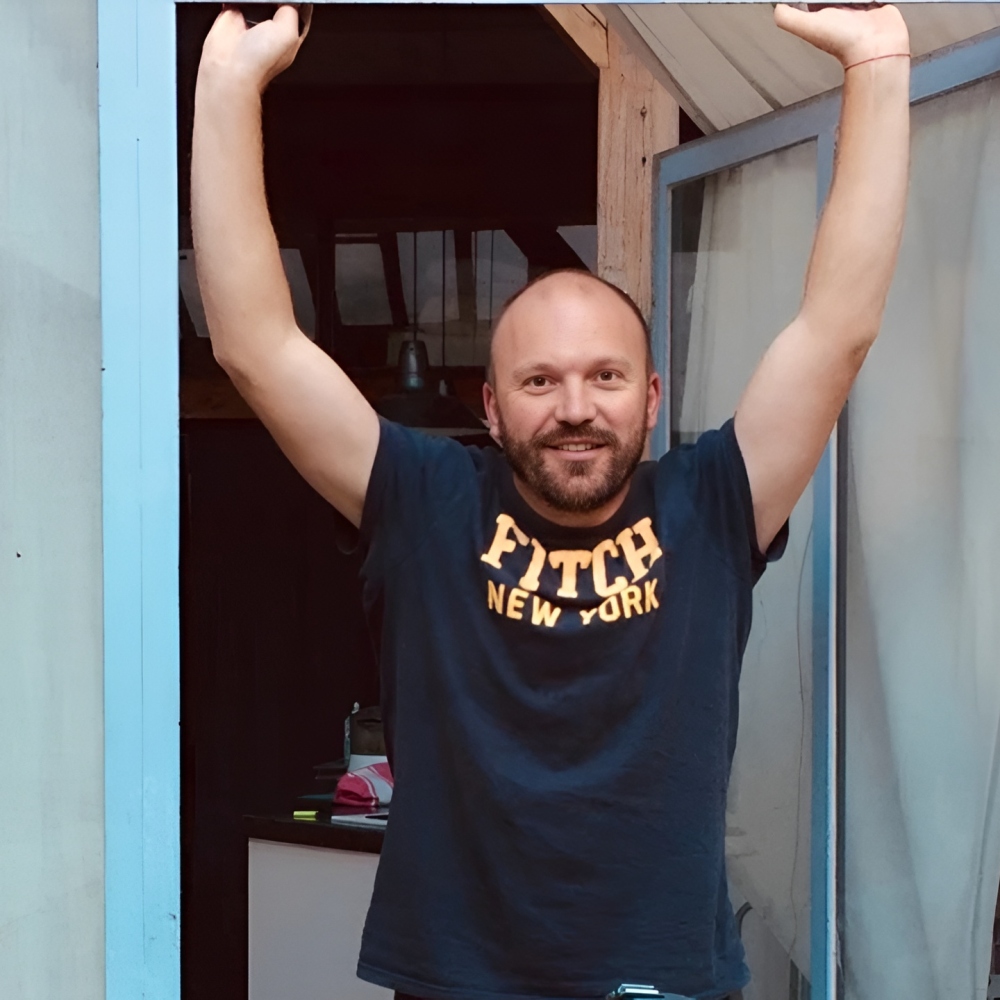
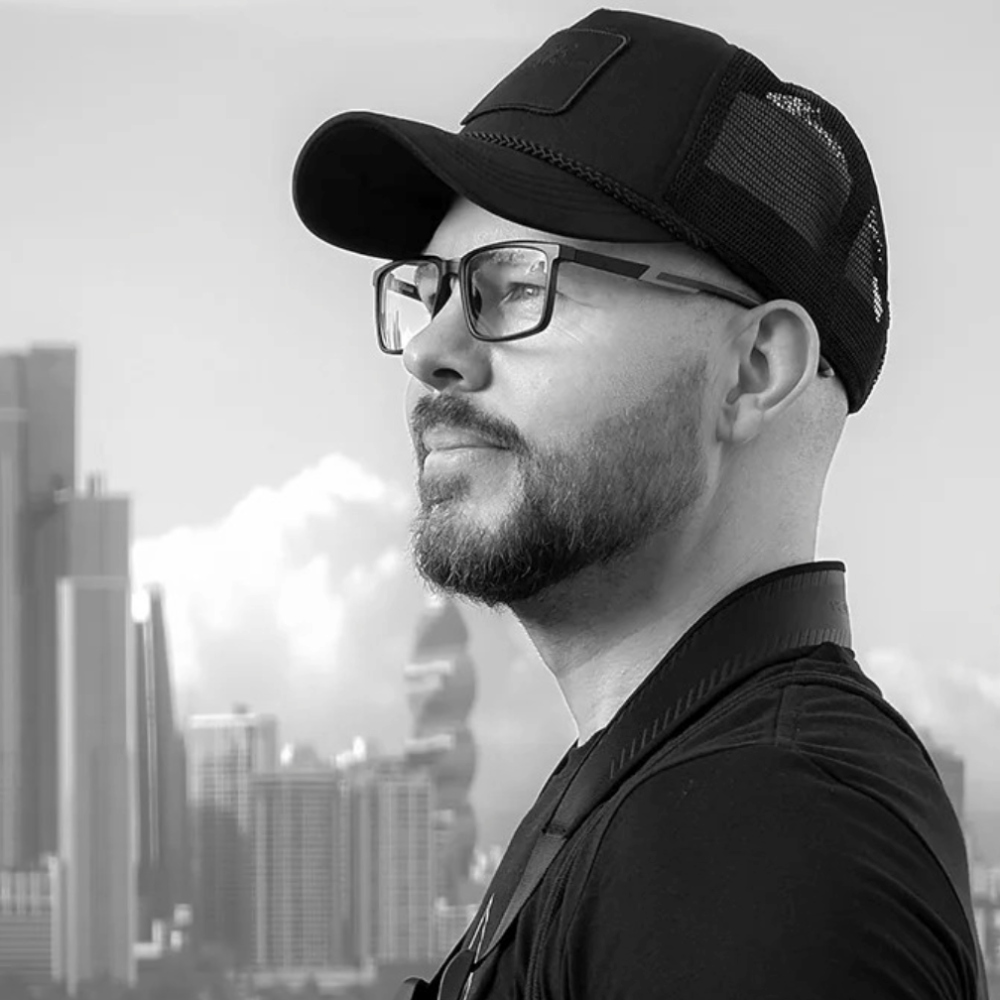
Francesco Depierro transitioned from a career in construction to pursue his lifelong passion for photography, turning curiosity into a profession. His work, focused on portrait and landscape photography, seeks to reveal the emotions and inner worlds of his subjects, capturing moments that speak without words.
Thank you. For many years, I worked as a technician in the construction field, but my passion for photography eventually took over, leading me to leave everything behind to follow this passion and turn it into a profession. I began photographing out of pure curiosity, without a clear professional goal—I simply wanted to tell the stories of what I saw. Over time, however, I realized that photography was much more than a hobby; it became a language through which I could express emotions and personal visions.
My true passion is portrait photography, where I always strive to capture the essence and uniqueness of the person in front of me. Landscape photography follows closely, allowing me to immerse myself in nature and interpret it through my own sensitivity. Over the years, I have invested heavily in education, experimentation, and countless field experiences.
Each project and every photograph has been another step toward an artistic awareness that continues to evolve. This growth has also led me to participate in international competitions, and receiving recognition such as the New York Photography Awards has been a meaningful affirmation that encourages me to continue on this path with even greater dedication.
The inspiration for this work comes from a desire to explore the expressive power of the human face as a site of transformation. In this photograph, I aimed to unite vulnerability and strength, using color and light to bring forth a suspended, almost theatrical emotion. The strand of hair and the intense makeup are not accidental aesthetic choices; they represent the idea of identity as something constructed.
Receiving this award is deeply meaningful to me. It is not only a technical or creative recognition, but a confirmation that the direction I am pursuing resonates with others. It gives me energy, confidence, and above all, motivates me to continue researching and experimenting without fear. It is a valuable encouragement along a path that often requires courage and dedication.
I choose the photograph to submit by evaluating three key aspects: whether it has a clear theme and coherence, its visual and emotional impact—something that captures attention immediately—and its technical quality and originality, while truly representing my personal style. Ultimately, I select the image that speaks the strongest.
I picked up a camera for the first time because I felt the need to give form to emotions I couldn’t put into words. Photography became my instinctive way of preserving feelings, people, and details that moved me, even when I couldn’t explain why. What began as simple curiosity gradually revealed itself as a path that brought me closer to understanding myself.
My favorite genre is portrait photography, because it allows me to connect with people and their most sincere emotions. I love the moment when, in front of the lens, every mask falls away and something authentic surfaces. In portraits, I always find a fragment of myself—a light, a gesture, a gaze that speaks without words. It is this silent dialogue that makes me deeply love this genre.
My preferred setup is the Sony A7RIII paired with the Sigma 50mm and 105mm lenses. It allows me to achieve extremely high image quality with a clean yet highly expressive rendering. I use the 50mm when I want a more intimate and natural portrait, while the 105mm gives me the compression and delicacy in detail that I find ideal for creating more sculpted and intense images.
I usually work with one to five flashes because I enjoy shaping the light with precision. This lets me model the face, build atmosphere, or push toward a more cinematic aesthetic. What I love most about this setup is the complete freedom it gives me. I can control every nuance of light without losing the subject’s spontaneity. It is a perfect balance between technique and emotion.
Emotion, above all. I believe technique is not always everything. A slightly blurred photograph that truly conveys feeling is far more powerful than a technically perfect image that remains emotionally flat.
The most challenging part of creating the winning shot was finding the perfect balance between technique and emotion. Working with multiple flashes and carefully constructed lighting, there was a real risk that technical precision could overwhelm the subject’s spontaneity. I had to proceed with sensitivity, adjusting the light millimeter by millimeter while keeping the human connection alive, because that is what gives the image meaning.
The most difficult moment came when I realized the photograph would only emerge once technique stepped into the background and made room for emotion. That was when the image truly came to life.
More than a physical place, what truly inspires me is the human being. Faces, details, and small gestures that tell a story without words are what move me most. Every person carries an entire world within them, and my work is to bring that world to the surface through light and atmosphere.
If I have to choose a setting, I am especially inspired by intimate, enclosed spaces where people feel free to reveal themselves. It is in those moments that the truth of a gaze emerges, and that is where photography becomes truly powerful for me.
My greatest influence hasn’t been a single person, but rather a collection of photographers and artists who taught me to observe the world with care and sensitivity, showing me the power of telling a story in a single frame.
Equally important have been the people around me—the subjects I’ve photographed and their everyday emotions. They’ve shown me that photography is not just about technique, but above all about listening and connecting.
Participating in photography awards is a unique opportunity to challenge yourself, engage with other artists, and share your work with a wider audience. Each competition is also a chance for growth: it pushes you to reflect on your style, your images, and the stories you truly want to tell.
My advice for standing out is simple but essential: choose the photographs that speak most honestly about who you are, not just those that are technically perfect. Pay attention to light, composition, and details, but always let emotion shine through. Show your uniqueness, because judges look for authenticity and personality more than imitation.
My main advice for beginners is simply to keep shooting—shoot, shoot, and shoot again. Observe the light, the people, and the details around you, and always aim to tell a story with each image. Technique can be learned, but developing an eye and sensitivity comes only through practice.
I think of them like a brush and a canvas—they give me the ability to express even more of what I want to convey.
Technology and artificial intelligence undoubtedly open up new creative and post-production possibilities, but they will never replace the emotion and human connection that make a photograph truly unique. In my work, AI can serve as a tool for experimentation or optimization, but it should never replace observation, light, or the relationship with the subject. Without careful use, AI can indeed be a risky approach to photography.
I would choose to photograph people in whom genuine emotions emerge—those gestures and glances that tell deep stories without the need for words.

Click here to read A Conversation with Tharaka Bibulewitharana About Reading Space Without Answers, a winner of the 2025 New York Photography Awards.