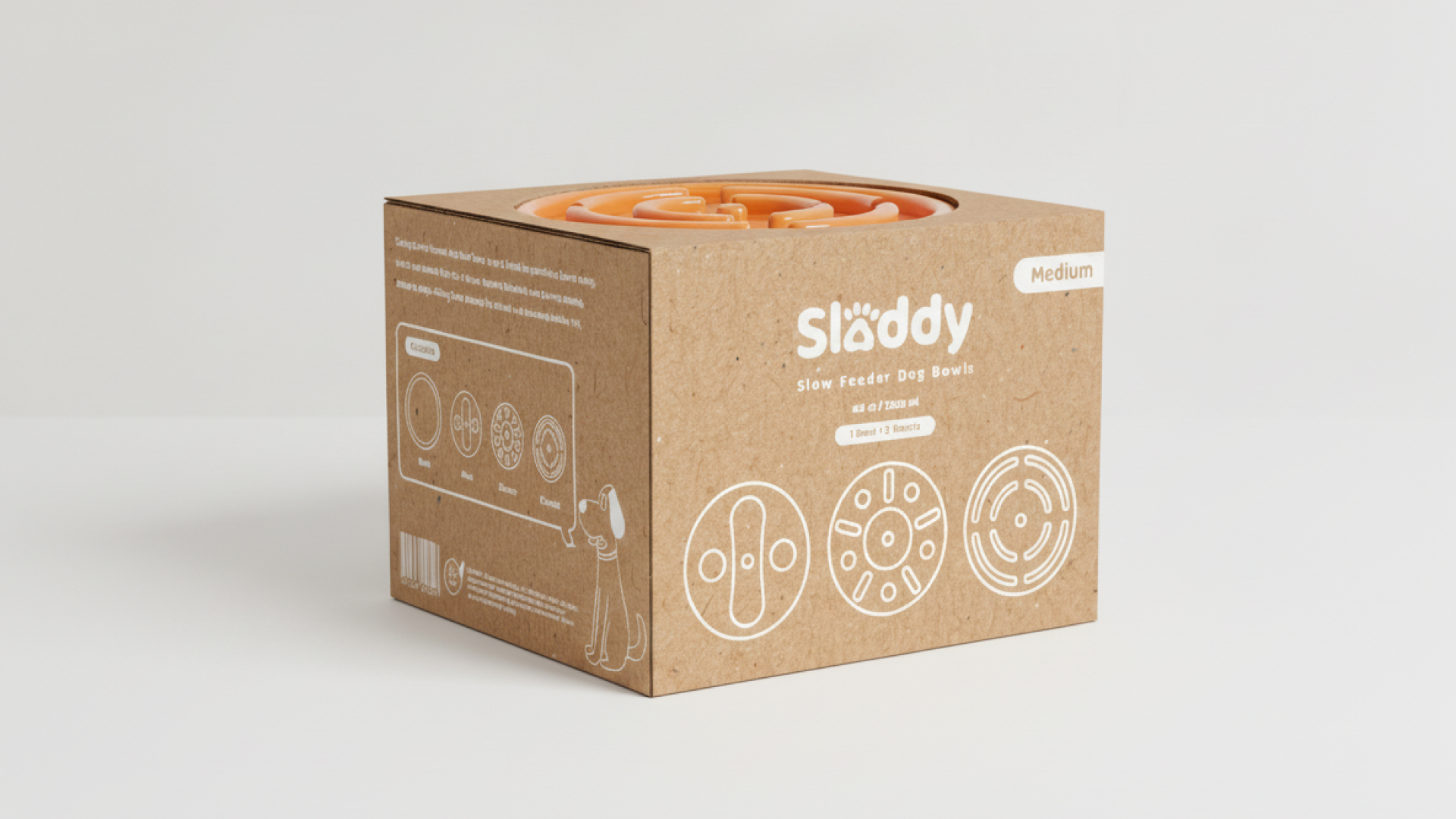
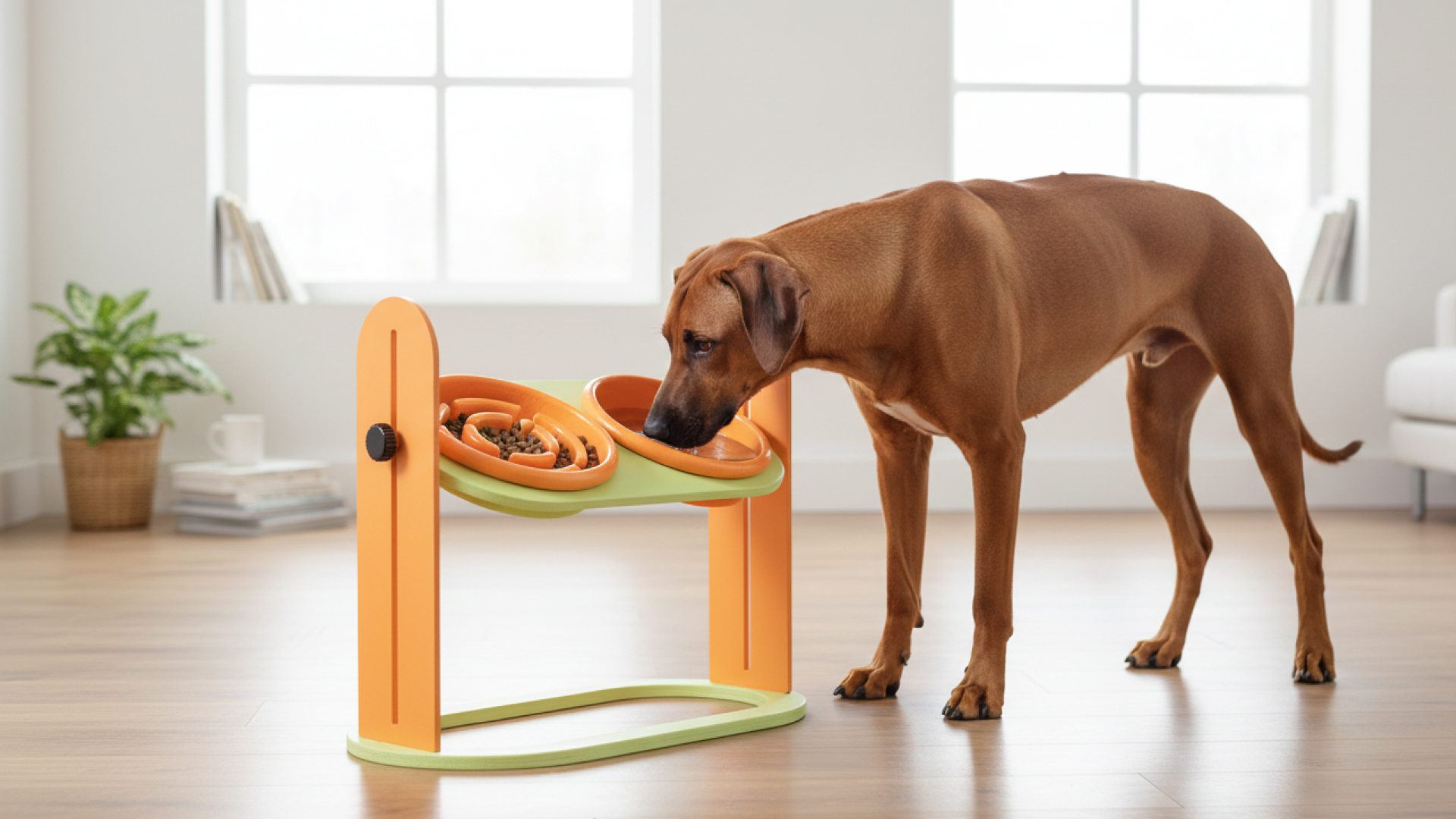
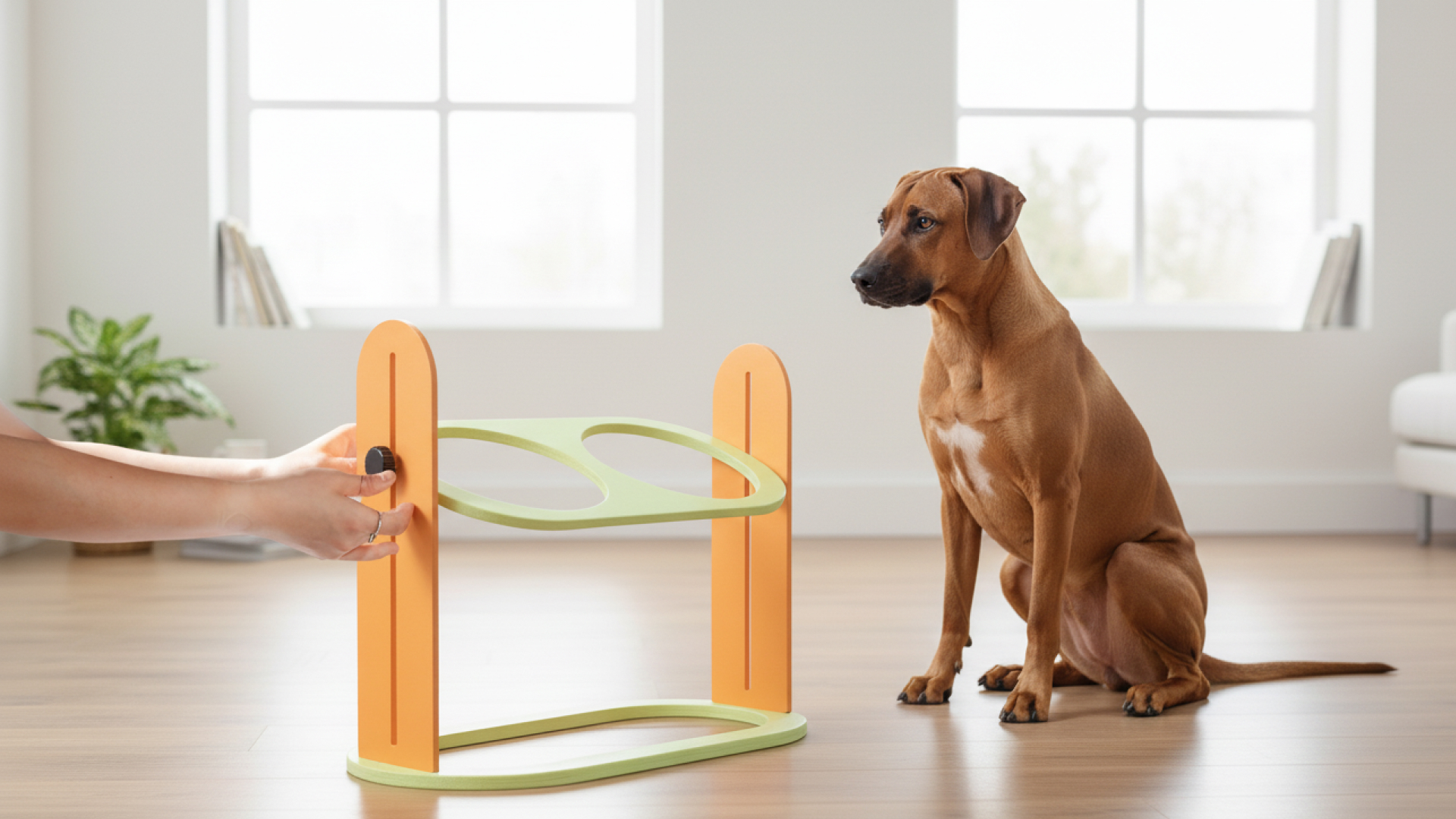
Sloddy: Slow feeder dog bowl with adjustable stand
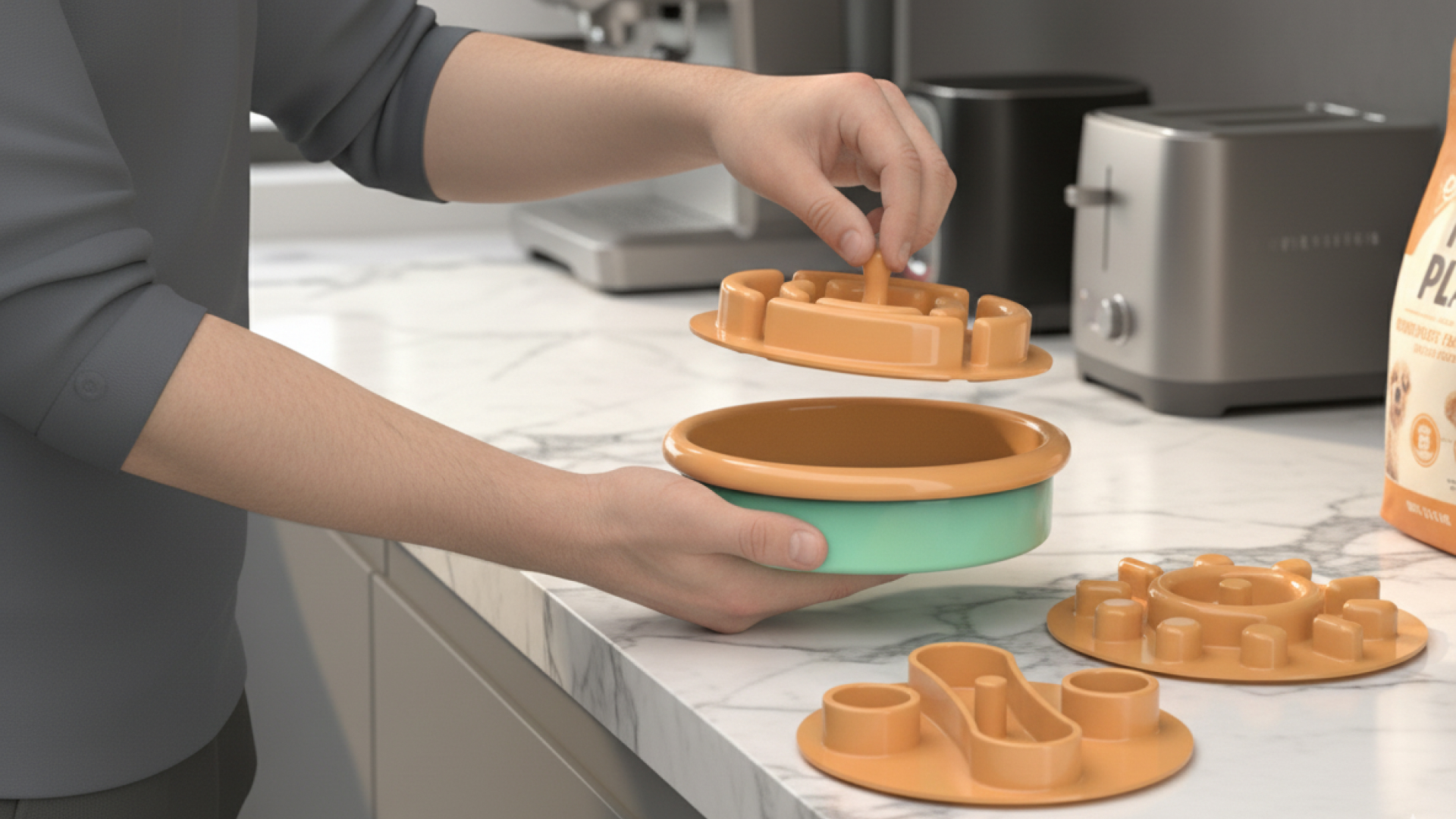
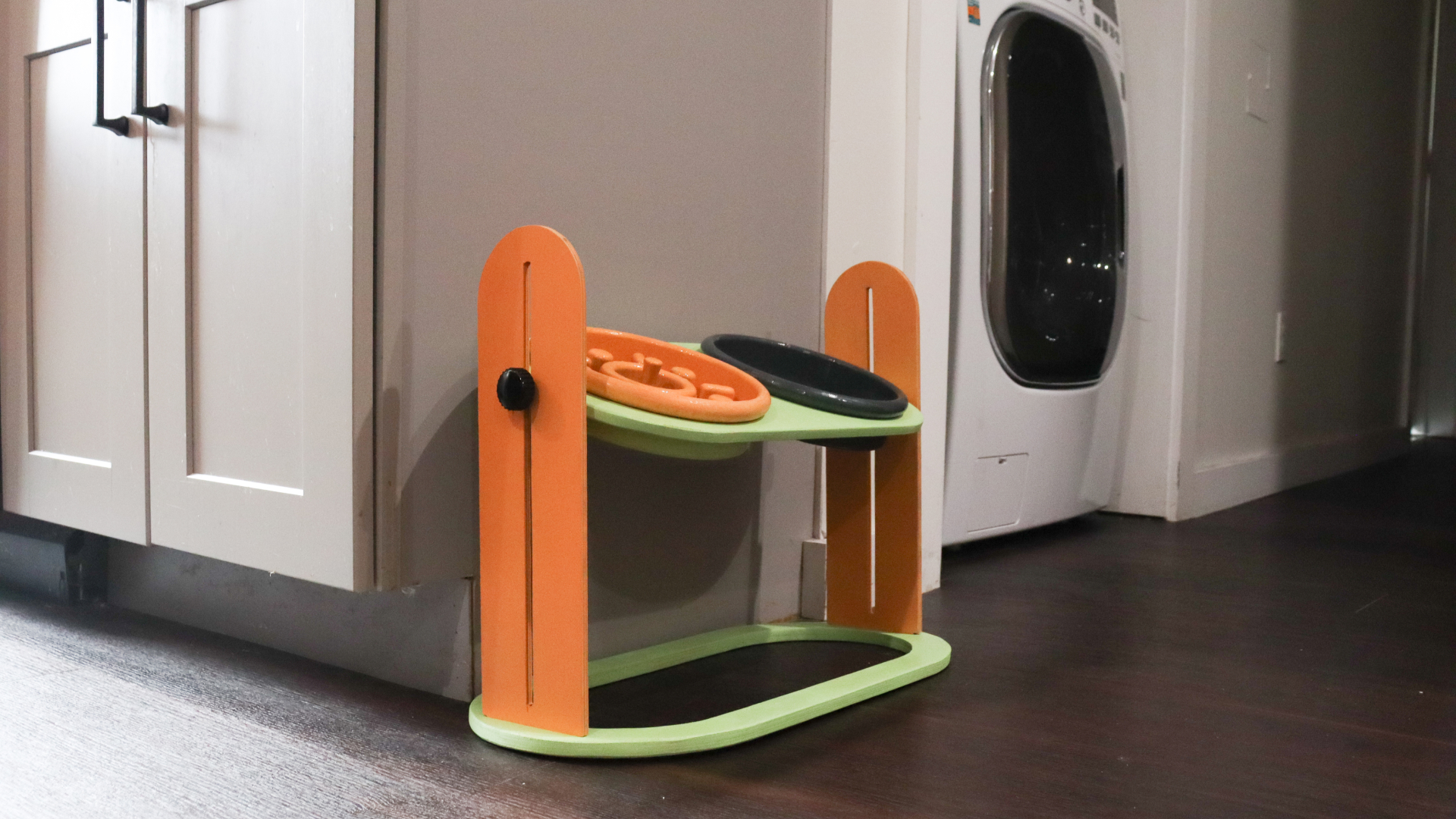
Sloddy is an innovative slow-feeder dog bowl with interchangeable puzzle inserts and an adjustable stand.

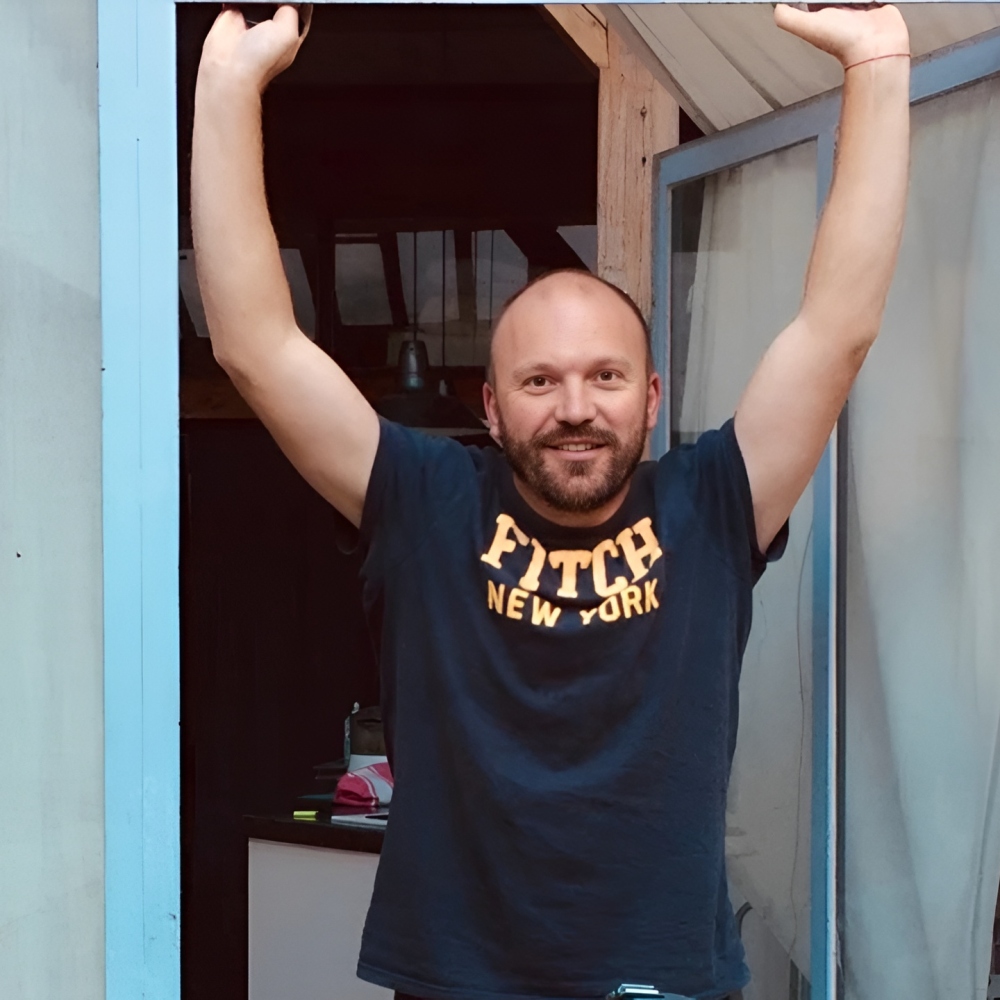
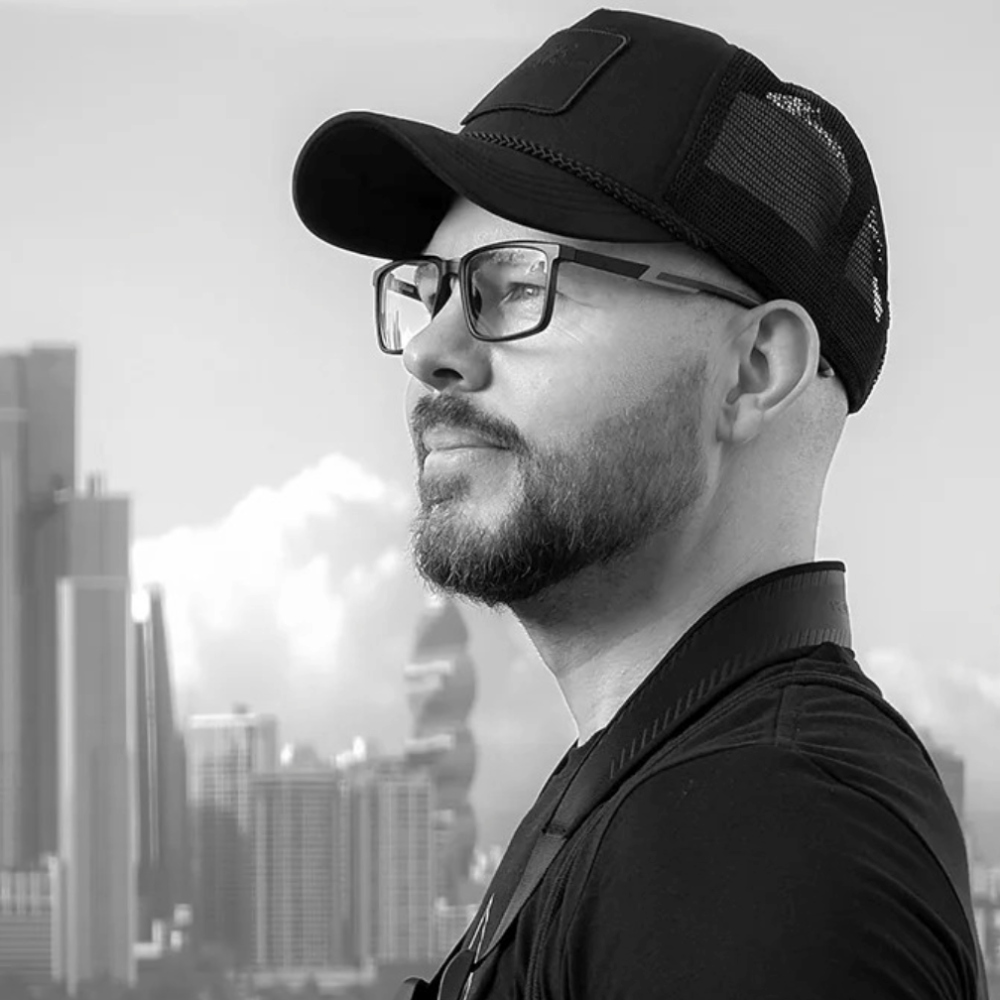
Kyung-seo (Kaline) Yoo is a product designer focused on creating meaningful solutions that connect functionality with emotional experience. Inspired by everyday interactions and personal experiences as a dog owner, Yoo develops products shaped by care, observation, and human-centered thinking.
I’m Kyung-seo (Kaline) Yoo, a product designer passionate about creating meaningful solutions for everyday life. My work focuses on understanding real human needs and transforming them into products that are not only functional, but also emotionally engaging and memorable.
What inspired me to pursue design as a career is the power design has to create connections—between people, products, and brands. I have always been drawn to the idea that a well-designed object can solve a small daily challenge, bring joy, and become part of someone’s personal experience or memory. As a designer, I want to create end-to-end product experiences that go beyond problem-solving and leave a positive, lasting impact on people’s lives.
Being recognized in the NY Product Design Awards is a truly meaningful honor for me. I’m very grateful that my work and design approach have been acknowledged through this award, and it motivates me to keep pushing my projects, ideas, and design philosophy further.
I’m especially excited that my project, Sloddy, was recognized and showcased to a wider audience. This recognition gives me more confidence in the potential of the project and inspires me to continue developing it further, exploring how it can create a greater impact in people’s everyday lives.
This achievement has had a meaningful impact on my growth as a product designer. While working on Sloddy, I experienced the full end-to-end product design process, from concept development and user testing to prototyping and marketing. Each stage helped me understand that designing a meaningful product starts with deeply understanding the user’s needs, behaviors, and everyday problems.
Being recognized by the NY Product Design Awards has also given me greater confidence in my design philosophy. It proves to me that I can continue pursuing ideas that are user-centered, meaningful, and marketable. This recognition has motivated me to push Sloddy further and has strengthened my dream of starting a small business based on my own design ideas.
So far, this achievement has opened the opportunity for my work to be showcased to a wider audience, allowing more people to discover my design approach and the story behind Sloddy. It has encouraged me to think more seriously about how this project can grow beyond an award-winning concept and become a real product that brings value to people’s everyday lives.
Experimentation plays a very important role in my creative process. I see it as a booster that helps an idea grow beyond its initial concept. I enjoy exploring new materials, design methods, tools, and user groups because each experiment reveals something unexpected and helps me make better design decisions. Without experimentation, Sloddy would not have become the project it is today.
One key example from the Sloddy development process was food-safe material testing. Since the product is designed for dogs to eat from, safety was one of the most important considerations. I experimented with food-safe 3D printing filament, food-safe epoxy coating, and even ceramic prototyping to understand which material direction would be most suitable for the product.
Through these experiments, I was able to refine Sloddy not only as a functional slow feeder dog bowl, but also as a thoughtful and user-centered product. This process helped strengthen the final design and contributed to its recognition by the NY Product Design Awards.
The most unusual source of inspiration for Sloddy came from my own dog and my everyday experience as a dog owner. As someone who loves dogs, I have always been interested in developing pet products that can improve their daily routines and well-being.
While working on this project, I found inspiration in small, ordinary moments—watching how my dog eats, behaves, and interacts with objects at home. Those observations helped me identify real needs and turn them into a design opportunity. In that sense, Sloddy started from my love for dogs, but developed into a product that combines care, functionality, and a deeper understanding of both pets and their owners.
One thing I wish more people understood about the design process is that balancing function and aesthetics is one of the hardest, but also most exciting, parts of product design. A product should not only look beautiful, but also work well, solve a real problem, and fit naturally into people’s everyday lives.
For me, aesthetics create the first emotional connection, while function builds trust through use. The challenge is making sure these two elements support each other rather than compete. When a product is visually appealing, practical, and meaningful at the same time, that is when design becomes truly powerful.
I navigate this balance by focusing on shared goals. Clients may come with specific requests, but my role is to understand the deeper need behind them and translate it into a meaningful design direction.
When we align on the purpose and user experience, the process becomes collaborative rather than a compromise. This allows me to stay true to my design philosophy while still creating solutions that meet, and sometimes exceed, client expectations.
The biggest challenge I faced was user testing. Since Sloddy is designed for dogs, I had to test not only with the dogs themselves but also with their owners. As this was a solo project, finding dog owners, arranging testing sessions, and collecting meaningful feedback took time and effort.
I overcame this by actively reaching out to dog owners, observing how their dogs interacted with the prototype, and listening carefully to the owners’ feedback. These testing sessions helped me understand real eating behaviors, safety concerns, and usability issues more clearly. By applying those insights to the design, I was able to refine Sloddy into a more thoughtful and user-centered product.
When I hit a creative block, I believe the most important thing is to refresh my mind instead of forcing ideas to come out. I try to step away from the project for a moment and pay closer attention to the products, objects, and small details around me in everyday life.
Visiting museums and reading books also help me recharge creatively. They allow me to see different perspectives, discover new forms of inspiration, and return to my work with a clearer and more open mindset.
I try to infuse empathy, care, and emotional connection into my designs. I believe a product should not only solve a problem, but also bring joy, comfort, and meaning to people’s everyday lives.
My personal experiences often shape the way I design. For example, Sloddy was inspired by my love for dogs and my experience as a dog owner. Observing small moments in daily life helped me understand real needs and turn them into a thoughtful design solution. As a designer, I always try to stand by the user’s side and create products that feel functional, memorable, and genuinely meaningful.
My advice to aspiring designers is to find the category or field you truly love to design for. When you are genuinely interested in the subject, you naturally become more curious, patient, and motivated to understand the users and problems behind it.
I would also encourage them to keep testing, listen carefully to user feedback, and not be afraid to fail fast. Every prototype, mistake, and piece of feedback can become a valuable lesson. Success in design does not come from getting everything right on the first try, but from continuously learning, improving, and staying open to the process.
I would love to collaborate with Dieter Rams. I have always admired his ability to create designs that balance function and aesthetics in such a clear and thoughtful way. His work is minimal, user-friendly, and deeply focused on purpose rather than unnecessary decoration.
I especially connect with his design philosophy that simple is better. To me, his approach shows that great design does not need to be loud to be powerful. It should feel intuitive, meaningful, and timeless in people’s everyday lives.
One question I wish people would ask me is: "What kind of impact do you hope your designs create in people’s everyday lives?”
My answer would be that I hope my designs can go beyond simply solving a problem. I want to create products that bring comfort, joy, and meaningful experiences to people’s daily routines. Whether it is a small interaction, a functional improvement, or an emotional connection, I believe good design should leave a positive and memorable impact.
For me, design is not just about making something look beautiful or work well. It is about understanding people, caring about their needs, and creating something that can genuinely improve their everyday lives.
Read this interview here to learn about Building Immersive Worlds with Qianyi Chen Through XR, AI, and Spatial Thinking.