Once Upon a Charm-New Design Language for Children’s Eyewear
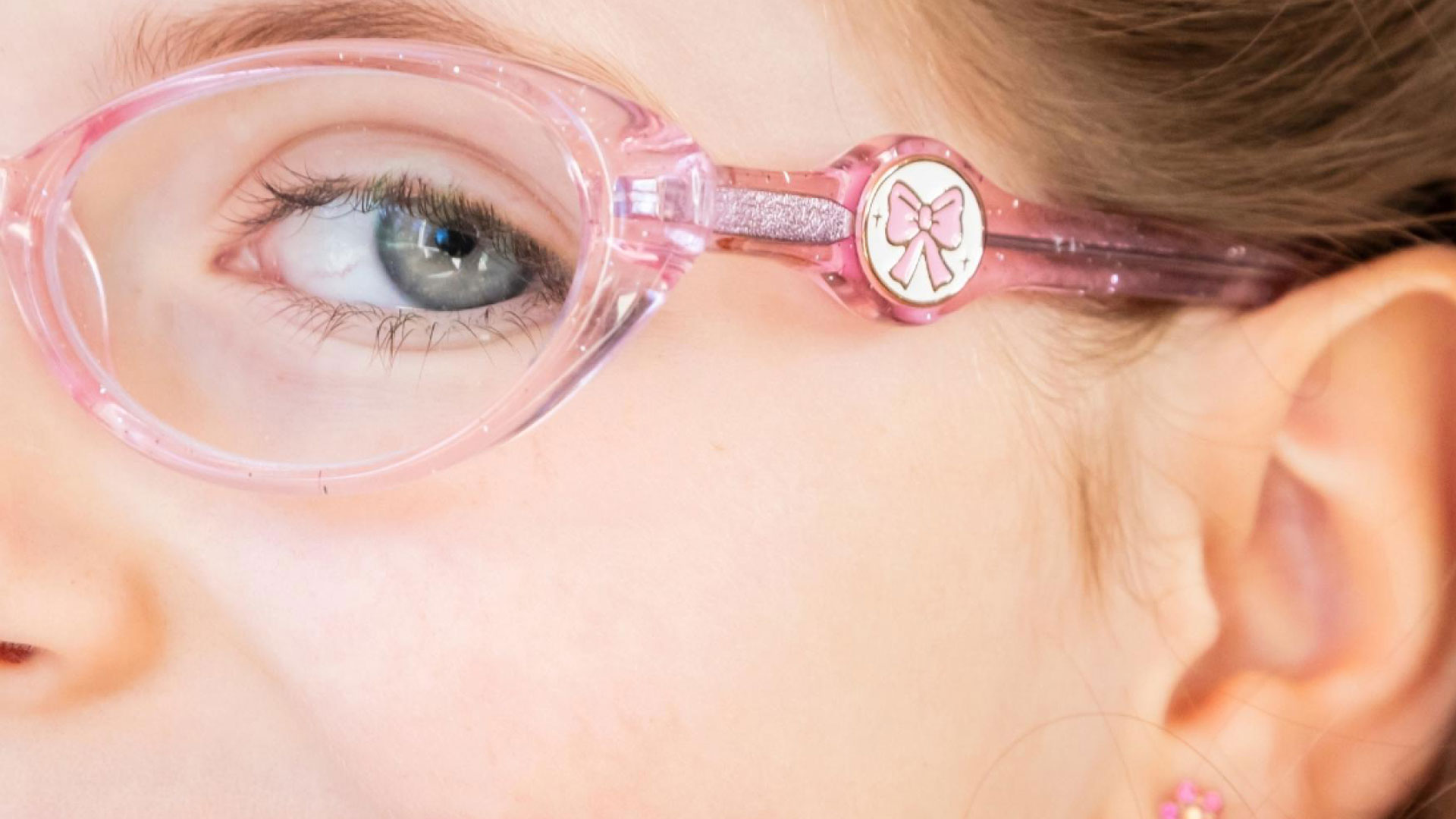
Once Upon a Charm reimagines children’s eyewear through a new design language shaped not only...

Hayley Martin is the founder of Once Upon a Charm Eyewear, a design-led brand reimagining children's prescription eyewear. Inspired by a gap between function and experience, she combines thoughtful design with a child-centered perspective to create eyewear that is as engaging as it is practical.
Thank you. I'm honored to be recognized, particularly in the Fashion – Eyewear category. I’m the founder of Once Upon a Charm Eyewear, a product design-led brand focused on rethinking children's prescription eyewear.
My path into design wasn't traditional. It emerged from recognizing a gap where function and experience were misaligned and realizing that thoughtful design could address both simultaneously.
The recognition is meaningful because it validates the work at a design level, not merely as a concept or a niche product. The MUSE Design Awards celebrate both aesthetics and functionality, and that dual recognition is central to what this product aims to achieve.
It reinforces the idea that children's products—particularly prescription eyewear—can, and should, meet the same standards of innovation, integration, and refinement as any other category.
It has shifted the conversation. The work is now being evaluated through a design lens rather than solely as a children's product, opening the door to more meaningful industry engagement.
It has also created opportunities to connect with partners and retailers who value design-led differentiation and are seeking products that bring genuine innovation to their category.
Experimentation is essential, particularly when the goal is to move beyond incremental improvement. In this case, it involved rethinking how customization could exist within eyewear.
Rather than applying interchangeable elements to the surface, we explored how that functionality could be embedded directly into the frame architecture. This required multiple iterations across materials, tolerances, and user interactions to ensure the mechanism felt intuitive, secure, and seamlessly integrated.
One of the more unexpected sources of inspiration was the bottom of my purse—not in a curated sense, but in the very real, slightly chaotic way it becomes a holding place for whatever my child decides is worth keeping: pebbles from a walk, shells from the beach, or a sticker that simply cannot be thrown away.
What stood out was how much meaning could be assigned to very small, interchangeable objects. That behavior—the collecting, the swapping, the quiet sense of ownership—informed the idea that customization should feel inherent and personal rather than added on.
In that sense, the foundational design draws less from traditional references and more from observing how value is created at a child's scale and through a child's perspective. The everyday chaos of my purse, and the realization that there is wonder in small collectible objects, became the true inspiration behind the design principles of my eyewear line.
That good design is often invisible. When something feels intuitive, seamless, and effortless, it is usually the result of significant problem-solving behind the scenes.
The most successful outcomes are rarely about adding more, but rather about resolving complexity in a way that feels simple and natural to the end user.
In this category, the "client" is not a single audience, but a group of stakeholders with different priorities: the optician deciding whether to carry the frame, the parent making the purchase, and the child who ultimately determines whether it will be worn.
Rather than designing to satisfy each stakeholder independently, I focused on a single guiding objective: wearing compliance. Many pediatric vision conditions depend on consistent use, so the design needed to address that first.
This shifted the question from "How do we appeal to each stakeholder?" to "How do we create something a child genuinely wants to wear?" Once that challenge was resolved, the other considerations—parental trust and optician confidence in the product—began to align naturally around it.
In that sense, balance is not achieved through compromise, but through prioritizing the outcome that matters most and allowing the rest to follow.
One of the most significant challenges was ensuring that the interchangeable charm system felt fully integrated into the frame rather than applied to it. The intent was always for the mechanism to sit flush and read as part of the frame's architecture, not as an added feature.
Early in the development process, that level of integration proved difficult to achieve. The initial engineering approach did not fully align with the design intent, particularly in how the system interacted with the frame both visually and functionally.
Resolving this required a difficult decision: transitioning to a new engineering partner who could approach the problem with the necessary precision and alignment. It was less about iterating within a constrained solution and more about resetting the foundation to ensure the concept could be realized as intended.
Maintaining that standard was critical because, once the integration is compromised, the entire design loses coherence. Adhering to that principle ultimately made it possible to deliver a product in which the functionality feels inherent rather than applied.
When I encounter a creative block, I step away from the work entirely and return to observing the end user. In this case, that means spending time in environments where children naturally interact—playgrounds, parks, or near the water—and simply watching how they move, play, and engage with the world around them.
It serves as a reminder that glasses are not an occasional accessory for a child. They are worn continuously, across a wide range of environments and activities. Reconnecting with that reality brings clarity to the design process.
Often, the solution is not found by pushing harder, but by shifting perspective. Stepping out of a design mindset and into a child's world has consistently revealed new insights, helped resolve creative stagnation, and reinforced the importance of the work itself.
A central value in my work is designing from the perspective of the end user rather than simply for them. In children's eyewear, that perspective is often overlooked. Much of the category consists of scaled-down adult frames or technically sound designs that prioritize fit but fail to connect with the child wearing them.
My approach was to lead the design through a child-centered lens. That meant closely observing real points of friction—frames slipping, pressure at the temples, and discomfort during extended wear—as well as the social and emotional experience of wearing glasses.
From there, the goal became twofold: to resolve functional challenges while rethinking how the product is perceived by the wearer and received by those around them. The integration of interchangeable charms was not simply decorative, but a way to transform the relationship between the child and the product—from something prescribed to something chosen.
The intention was to move away from designing what adults think children should wear and instead create eyewear that children genuinely want to wear.
If you have an idea you truly believe in, pursue it. Passion is often underestimated, yet it has a remarkable ability to sustain momentum through uncertainty, setbacks, and long development cycles.
Listen to feedback—it is an essential part of the process—but do not lose sight of your own intuition. The strongest design work often emerges from a clear point of view that is held with conviction.
Success in design is not just about execution. It is about having the clarity to recognize when an idea is worth committing to and the persistence to see it through.
I would choose Cecilie Manz. Her work is defined by clarity, restraint, and a deep respect for how objects are actually used. There is a quiet confidence in her designs, where nothing feels excessive and every element serves a purpose.
That approach is particularly compelling in a category like eyewear, where precision and usability are essential. A collaboration would be an opportunity to further refine the balance between function and form while continuing to distill the product to its most intentional and essential expression.
I wish people would ask what inspired me to reimagine eyewear for children. I rarely receive that question, but when I do, I often explain that I was motivated by the feeling that the category remained unresolved.
Children's eyewear has largely been treated as a scaled-down version of adult design or as a purely functional product, without fully considering the experience of the child wearing it.
Having a daughter who wears glasses made that gap impossible to ignore. It brought into focus both the physical realities of daily wear and the emotional experience that often goes unaddressed.
I wanted to approach the category differently—to create something that acknowledges both. The goal was not to add novelty, but to rethink the product in a way that feels thoughtful, engaging, and inherently personal.
At its core, the work is about designing with intention for a user who has historically been overlooked.