Designing Accessible Architecture through Virtual Reality
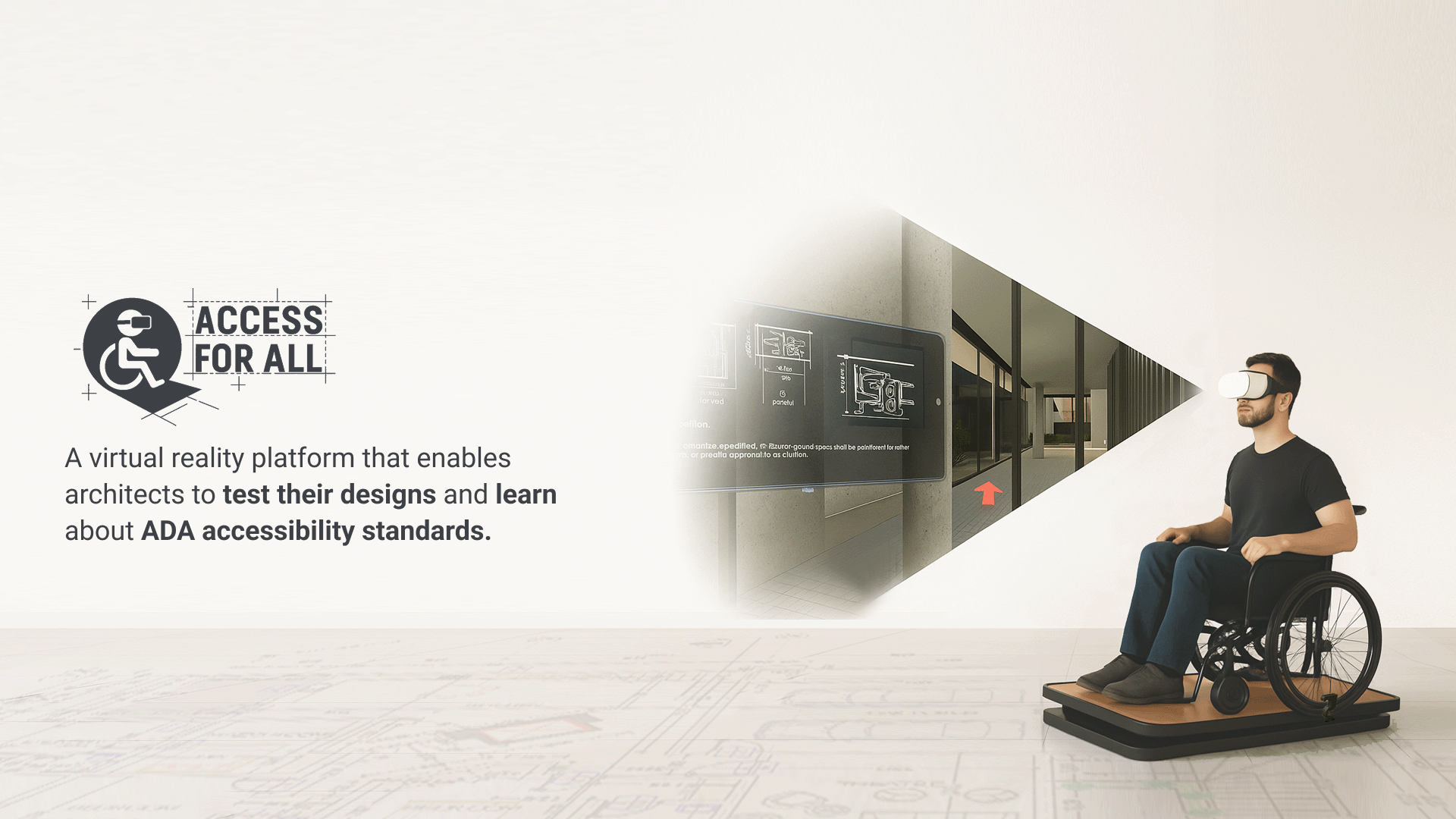
'Access for All' is a virtual reality platform that enables architects to test their designs...

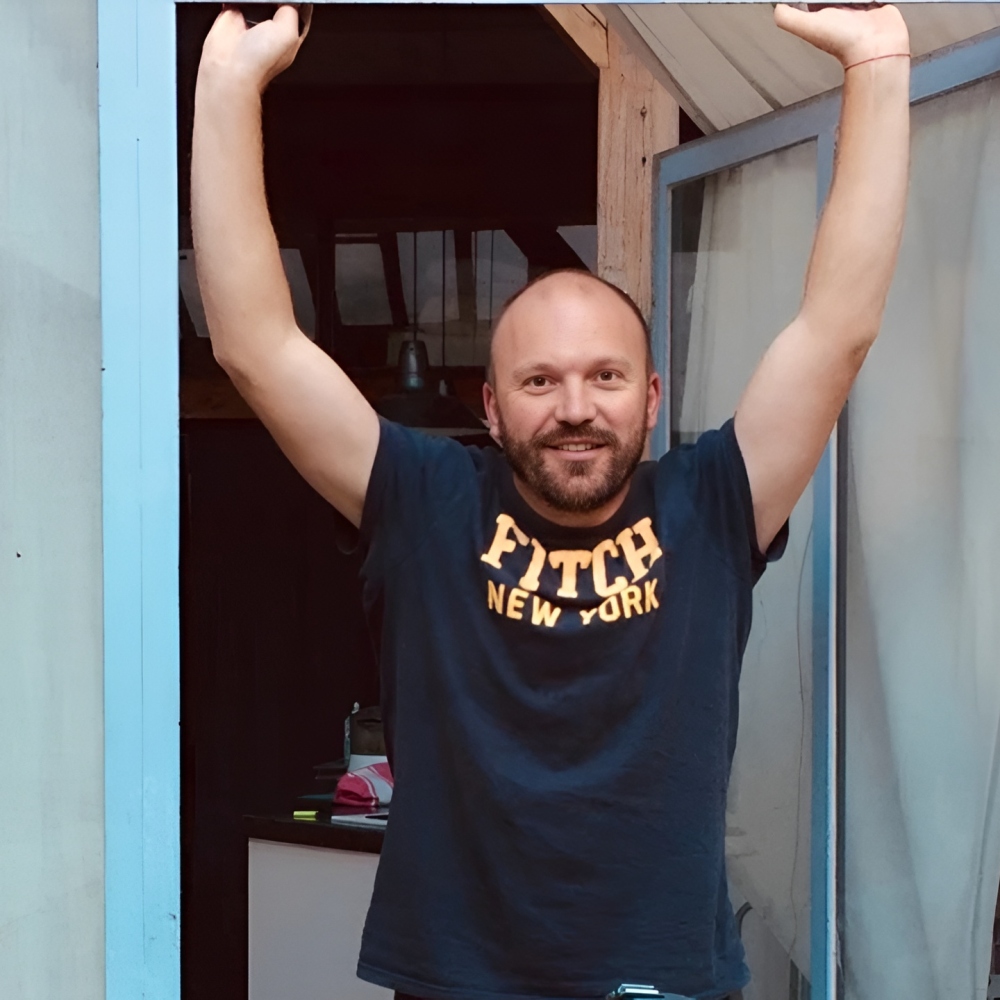
Zhenwen “Wayne” Zhang is a Senior Digital Product Designer whose work brings together architecture, interaction design, and product strategy to create digital systems that support inclusive decision-making. His recent VR initiatives allow teams in retail and built-environment industries to evaluate accessibility and customer experience with greater clarity before anything is constructed.
Thank you. I’m Zhenwen “Wayne” Zhang, a Senior Digital Product Designer focused on building large-scale digital systems, design frameworks, and enterprise-level tools. My background is in architecture, interaction design, and product strategy, which formed my obsession with how environments—physical or digital—shape human behavior.
What inspired my career path is the understanding that design can remove barriers and create participation. That’s what led to the VR platform that allows designers and architects to experience built environments from a wheelchair user’s perspective.
And now, building on its success, I’m designing the next MVP version for retail and supermarket environments. This new iteration helps retail experience teams and store planners simulate customer journeys in VR to evaluate accessibility, wayfinding, and inclusive design at scale. It bridges my product expertise with my current work in the retail industry and continues my mission of creating more inclusive environments.
It’s incredibly meaningful because this recognition goes beyond aesthetics — it acknowledges design as a catalyst for more accessible, equitable environments.
'Designing Accessible Architecture through Virtual Reality’ started as a passion project, not a client brief. It represents product thinking, experimentation, and problem-solving from the ground up. Being recognised tells me that the industry is paying attention to accessibility innovation, and that there is genuine demand for tools that can shift how design teams make decisions.
Winning the London Design Awards elevated my role as a Senior Product Designer working at the intersection of accessibility, emerging technology, and enterprise product strategy. It has sparked discussions with retail innovation teams, architects, and accessibility researchers who are exploring how VR can be integrated into planning and design operations.
Most importantly, it accelerated the next phase of the project: I’m currently building an MVP of Access for All for retail and supermarket environments, designed to help organisations simulate real customer journeys, test layout decisions, and identify accessibility barriers before stores are built or remodelled. This opportunity came directly from the visibility and conversations generated by the award.
It’s turning a passion project into a scalable product vision with real industry impact.
Experimentation is essential in my work because many of the challenges I tackle don’t have existing playbooks. As a Senior Product Designer, experimentation helps me de-risk decisions, validate assumptions early, and break down complex problems before they reach engineering.
For the project, experimentation meant testing VR locomotion methods, interface flows, and spatial layouts long before defining the final product direction. I created rough prototypes to validate how a wheelchair-height POV would affect perception, navigation, and emotional impact. These early experiments were what allowed the final product to feel authentic and meaningful.
One unusual source came from observing how delivery workers, parents with strollers, and seniors navigate public spaces. These groups often face the same barriers as wheelchair users: narrow paths, heavy doors, and uneven floors.
Watching their real-world behaviour sparked the idea that accessibility challenges aren't limited to one demographic—they’re systemic. That perspective shaped the “design for everyone” approach behind the project.
That product design is fundamentally about aligning across people, priorities, and realities. The process is not linear. It involves understanding constraints, negotiating with stakeholders, balancing technical feasibility, and driving clarity when many teams are involved.
A lot of the “invisible work” in product design is actually communication, facilitation, and decision-making—making sure the right problem is being solved and that teams are aligned around the same north star.
I focus on aligning everyone to outcomes instead of opinions. When I ground decisions in user needs, business goals, data, or accessibility impact, it becomes easier to show why a particular direction matters. I also prototype early so clients can see the potential, not just hear it. If tensions arise, I lean on evidence, testing, and clear rationale rather than personal preference.
My goal isn’t to push my idea through — it’s to arrive at a solution that solves the real problem with the least friction.
Two major challenges stood out:
1. Making VR accessibility simulation authentic and usable. It required balancing realism, comfort, and product feasibility. Through iterative testing and many prototypes, I refined locomotion mechanics, camera perspective, and environmental modelling to represent wheelchair navigation accurately.
2. Defining a scalable product vision. The project began as a standalone prototype. But as I explored how it could evolve into a repeatable, high-value tool for designers, I had to think like a product strategist: What’s the MVP? What’s the long-term roadmap? Who are the users? What problems matter most?
This thinking led directly to the next iteration: a retail-focused MVP designed to help large retailers and store design teams evaluate accessibility and wayfinding within supermarkets and big-box environments. This evolution required prioritisation, market research, and aligning the concept with real industry needs.
I step away from screens and observe real environments: grocery stores, airports, museums, busy streets. As a product designer, watching how people actually behave—not how we assume they behave—always unlocks new ideas. I also recharge through photography and sketching, which help me reconnect with spatial thinking and form.
Three values guide my work:
Empathy - I care deeply about removing friction and barriers, especially for groups whose needs are often overlooked.
Systems thinking - I naturally think in ecosystems—platforms, workflows, components, and repeatable frameworks.
Integrity - As a product designer, I believe in responsibility. Products influence millions of people; we have to build with intention.
My background in architecture also shapes my designs—space, movement, and accessibility remain at the centre of how I think about digital and physical experiences.
Learn how to define problems, not just how to solve them. Tools and visual skills are important, but what makes a strong product designer is the ability to frame challenges, ask the right questions, communicate clearly, and work collaboratively with engineering, research, and business partners. Design is not about perfection; it’s about progress, clarity, and impact.
I would choose Dieter Rams. His principles around clarity, usefulness, and reduction still influence modern product design at every level. His philosophy aligns closely with how I approach product decisions: remove noise, streamline complexity, and elevate what truly matters.
Question: Where do you see the project going next?
Answer: I see it evolving into a scalable simulation tool for multiple industries. I’m already designing the MVP for retail and supermarket environments, where accessibility challenges can significantly affect customer experience, store navigation, and operational efficiency. Retailers often rely on floor plans and mockups, but VR gives them a new way to “walk the journey” before decisions become expensive.
My hope is to build a platform that helps teams evaluate accessibility early—whether they’re designing campuses, stores, offices, or public spaces. Ultimately, I want Access for All to become a tool that empowers more inclusive decision-making across industries.
Read about Identity, Simplicity, and Purpose in Design: Hanqin Tang Shares His Foundational Process here.