TRACES OF WAR
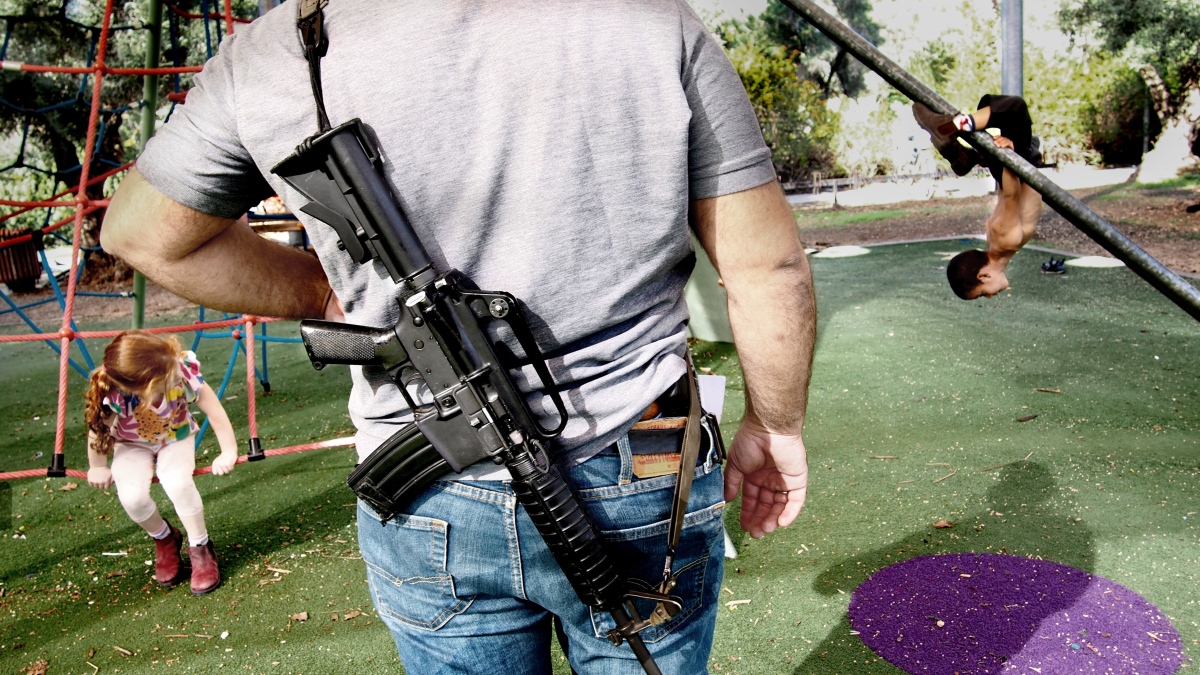
In the center, a man, the father of the young boy, carries a long rifle....
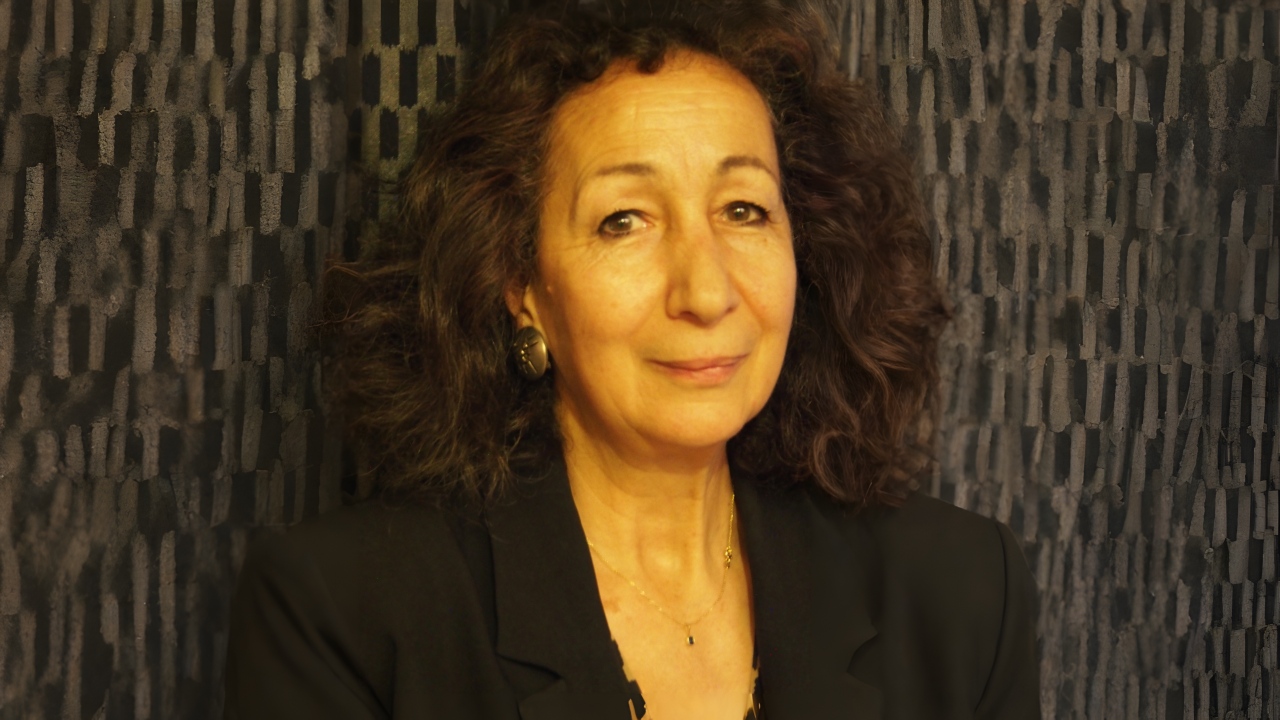
Trained in drawing at the École des Beaux Arts in Paris, Myriam Tangi uses photography to investigate the power of framing, capturing the spatial, emotional, and identity-driven aspects of her environment. From black-and-white film to her first digital color series, her work continuously balances intuition and thoughtful intention.
After graduating with a degree in drawing from the École des Beaux Arts in Paris, I began photography, through which I continue to explore framing: the sheet of paper, the canvas, the camera viewfinder are all rectangles to be constructed, in which to inscribe a vision, an intention, a thought, an emotion. My gaze is constantly evolving: today, my practice in photography is both spontaneous and intentional.
The award-winning photo is part of a series in which I attempted to convey the need for protection that was so sorely lacking on October 7, hence the series's subtitle: “Photography in Resilience.” Winning an award like the New York Photography Award is an exciting step in promoting the series to which this photo belongs. An award invites the public to look more closely.
I have been practicing black and white film photography since I started out, and I appreciate its depth and density. The photo that won the award is part of my first digital color series, which makes me want to explore color film photography.
I like to use a Leica AF: two focal lengths for instant shooting, reducing the time needed to capture the shot.
Emotion and questioning.
I like to observe what part of my environment is spatial, identity-related, or emotional. Framing the reality I am confronted with, from which I extract the echo that matters to me.
The great photographers of the second half of the 20th century, but given my pictorial practice, Renaissance painters and painting in general have also shaped my gaze, like “hidden” references behind reality.
Focus on the intention behind the shot and, if there is a series, choose the photo that best expresses it, in a move that is both instinctive and thoughtful.
Be curious, with your heart and eyes wide open.
Post-processing a photo is absolutely essential to bring out the best in it. I entrust this technical aspect to skilled professionals who have an eye for detail. It is from this collaboration that the final photo emerges.
AI can be likened to a painter's palette or a photographer's camera, given that the question of choosing details in a work of art is central and unavoidable. With AI, the work will be the result of an intention specified through words, the prompt. It is therefore a technically different creative process, and I would be interested in exploring it, but only by drawing on my own photographs, after clarifying the question of intention.
There is one moment in particular that I experienced that I would like to recreate “exactly as it was,” and that I was unable to photograph at the time.
Explore how Letting Light Speak: Inside BoQuan Chen’s Photographic Practice achieved a winning award in the New York Photography Awards by clicking here.