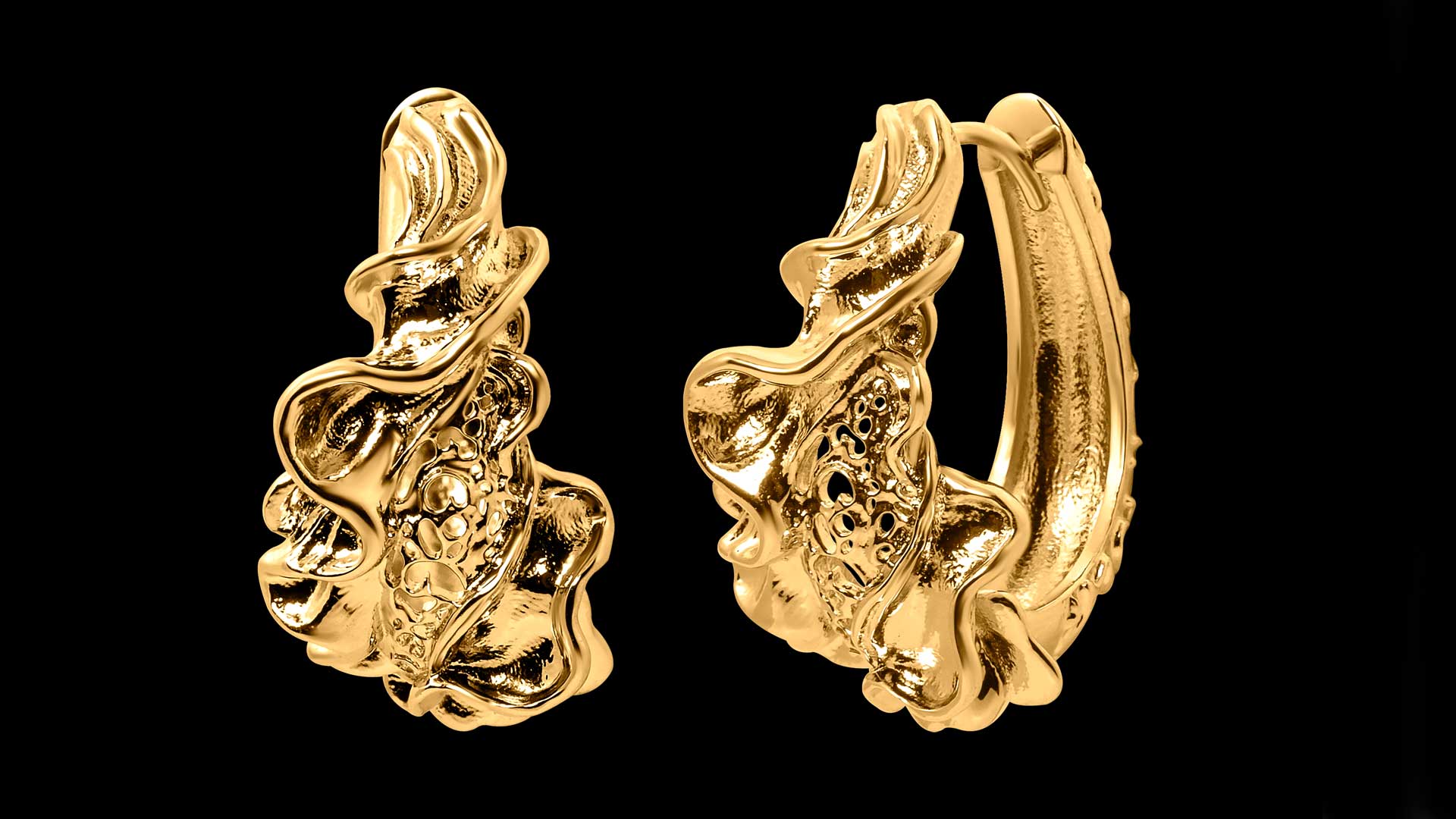
Frill Earring: The Unfading Gesture
Frill Earring by Mitsu Noib is a sculptural jewelry piece born from the tension between...

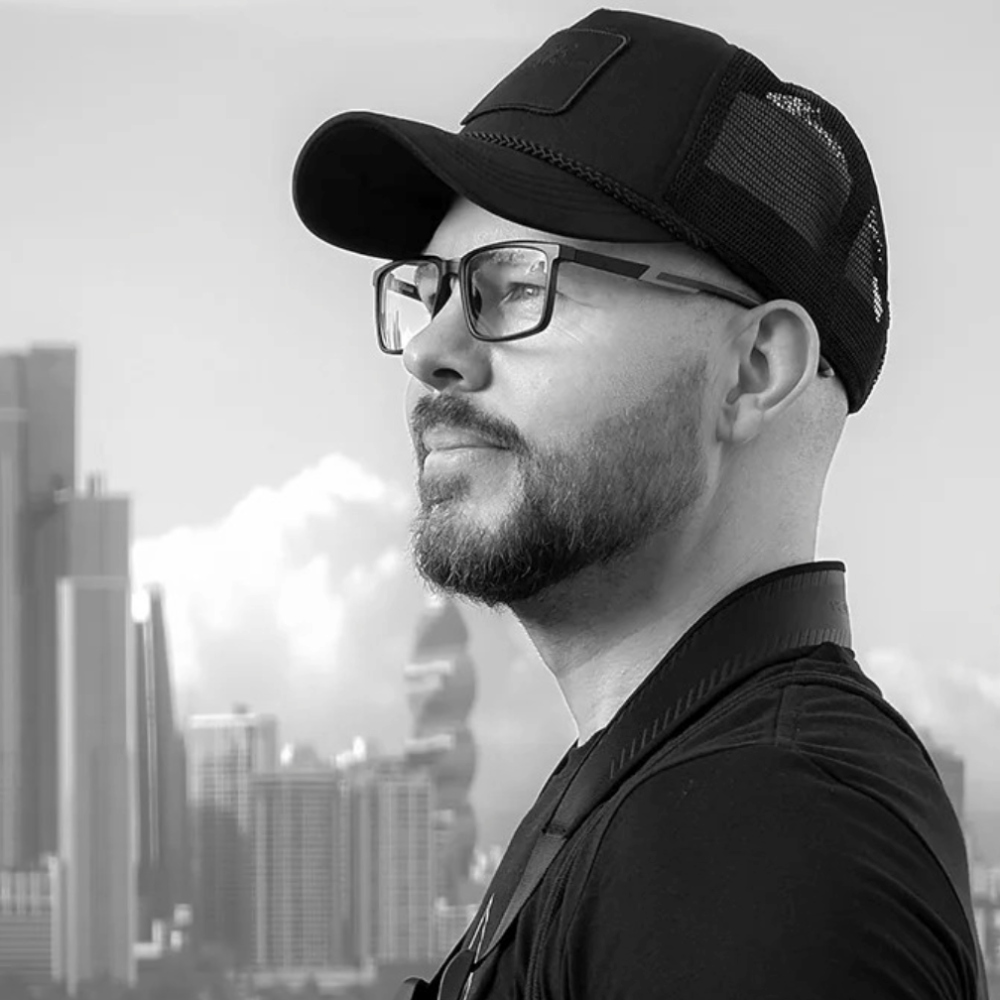
Bion Kim, founder and creative director of Mitsu Noib, transforms jewellery into wearable sculpture that embodies emotion and structure. With a background in Italy and years in metal workshops, she channels the tension between restraint and desire into designs that give physical form to emotional architecture.
My name is Bion Kim, the founder and creative director of Mitsu Noib, a premium jewellery house that approaches jewellery as wearable sculpture.
My background in Italy and the years I spent in metal workshops shaped my belief that emotion has structure, and that structure can be expressed through metal. I was inspired to pursue design because I am fascinated by the tension between restraint and desire. Jewellery became the medium through which I could translate that emotional architecture into physical form.
For me, creating a piece is not about ornamentation; it is about shaping a person’s inner landscape into a sculptural object they can wear.
Being recognised by the Rome Design Awards is deeply meaningful, as it affirms our vision on an international stage.
Mitsu Noib focuses on emotional structure, sculptural depth, and precision — values that are often difficult to categorise within traditional jewellery frameworks. This award acknowledges that our direction resonates beyond trends and markets.
It symbolises that our approach to jewellery as emotional architecture and refined structure is understood and appreciated within the global design community. It also strengthens our brand’s global positioning as we expand into the European and Middle Eastern premium markets.
Winning this award has accelerated Mitsu Noib’s global momentum.
We are receiving an increasing number of collaboration enquiries from Europe and the Middle East — particularly from concept stores, fashion brands, and creative agencies that resonate with our sculptural direction.
For our team, this recognition has reinforced our commitment to craftsmanship, emotional depth, and technical precision. It has opened doors to new partnerships, expanded our international visibility, and strengthened our long-term goal of establishing Mitsu Noib as a distinctive premium jewellery house with a sculptural identity.
This achievement serves as both validation and motivation as we continue building the next chapters of our brand.
Experimentation sits at the core of my creative process. It is not about randomness; it is a disciplined search for new emotional structures. I often reinterpret architectural or historical motifs by repeatedly deconstructing them until only their essence remains.
Through this process, I uncover unexpected forms that carry emotional tension. For example, in one of our recent collections, I examined the internal structures of ancient metalwork and merged them with the emotional logic of our 3-Layer Emotion Model.
After countless sculptural refinements, the final forms appeared both fluid and rigid, as if the metal held a quiet tension within. These experiments allow Mitsu Noib to maintain a sculptural language that is both innovative and emotionally resonant.
One of my most unusual inspirations came from witnessing the tension within architectural ruins — how fractured structures still preserve traces of their original intent. The incomplete lines, exposed frameworks, and silent strength of these forms resonated with me as emotional metaphors.
Rather than recreating them literally, I translated the feeling of incompleteness into jewellery: intentional voids, off-balance symmetry, and subtle distortions that reflect the coexistence of vulnerability and resilience.
This unexpected source allowed me to create pieces that feel ancient yet contemporary, fragile yet firm, aligning with Mitsu Noib’s philosophy of emotional architecture.
I wish more people understood that true design is not about creating something “beautiful” — it is about uncovering the internal logic behind that beauty. A piece may appear simple, but the emotional and structural decisions behind it require precision, restraint, and countless revisions.
In my work, every angle, void, and thickness carries emotional meaning. The process is closer to sculpting an internal narrative than embellishing an object. Good design is invisible discipline: hundreds of decisions that shape a form that feels inevitable.
I approach client expectations as a dialogue of intentions rather than compromises. The key lies in understanding the emotional core of what a client wants and reinterpreting it through Mitsu Noib’s sculptural language. This ensures the work remains aligned with our identity while capturing what the client truly seeks beneath the surface.
By grounding each design in emotional structure rather than literal requests, I maintain artistic integrity while creating pieces that resonate deeply with clients. Staying true to my ideas is not about insisting on form, but insisting on meaning.
One of the greatest challenges was achieving the right balance between emotional intensity and structural discipline. Mitsu Noib’s work demands a sculptural language that feels expressive yet controlled, and finding that equilibrium required many iterations and moments of reassessment.
Another challenge lay in preserving the purity of the concept while ensuring the final form remained wearable and structurally sound. I constantly refined proportions, negative spaces, and tension lines to maintain both artistic integrity and physical functionality.
I overcame these challenges by returning to the emotional core of the piece. Whenever the form felt uncertain, I revisited the underlying narrative — the specific emotion or internal architecture it needed to convey. Allowing emotion to guide structure ultimately led me to the final design.
When I encounter a creative block, I step away from the form and return to the emotional atmosphere surrounding the work. Rather than forcing new ideas, I reconnect with environments — architecture, music, or silent spaces — that shift my internal state. This allows me to realign emotionally before engaging with the structure again.
I also revisit fragments of past sketches or unfinished concepts. They remind me that creativity is not a linear process, but a cycle of tension and release. By allowing myself to breathe within that rhythm, clarity eventually returns.
Ultimately, recharging my creativity is about returning to the essence of why I design: to give form to emotion. Once I reconnect with that purpose, the path forward becomes visible again.
I infuse a deep sense of emotional honesty and inner tension into my designs. Growing up, I often observed the quiet spaces between people — the unspoken emotions, the restrained desires, and the fragile boundaries that shape our individuality. Those experiences taught me that emotions always carry structure, and structure always carries emotion.
In my work, I translate these internal dynamics into form. Every asymmetry, line of tension, and controlled curve reflects moments of introspection and the discipline required to transform raw emotion into something wearable. My designs become a way of giving shape to feelings that cannot be spoken, but can be sensed.
My advice is to build a dialogue with yourself before seeking validation from others. True design begins when you understand what you want to express and why it matters. Trends can be studied, but identity must be earned.
Refine your discipline as much as your imagination. Creativity without structure fades quickly, and structure without emotion becomes empty. The most compelling work emerges when both coexist with clarity.
Finally, allow yourself to evolve. A designer’s growth is not linear — your failures, doubts, and restarts are part of the language you are building. Trust that process, and your work will eventually speak for you.
I would choose to collaborate with a designer who understands the dialogue between emotion and structure — someone who sees beauty not only in decoration but in tension, restraint, and silence. Among many, I am particularly drawn to the architectural minds of the past, such as Carlo Scarpa.
His ability to create depth and emotion through precise structural language resonates deeply with the philosophy of Mitsu Noib.
A collaboration with a designer like him would be a conversation between eras: his disciplined architectural sensibility meeting my pursuit of emotional form. It would be an exploration of how structure can speak, and how emotion can be built.
I wish I were asked, ‘What emotion were you trying to give shape to in this piece?’ Every piece I create begins with an emotion, not an object. Before the form exists, there is a tension — something unresolved, restrained, or quietly burning beneath the surface.
My work is an attempt to translate that inner movement into structure. When someone asks about the emotion behind a piece, it shows they are looking beyond the aesthetic and into the reason the form exists, allowing the work to be understood from the inside out, exactly as it was created.