PLUS Tutoring
Most AI education products put a chatbot in front of the student. PLUS took the...

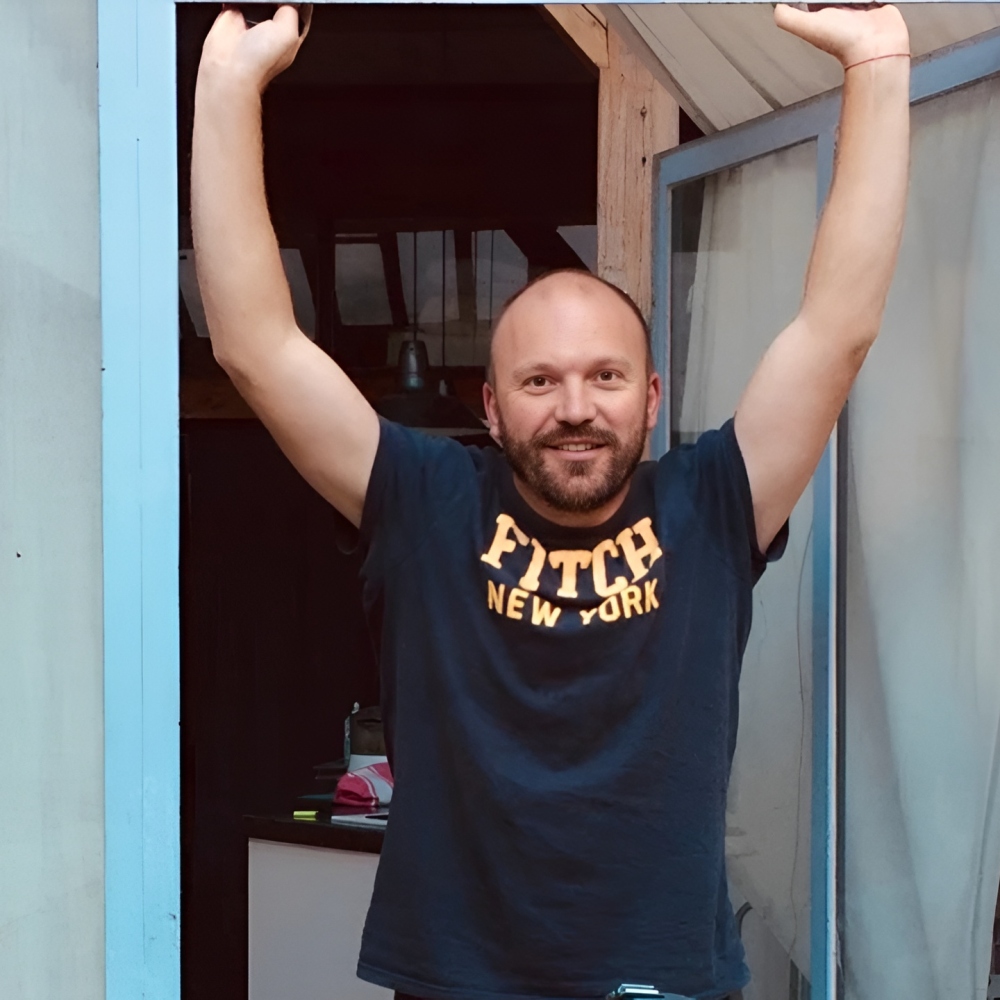
I’m Boyuan Guo—most people call me Bill. I’m a product designer working in education technology and currently part of the team behind PLUS, an AI-augmented tutoring platform that supports one-on-one math instruction for K–12 students.
What drew me to design was the ability to shape systems rather than just artifacts. In education, especially, the real challenges are often structural: how teachers prepare, how tutors receive feedback, and how learning progress becomes visible. Design offers a way to organize these systems so people can make better decisions in the moment. That systems perspective is what originally drew me to the field.
It’s meaningful because the project operates in a space where design is often invisible. Most conversations around AI in education focus on the technology itself, but our work with PLUS highlights the role design plays in shaping how that technology interacts with people.
Recognition like this validates the idea that thoughtful service and interaction design are just as important as the underlying algorithms.
This recognition has helped bring attention to a design challenge that isn’t always immediately visible: building infrastructure for human-supported AI systems.
PLUS was developed by a small, interdisciplinary team of designers, engineers, and learning scientists working closely together. The award has allowed us to share the thinking behind this work and open up conversations with educators, researchers, and organizations interested in similar approaches.
Experimentation is essential when designing systems that involve both humans and AI, as behavior can shift quickly depending on how information is presented.
During the development of PLUS, we explored different ways tutors could receive support during live sessions. Early versions emphasized analytics and metrics, but tutors needed concise prompts tied to the moment of instruction. This insight led to the “co-pilot” interaction model—where AI surfaces strategies and student momentum signals in real time without interrupting the tutor–student interaction.
Service blueprints played a central role. For the PLUS platform, we mapped every interaction across four roles—students, tutors, supervisors, and researchers—throughout the entire tutoring lifecycle.
This exercise revealed something unexpected: the highest-impact design opportunities were not within the tutoring session itself, but in the surrounding moments—tutor preparation, coaching, reflection, and operational oversight. That insight ultimately shaped the product’s overall architecture.
Many important design decisions are invisible.
In this project, the core work wasn’t about interface visuals—it was about structuring a system where AI could strengthen the tutor–student relationship without replacing it. This involved designing how information flows between tutors, supervisors, and researchers, and determining where AI should assist quietly in the background.
I try to center discussions on outcomes rather than design preferences. In education technology, the key question is always whether something helps people teach or learn more effectively.
When the conversation is grounded in those outcomes—better tutoring sessions, clearer feedback loops, and stronger supervision—it becomes easier to evaluate different design directions objectively.
One challenge was designing an AI platform within a team structure that changes frequently. The design team includes 10–15 student designers who rotate every 6–9 months.
To make this sustainable, knowledge couldn’t reside with individuals—it had to be embedded in systems. We addressed this by developing a robust design system, structured documentation, and clear workflows that enable new designers to contribute within weeks. The team itself became a renewable system, where each cohort inherits and strengthens the process.
I usually return to observing how the system actually operates. In projects like PLUS, watching how tutors prepare for sessions or how supervisors monitor program health often reveals design opportunities that weren’t immediately apparent.
Returning to the real environment often unlocks ideas more effectively than staring at a blank design canvas.
Accessibility and efficiency are both important to me.
PLUS began with a simple premise: expert tutoring shouldn’t be a luxury. Traditional one-on-one tutoring can cost families thousands, while our platform makes it more accessible by supporting tutors with AI. Designing systems that expand access to expertise is something I care deeply about.
Learn to understand the system surrounding the product.
In this project, design decisions extended beyond interface screens to include philanthropy models, tutor training pipelines, AI workflows, and educational research. The broader your understanding of the system, the more meaningful your design contributions become.
Jeffrey Bernett. I recently attended one of his talks at Pentagram and was inspired by how he approaches design as a system rather than a collection of isolated artifacts.
His work on designing environments and workplaces is particularly compelling, especially in how he connects productivity, spatial design, and insights from sports into his practice. That mindset—considering how environments shape behavior—resonates strongly with the systems design approach we apply in digital products.
I wish more people would ask, “Where should AI actually sit within a system?”
Many products place AI directly in front of users as a chatbot. In PLUS, we took the opposite approach—positioning AI behind the human tutor. Students never interact with the AI directly; instead, it supports tutors through simulation training, real-time strategy guidance, and post-session coaching.
Sometimes, the most powerful AI is the kind users never see.