
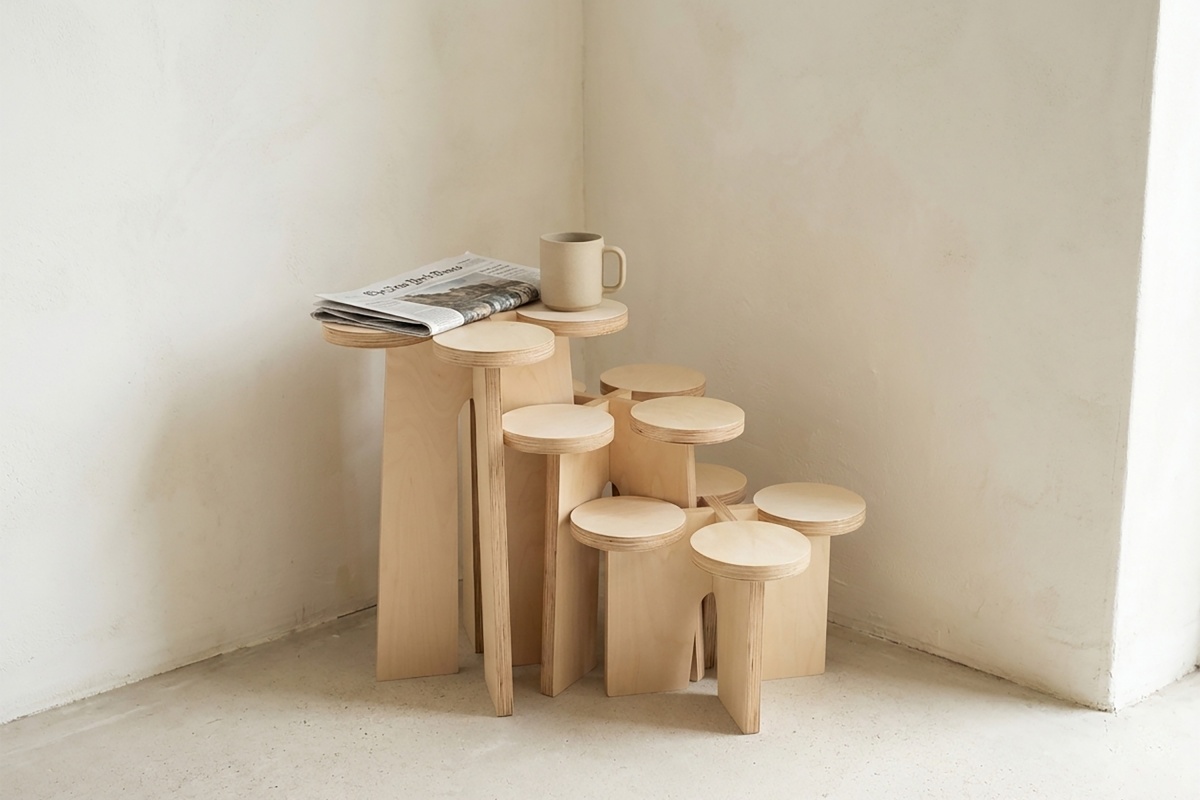
Fractal System
Inspired by fractal formations, Fractal System offers a set of non-directional, nestable objects that can...

Xubai Li is a multidisciplinary designer working across object-making and spatial design after an early career in graphic design. Inspired by sculpture, fashion, and classical Chinese literature, she creates works that challenge functional expectations and prioritise conceptual spatial experience.
My background is originally in graphic design and branding, but my graduate studies shifted toward object-making and spatial design. I was inspired early on by a Henry Moore sculpture I saw in my childhood. Its tenderness, spatial serenity, and editorial intuition showed me that art and design have crossed paths, sparking my drive to create objects that occupy space with a conceptual presence rather than just serving as functional furniture.
It means a recognition that I’m super grateful for. I’m glad to be reviewed and perceived by the design peers and judges. And I get to see many other incredible designs this year.
So far, it’s very early in the process, but I have been reaching out to fellow designers who are sharing this moment with me in the competition.
Experimentation is critical, particularly through digital fabrication. I rely on 3D modeling and 3D printing to fabricate smaller testing samples. This iterative experimentation allows me to physically test the visual elegance, the ratio, the "hide-and-seek" spatial play, and the subtlety of unbalanced compositions before committing to full-scale manufacturing.
I draw heavily from other disciplines, which isn't always common in industrial design. For example, my switch light, "Turn on Light," carries a distinct formal similarity to the avant-garde fashion design of Maison Margiela. I also draw deeply from ancient Chinese texts, using them as comparative literature to Western design progressions (like modernism and postmodernism) to explore metamodernism in my work.
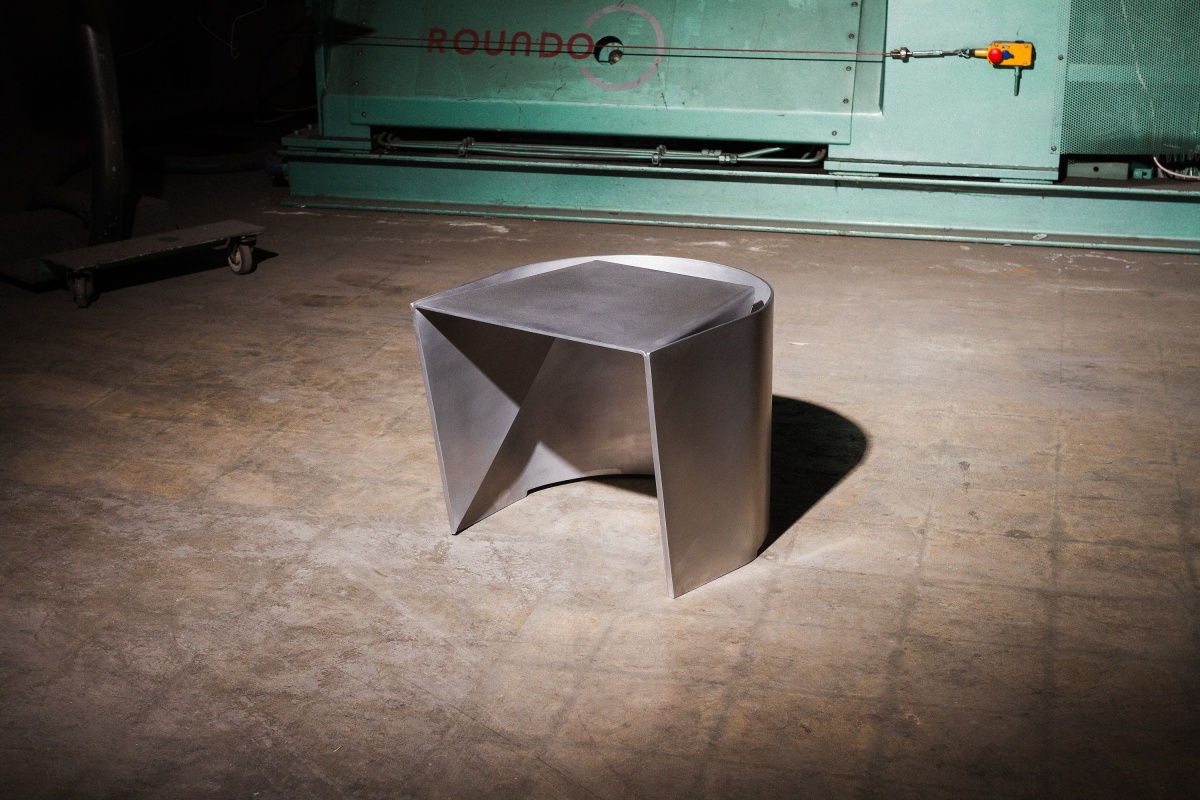
As for the pieces I have submitted, I think what people could focus more on is the deconstruction: how a certain product silhouette is made and how people perceive it. If it’s for the design in general, I wish more consumers would be more imaginative as to how a product should be used.
I’m not particularly referencing some all-in-one multitasking sort, but how one piece of furniture could exist in space and time. More often than not, the classics are not the ones catering for the trends in the moment but the aesthetics in the environment while maintaining a functional presence.
I think it’s about understanding and communication, but also knowing the right time to let go.
For Fractal System, there were a lot of hiccups around the layering and tiering among modules and for Uni Side Table, the process was quite fast.
I just rest and let my mind go blank. The key to rejuvenation is actually not thinking at all. It’s not a very stereotypical answer, but it’s what works for me.
My background in Chinese culture certainly helps a lot, not in a way of carving a yin-yang symbol on the wood. But it is present in the deconstructive method of design. It’s the drive or obsession to analyze what makes a chair a chair or a table a table. The idea of getting to the existential core of an object is actually quite in line with Taoist beliefs.
See more, outside of the discipline.
I would choose to collaborate with Henry Moore, for his unmatched spatial serenity, or Maison Margiela, for their brilliant deconstructive ethos.
“Why this?” My answer would be just “because you like it,” and there’s no further explanation to be made. Curiosity explains many things.
Read the Interview with Yash Rathod Through His Relationship Between Light and Human Experience through this link here.






.jpg)