iTranquil — Beyond Driving
iTranquil, a collaborative initiative supported by the Jacobs Institute for Design Innovation and the BMW...

Clover Li is a designer, computational artist, and entrepreneur working at the intersection of emerging technology and human experience, turning complex systems in AI, mobility, energy, and industry into intuitive, human-centered design.
I am a designer, computational artist, and entrepreneur whose work explores how emerging technologies can be transformed into meaningful human experiences. My background spans design, technology, and innovation, and I hold degrees from New York University and the University of California, Berkeley.
I began my career in visual design, user experience, and digital product design, where I developed an interest in helping people better understand complex technologies. Over time, this interest expanded beyond traditional digital products into areas such as artificial intelligence, industrial systems, and future mobility.
Today, my work spans industries including energy, mobility, and emerging technology, with a focus on making technical innovations more accessible and understandable to the people who use them.
I submitted iTranquil because it represents a design philosophy that I care deeply about: using technology not only to improve efficiency, but also to enhance human well-being.
Winning the Vega Digital Awards was especially meaningful because it provided international recognition for my contributions to human-centered innovation in digital design. Professionally, it demonstrates that thoughtful digital experiences can create value across industries. Personally, it reinforces my belief that design can help foster a more supportive relationship between people and technology.
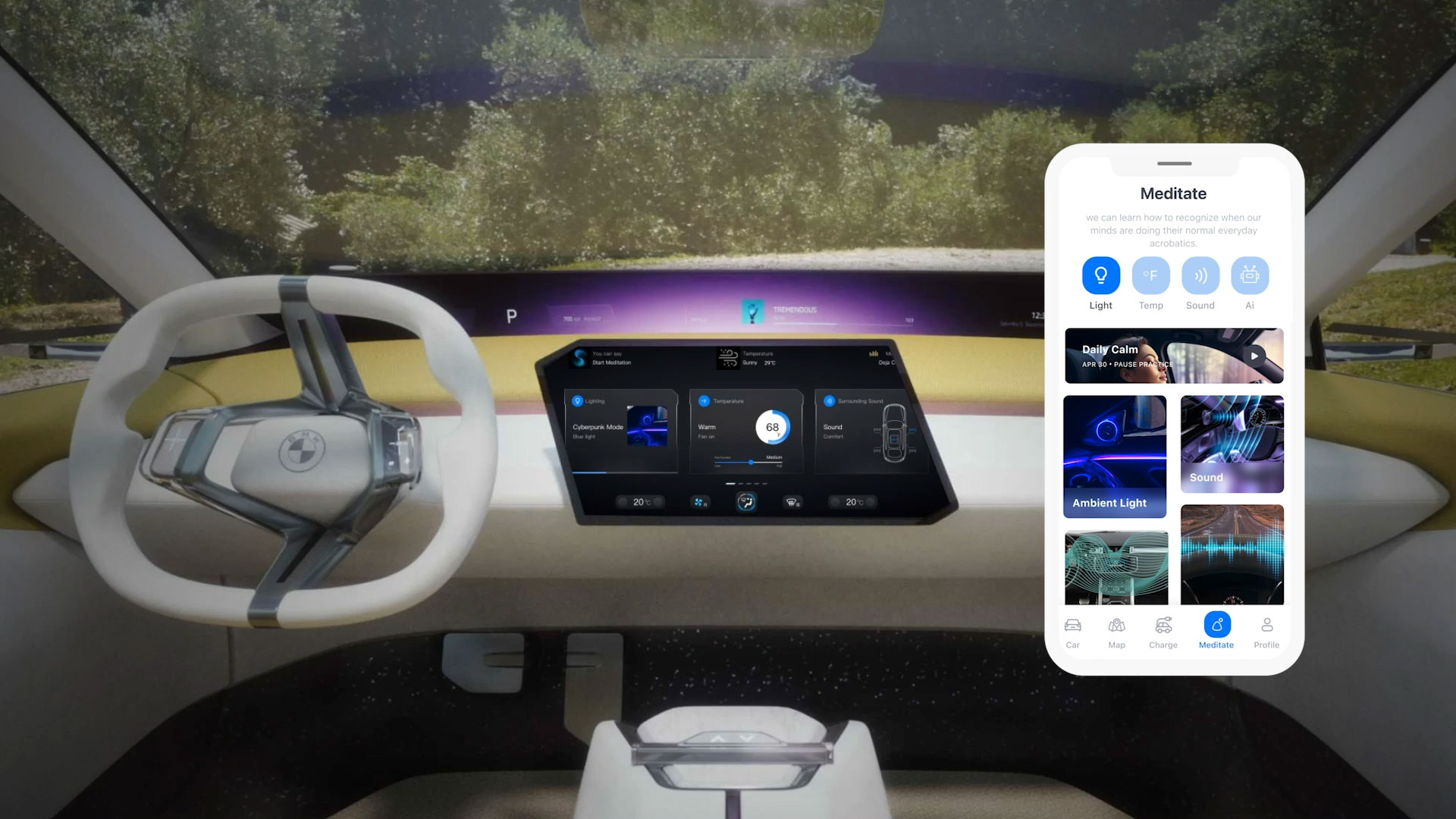
iTranquil emerged from a collaboration between the UC Berkeley Jacobs Institute for Design Innovation and the BMW Group focused on exploring the future of digital sustainability and wellness in mobility. We began with a simple question: What if a vehicle could provide more than transportation and become a restorative environment during moments of stress, fatigue, or emotional overload?
The project reimagined the BMW vehicle as a digital wellness ecosystem by connecting mobile applications, in-car interfaces, ambient lighting, privacy controls, and environmental systems into a unified experience. Rather than introducing another feature, we explored how existing digital infrastructure could be orchestrated to create meaningful emotional value for users.
I believe the project reflects an important shift taking place across industries today. Increasingly, the challenge is not creating more technology, but designing technology that better supports human needs. My role focused on translating this principle into a cohesive digital ecosystem that integrated multiple technologies into a seamless user experience.
That same principle has guided my work across sectors, from mobility projects with BMW to digital solutions for global energy companies such as NOV and SLB. Across these diverse industries, I specialize in transforming complex technical systems into experiences that are intuitive, valuable, and accessible to users.
What distinguished iTranquil was its systems-level approach to innovation. Rather than introducing a standalone feature, we designed an integrated digital ecosystem that connected multiple layers of the BMW experience, including mobile applications, vehicle interfaces, environmental controls, and privacy features.
Throughout my career, I have focused on helping people understand and engage with complex technologies. In the automotive industry, that meant transforming existing vehicle systems into a cohesive wellness experience. In my work with organizations such as NOV and SLB, it has involved translating sophisticated engineering and data-driven technologies into accessible digital products, communication platforms, and user experiences.
Although these industries differ, the underlying design challenge remains remarkably similar: making advanced technology intuitive, meaningful, and valuable to the people who use it.
One of the biggest challenges was balancing visionary thinking with technological feasibility. Rather than proposing purely speculative concepts, we grounded every design decision in BMW’s existing digital ecosystem, identifying opportunities within current technologies to create a solution that was both innovative and practical.
This recognition highlights the value of interdisciplinary design at the intersection of technology, business, and human experience. It reinforces the idea that strong digital design can create impact across industries—from mobility to AI and industrial systems—through consistent principles of clarity, empathy, and innovation.
One of the most rewarding aspects of the project was seeing how strongly people connected with the idea. Discussions focused less on the technology and more on the emotional experience it created.
This reinforced my belief that people increasingly value technology that supports well-being, and that digital innovation can be both technically advanced and emotionally meaningful.
Focus on solving meaningful problems rather than pursuing recognition. Strong work emerges from clear purpose and cross-disciplinary collaboration across design, technology, engineering, and business. Awards often reflect not only creativity, but also relevance, execution, and real-world impact.
The digital industry is entering a period in which artificial intelligence, automation, and connected systems are becoming foundational components of nearly every product and service. While these technologies continue to advance rapidly, I believe the defining challenge is ensuring they remain understandable, trustworthy, and beneficial to people.
Throughout my career, I have worked across multiple industries, from future mobility collaborations with BMW to digital transformation initiatives for global energy organizations such as NOV and SLB. These experiences have reinforced my belief that innovation is most impactful when technical sophistication is matched by thoughtful design, communication, and user experience.
Looking forward, I hope to continue developing digital solutions that bridge complex technologies and human experience. Whether through AI-driven systems, industrial automation platforms, emerging interfaces, or next-generation digital products, my goal is to help organizations translate technical innovation into meaningful real-world value.
Do not wait until you feel fully ready. Competitions are valuable not only for recognition, but also for reflection and growth. Every accomplished designer starts somewhere, and sharing your work creates opportunities for feedback, learning, and connection.
Often, the greatest value comes from participation and from building confidence in your own voice.
Technology alone does not create impact. Impact emerges when technology, design, and human needs are aligned. As industries become increasingly digital, I believe our responsibility is not only to build smarter systems, but also to make them more inclusive and meaningful.
The future belongs to those who can bridge technical innovation and human experience.
I dedicate this achievement to my teammates, Jin Yutao and Bao Qiancheng, whose collaboration and dedication helped bring the project to life. I would also like to acknowledge Purin Phanichphant, our professor at the Jacobs Institute for Design Innovation at the University of California, Berkeley, whose guidance and support were instrumental throughout the project.
Working with the Jacobs Institute for Design Innovation and BMW created an environment that encouraged experimentation, curiosity, and interdisciplinary thinking. Their support helped transform an ambitious idea into a meaningful design exploration.
iTranquil reimagines the automobile as a digital sanctuary that supports both movement and well-being. I believe this reflects the project’s core idea: extending technology beyond functionality to create experiences that positively shape everyday life.
I am continuing to explore how AI, computational systems, and emerging technologies can create new forms of human-centered experiences. My work spans digital product innovation, computational art, and technology-driven communication systems.
Looking ahead, I am particularly interested in developing solutions that help people better understand and interact with increasingly complex technologies. Across mobility, energy, and emerging digital ecosystems, my goal is to create work that connects technical innovation with human value.