Elves Kiss: Crystal Healing WeChat Mini Program UX Design
Elves Kiss is an innovative WeChat mini-program anchored in crystal energy, integrating commerce, DIY customization,...

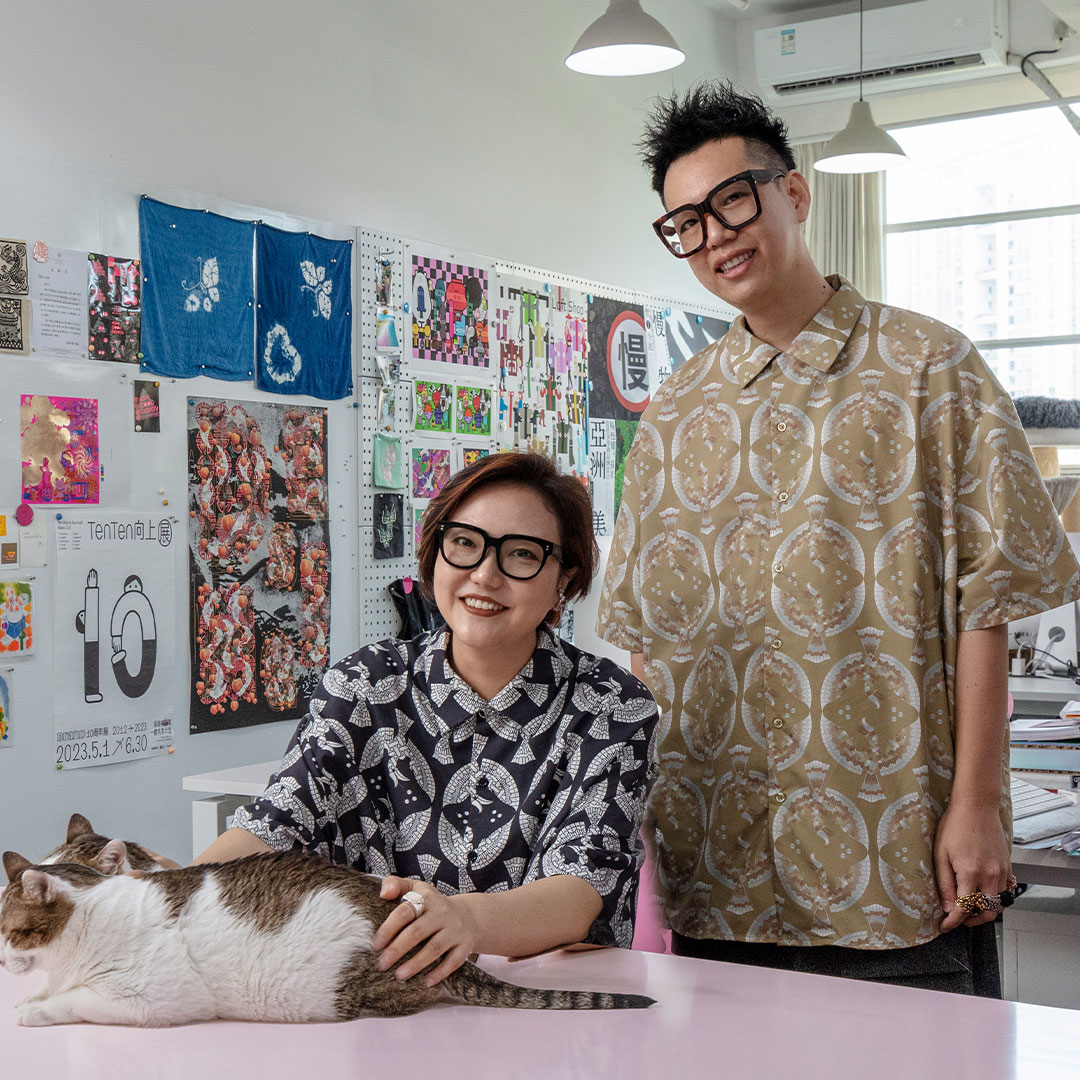
Jianjun Wong is a UI designer with over a decade of experience, driven by an instinctive pull toward design. Originally trained in history, she approaches design as a means of connection—linking people, ideas, and experiences on a deeper level.
I believe it began with an instinctive pull toward design. Although I majored in history during my undergraduate studies, I chose to follow my genuine interest after graduation and stepped into the field of UI design, where I have been deeply engaged for over a decade.
Throughout these ten years, I have continuously refined my skills and gained valuable experience. More importantly, I have come to see design not just as a profession, but as a means of connection—connecting with the world, with myself, and with my clients on a deeper level. That sense of connection is what makes design truly meaningful to me.
To me, this recognition represents an important milestone. Submitting this project was not part of my original plan—it was more of a spontaneous decision.
However, the MUSE Design Awards has always been a platform I admire. This project was built on a strong foundation, as the client’s product itself was exceptional, allowing me to fully integrate my previous experience in mind–body–spirit-oriented design.
In many ways, this work is not just a single project, but a concentrated expression of my design thinking over time. Being recognized by the MUSE Design Awards is both a meaningful encouragement and a significant milestone in my journey as a designer.
As this recognition is still very recent, the opportunities it brings are still unfolding. What matters most to me at this stage, however, is the sense of direction it reinforces.
This year, I transitioned from working at a leading internet company to becoming an independent designer, gradually shaping my own studio practice. Receiving recognition from the MUSE Design Awards at this moment offers strong validation that my exploration of mind–body–spirit-oriented design is both seen and valued. It also helps guide my future direction—from the projects I choose to how I express and deepen my work, I am becoming more focused and intentional.
At the same time, it has already begun to open up new connections. Whether in conversations with clients or in how others perceive my work, communication has become more fluid and aligned. In many ways, this growing clarity is an early sign of emerging opportunities.
In addition, I will be attending the award ceremony in Kuala Lumpur this November. For me, it represents not only an opportunity for in-person international exchange, but also an important moment to position myself within a broader design context.
I see this recognition as a starting point rather than a final result.
For me, experimentation is not a separate stage, but a methodology that runs throughout the entire creative process.
In my work, I pay close attention to intangible aspects—such as atmosphere, subtle presence, and forms of energy that continuously influence perception yet cannot be directly measured. At its core, my process is about translating the invisible into something perceivable through design.
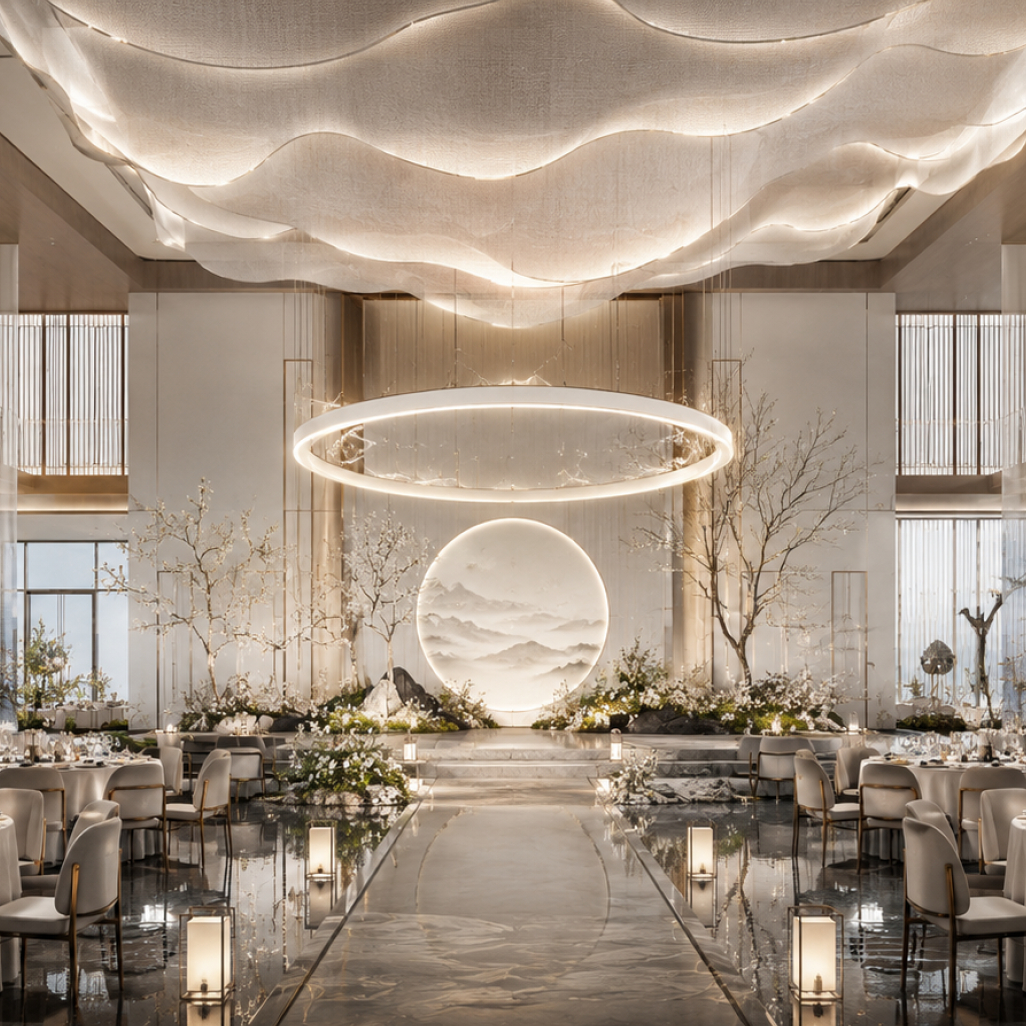
To achieve this, I work with light, materiality, and spatial relationships as primary mediums. Through the movement and reflection of light, the transparency and layering of materials, and the tension within spatial structures, I aim to create a sense of clarity and stability that extends beyond mere visual form.
In this project, I continuously refined the relationship between crystal arrangements and light, allowing these intangible qualities to emerge as a cohesive atmosphere.
Ultimately, this process is an ongoing experiment—exploring whether invisible energies can be made perceptible through design.
For me, inspiration is not confined to a single domain, but emerges from identifying shared qualities across different contexts.
On one hand, I often begin with human states, using internal perception as a starting point. On the other, I draw from nature and local cultural contexts—such as material expression, spatial atmosphere, and the sense of time embedded within them.
For example, in a previous project, I was inspired by the restraint and subtle warmth of Ru ware, as well as the strong sense of locality and spatial order found in Aman resorts. Although these references come from entirely different fields, they share a common sensibility. I translated these qualities into the design of an educational product.
In this sense, what makes my approach to inspiration distinctive is not the source itself, but the process of crossing disciplines—extracting and recombining shared perceptions, and ultimately translating them into a coherent design language.
I wish more people understood that the apparent simplicity of design is often the result of a highly complex process.
In interface design, for example, what is ultimately presented is a clear and restrained outcome. Beneath that simplicity lies extensive work—from filtering information and restructuring systems to carefully calibrating perception and experience. Design is not about adding more, but about refining and reducing complexity to its most essential form.
For me, this process is a form of translation—transforming complex information, emotions, and perceptions into something that can be intuitively understood and experienced.
That is why the value of design lies not only in the final result, but in its ability to make complexity clear and the intangible perceivable.
Earlier in my career, this was indeed a challenging question. I often found myself in subtle opposition with clients, trying to balance between expressing my own ideas and meeting their expectations.
However, as I gained more experience and developed a deeper understanding of people and communication, my perspective shifted. Instead of positioning myself against the client, I now aim to align with them from the very beginning—working together to understand the problem rather than defending individual viewpoints.
For example, in my collaboration with ElvesKiss, we built the project on a foundation of trust and open communication. The client had a clear vision of their product while also giving me the freedom to explore its expression. Within this framework, I was able to integrate my design approach, perceptual understanding, and attention to detail—turning what could have been a trade-off into a more additive, and even amplifying, co-creative process.
For me, it is no longer about “balancing” two sides, but about engaging in a fluid and evolving collaboration. I would also like to express my appreciation to Mr. Sun Quan Zhou for his trust and support, which made it possible to fully realize this project.
Additionally, the emergence of AI has helped reduce gaps in expression. Clients are now able to articulate their ideas more clearly, making communication more efficient and shifting the relationship from a traditional client–designer dynamic to a more collaborative partnership.
The main challenge in this project was finding a balance across different perceptual boundaries.
Crystals inherently carry symbolic and emotional associations. If not handled carefully, the design could easily become overly decorative or feel superficial. At the same time, leaning too heavily into mysticism could compromise clarity and accessibility. I therefore needed to establish a stable relationship between rational expression and emotional experience—preserving the material’s subtle presence while maintaining clarity and credibility in the overall design.
At the same time, I worked to balance objective user experience with precise visual communication, ensuring that structure, hierarchy, and usability remained intuitive and clear.
From a practical perspective, this could not be resolved in a single iteration. I approached it through multiple design directions, testing different expressive boundaries and gradually refining the outcome through continuous calibration. This included repeated adjustments to material representation, light behavior, and information hierarchy—ensuring the design remained restrained yet expressive.
In the end, I aimed to position the work in a space that is both understandable and open to interpretation.
For me, a creative block is not entirely an obstacle. More often, it signals that I am approaching something that has not yet been fully clarified.
In a way, I find this state exciting. Difficulty often points to the unknown, and the unknown suggests there is still room for discovery.
In these moments, instead of forcing a solution, I focus on adjusting both my input and my state.
On one hand, I deliberately return to the physical world—observing well-executed designs in architecture, automobiles, and luxury products. The way these disciplines handle proportion, materiality, and detail offers valuable references and helps me recalibrate my standards.
On the other hand, I step away from dense information environments. Spending time in nature or in quieter spaces allows my senses to gradually reset.
Often, when both my input and state shift, what once felt unclear begins to resolve naturally. For me, it is less about forcing a breakthrough and more about moving forward within uncertainty.
A significant part of what I bring into my design comes from how I perceive and process emotions.
I have a clear awareness of my own emotional states, and I translate these internal experiences into design expressions. This process allows me to become more sensitive to the subtle relationships between people and their environments.
At a deeper level, I hold a fundamental belief that people are capable of change. From both a design and experiential perspective, this transformation goes beyond surface-level comfort and can extend into more structural shifts—forms of change that carry both strength and direction.
As a result, I do not aim to create designs that are purely soft or soothing. Instead, I seek a balance between restraint and strength. Through a more tension-driven visual language, my work holds both subtle emotional depth and a sense of structural support.
In many ways, this reflects a balance between softness and strength.
I believe that becoming a strong designer begins with building a stable and open mindset.
Throughout the journey, you will inevitably encounter feedback, criticism, and even rejection. At times, what you consider a 90-point piece may be perceived as a 70—or even lower. This gap is unavoidable, but it is also a key driver of growth.
I see these external perspectives as a form of calibration. They help refine your judgment, adjust your expression, and gradually raise your standards. In this process, it is not simply about persistence, but about evolving through continuous iteration and refinement.
At the same time, I would encourage you not to limit yourself to the identity of a “designer.” Design is fundamentally about understanding and solving problems, and it can exist across many roles—whether in product, sales, or service. Expanding your role allows you to see problems more holistically and opens up new possibilities for design.
Over time, you may realize that what once felt distant has quietly become your reality.
Rather than choosing a specific designer, I am more interested in collaborating with creators who are actively shaping the present.
I am particularly drawn to working with people across disciplines—such as spatial designers, architects, and creators who engage with the physical environment.
In my own work, I explore perceptual aspects such as atmosphere, subtle presence, and other intangible factors that influence human experience. I believe that integrating these qualities into physical spaces—and amplifying them within immersive environments—can lead to compelling outcomes.
Instead of naming a particular individual, I am more interested in connecting with collaborators who are sensitive, open, and willing to explore the unknown together.
I wish people would ask me, “What impact has design had on you?” My answer would be: design has fundamentally changed the way I see the world.
It has taught me to observe and understand larger structures through small scales—to recognize broader systems within limited interfaces and details. This ability to see the bigger picture through the small has made my understanding much clearer.
At the same time, design has sharpened my perception. What began as a focus on visuals and interfaces has gradually expanded to include space, objects, and ultimately people. I have become more attentive to intangible aspects—such as states, atmosphere, and the subtle relationships between individuals and their environment.
In this process, design has come to feel like an ongoing relationship. Through continuous challenges and feedback, I constantly adjust, refine, and reassess my work. As these cycles begin to align, they bring not only growth in capability, but also a deeper sense of clarity—something that feels like a quiet realization of presence.
My ten years of experience in user-centered design have also expanded how I engage with the world. I have learned to understand the relationships between people, information, and environments from multiple perspectives. Combined with my sensitivity to perception, this continues to deepen my perspective.
As a result, my current practice is gradually extending beyond interfaces toward designing for human perception. I explore how individuals are perceived in brief moments, and how their states and characteristics can be more accurately expressed and communicated.
For me, design is not just a form of expression, but an ongoing process of refining perception and building connections with the world.