Homeland An Online Immersive Spatial Art Exhibition
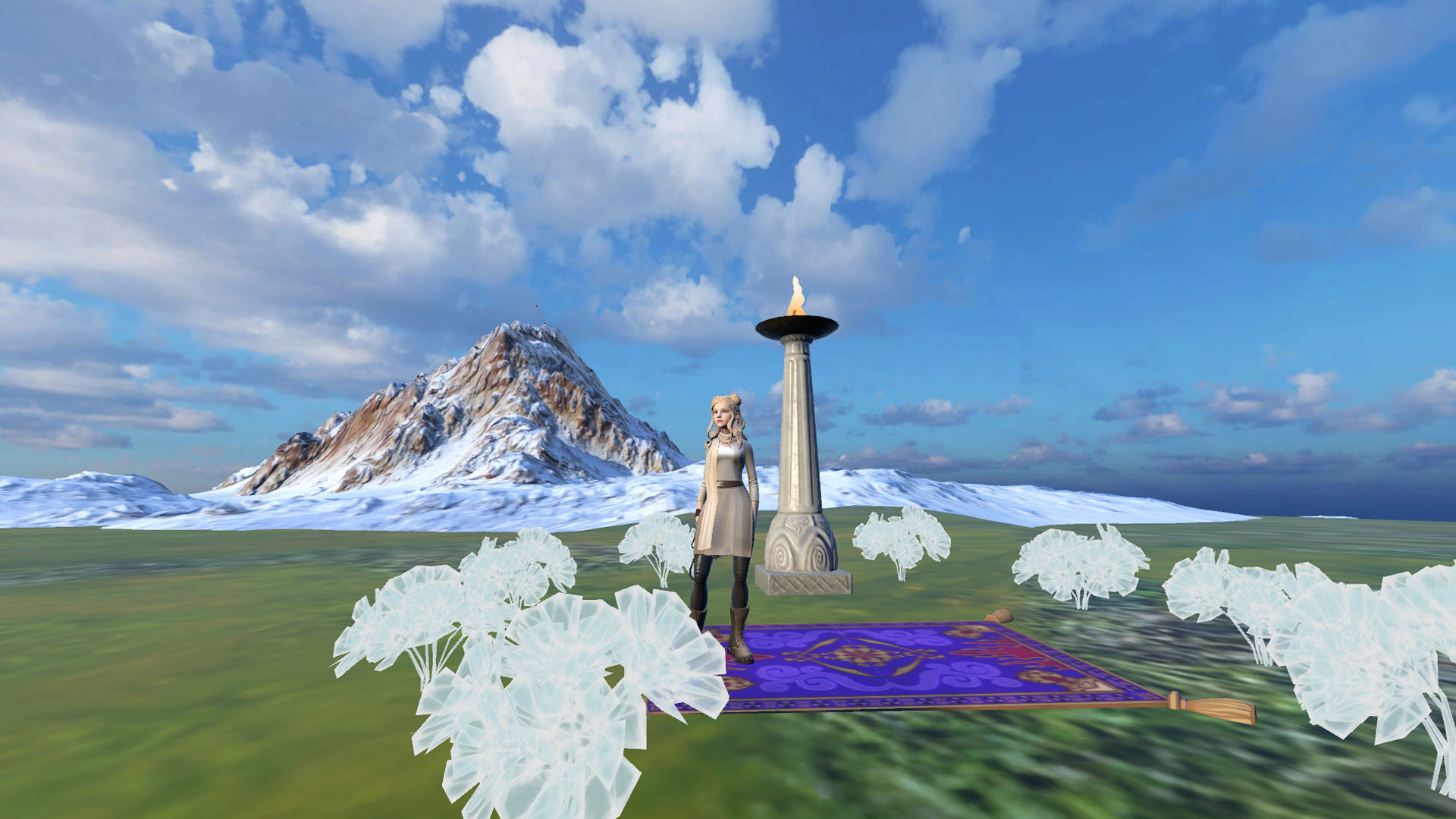
Homeland & Awakening is an online immersive spatial art exhibition inspired by the natural landscapes...

Natalie Zuo is a visual artist, curator, and digital spatial designer whose practice brings together watercolor, immersive environments, and curatorial thinking. Drawing on a background in the gaming industry, she creates narrative-driven spaces that reimagine how audiences experience art beyond traditional exhibition formats.
My name is Natalie Zuo. I am a visual artist, curator, and digital spatial designer based in Australia. My practice sits at the intersection of watercolor, immersive environments, and curatorial systems. I focus on creating narrative-driven artistic spaces that extend beyond traditional exhibition formats.
My journey into this field has been multifaceted. I originally worked in the gaming industry, where I was involved in large-scale visual production and project management. That experience shaped my understanding of spatial storytelling and audience engagement. Over time, I felt a strong pull toward a more personal and expressive direction, which led me to transition into fine art and curatorial practice.
Watercolor became an important medium for me—not only as a technique, but as a visual language capable of conveying emotion, fluidity, and atmosphere. From there, I began exploring how this language could expand into digital environments, eventually leading to the development of virtual exhibition spaces such as Homeland Awakening.
This project reflects both my artistic and curatorial philosophy: creating a contemplative and immersive environment where individual works can resonate within a larger narrative framework. Receiving the Gold Award is not only a recognition of a single project, but also an affirmation of this evolving direction.
I did not approach the competition as a goal in itself. Submitting this project was more about placing the work within an international context and exploring how this hybrid practice—combining watercolor, curatorial thinking, and digital spatial design—would be received.
The project emerged from a deeply personal place. It reflects my ongoing exploration of "homeland" not simply as a physical location, but as a psychological and emotional landscape that can be reconstructed through memory, perception, and atmosphere. Submitting the work was a way of exploring whether this introspective spatial narrative could resonate beyond my immediate community.
On a personal level, the recognition serves as a quiet affirmation of a path that has required me to navigate across disciplines. It is less about validation and more about discovering that the visual language I have been developing can genuinely connect with others.
Professionally, it positions the work within an international framework. It opens new conversations and helps establish credibility when presenting future projects, particularly those that challenge traditional exhibition formats. It also reinforces my commitment to developing long-term digital and curatorial systems rather than focusing solely on individual works. In many ways, the award is not a conclusion, but an encouragement to continue exploring this direction.
The success of my winning entry did not come from a single moment—it emerged from a longer process of questioning, breaking, and rebuilding my own creative direction.
Before this project, I had already worked across different systems, both in the gaming industry and within traditional art environments. While those experiences provided structure and technical expertise, they also made me increasingly aware of certain limitations: the separation between artwork and space, between individual expression and curatorial narrative, and between emotional depth and presentation formats.
It was created in response to that tension. The initial inspiration came from a deeply personal reflection on what “home” means when it is no longer stable or singular. Rather than depicting it literally, I wanted to construct it as an atmosphere—something viewers could move through, experience, and interpret. That is why I chose to merge the language of watercolor with a digital spatial environment, allowing the work to exist as a living field rather than a static image.
What it represents in today’s industry, I believe, is a broader shift. We are moving away from isolated artworks toward systems, from passive viewing toward spatial experiences, and from medium-based definitions toward language-driven practices. Artists are no longer simply creating objects—they are building worlds, narratives, and frameworks for others to inhabit.
In that sense, it is not just a project, but an early prototype of a different way of working, where art, space, and curation are integrated into a single evolving structure.
What set this project apart was not a single element, but the way multiple layers came together as a cohesive system. Many projects in this field excel either in visual execution or conceptual development.
My focus was on integration—treating the artwork, spatial environment, and curatorial narrative as a unified whole rather than separate components. The language of watercolor was not used merely as an aesthetic choice; it informed the atmosphere, pacing, and emotional rhythm of the entire experience.
Another key distinction was the shift from display to experience. Rather than presenting works as isolated pieces, the project was designed as a continuous environment through which audiences could move. This approach encourages a more immersive and reflective form of engagement, allowing meaning to unfold gradually rather than being communicated all at once.
From a strategic perspective, clarity was essential. Although the project operates across multiple disciplines, its central idea—reconstructing a sense of homeland as an emotional and spatial experience—remains consistent throughout. That clarity helps anchor the project's complexity. Restraint also played an important role. Rather than relying on excessive effects or information, I focused on atmosphere and subtle transitions, giving viewers space to form their own interpretations.
In a competitive field, what stands out is not always doing more, but creating work with greater cohesion, intention, and purpose. That balance between concept, execution, and experience is what allowed the project to resonate.
One of the biggest challenges was navigating the uncertainty of creating something that did not fit neatly within existing categories.
It exists at the intersection of fine art, digital environments, and curatorial system design. As a result, there was no established framework to follow, either technically or conceptually. I had to make decisions across multiple layers simultaneously, considering how the space would function, how the artworks would exist within it, and how to maintain a cohesive narrative without over-explaining it.
At times, the challenge extended beyond technical execution to the broader question of structure—how to bring these elements together while preserving both clarity and emotional depth.
I addressed this by continually returning to a simple guiding question: what should audiences feel as they move through the space? That became the foundation for every decision, from spatial design and pacing to visual language and atmosphere.
I also approached the process iteratively, building, testing, and refining through multiple stages rather than pursuing a perfect solution from the outset. This allowed the project to evolve naturally while reducing the pressure of getting everything right at once.
In the end, the challenge became part of the process. Working without a predefined framework encouraged a more integrated way of thinking, which continues to inform how I approach new projects today.
For me, the most meaningful aspect of receiving this recognition is not the immediate visibility it brings, but the long-term opportunities it creates for the work.
I see this project as part of a broader trajectory that explores how watercolor-based visual language can evolve into spatial and curatorial systems. In that sense, the award helps position this practice within an international context, which is particularly meaningful for the interdisciplinary work I am developing.
Looking ahead, I hope this recognition contributes to building greater trust and openness toward experimental formats, especially projects that do not fit neatly within traditional categories of fine art or digital design. My goal is to continue expanding this direction through more structured platforms and collaborative environments where artists, curators, and technologists can work within a shared framework.
On a practical level, the award has already sparked new conversations and interest, particularly within curatorial and creative communities. However, I view recognition not as an endpoint, but as an opportunity to foster deeper dialogue around future projects.
Ultimately, the goal of my practice is continuity: to use this moment not as a peak, but as a foundation for developing more sustained, thoughtful, and cohesive systems in the years ahead.
The response has been thoughtful and encouraging, particularly from audiences interested in experimental and interdisciplinary practices.
What has stood out most is that people respond not only to the visual aspects of Homeland Awakening, but also to the experience of moving through it. Several viewers have shared that it feels less like viewing an exhibition and more like entering a reflective space shaped by memory and emotion. That feedback is especially meaningful because it closely reflects the intentions behind the project.
Within creative and curatorial communities, the recognition has also helped foster more open dialogue. It has made it easier to communicate the broader framework behind the work—not as a collection of individual pieces, but as a system that brings together narrative, space, and emotional structure.
One comment that stayed with me described the project as “quiet but persistent,” something that continues to resonate after the experience has ended. I felt that observation captured the essence of what I hope to create: work that unfolds gradually and leaves a lasting impression.
Overall, the feedback has reinforced my belief that there is a growing appreciation for slower, more immersive, and reflective forms of artistic experience.
The creative industry is undergoing a period of significant transformation. The boundaries between disciplines are becoming increasingly fluid, with art, design, technology, and curation intersecting in new ways rather than operating independently. At the same time, audiences are moving beyond passive viewing toward more immersive, experiential, and participatory forms of engagement. I see this not as a disruption, but as a natural evolution of how creative work functions within contemporary culture.
This shift aligns closely with the direction of my own practice. I am interested in creating systems rather than standalone objects—spaces that can hold narrative, emotion, and interaction within a continuous experience. This includes exploring how watercolor-based visual language can extend beyond traditional surfaces into spatial and digital environments.
Looking ahead, I hope to position my work at the intersection of curation, spatial design, and artistic authorship, developing frameworks in which exhibitions become evolving environments rather than fixed presentations. I am also interested in creating collaborative platforms that allow artists from diverse backgrounds to contribute to shared narrative structures.
Ultimately, my focus is on creating work that responds to an evolving industry while maintaining clarity of purpose, emotional depth, and meaningful audience engagement.
I believe hesitation is common, especially at the beginning of a creative journey, and it does not necessarily indicate a lack of readiness. More often, it reflects a period in which a creative voice is still developing and taking shape.
For those with limited experience, it can be helpful to view competitions not simply as a measure of success or failure, but as opportunities for positioning and dialogue. Submitting work places ideas into a broader conversation and offers insight into how they resonate beyond one's immediate environment.
Confidence rarely comes before participation; it often develops through the process itself. Each submission, regardless of the outcome, helps clarify direction and encourages a deeper understanding of one's creative practice.
It is also important to separate identity from results. An award outcome represents a single moment in time, not a definitive measure of capability or future potential. When that distinction is understood, the process becomes less intimidating and more exploratory.
For me, participation creates a valuable opportunity for reflection. It provides perspective on where the work stands today while offering insight into where it may evolve in the future.
I believe creativity today no longer exists in isolation. It grows through exchange—between artists, curators, designers, marketers, technologists, and audiences. Some of the most meaningful work emerges where these different perspectives intersect and inform one another.
My message to fellow creatives is to remain open to collaboration, particularly across disciplines that may not traditionally overlap. Many of the most compelling ideas come from these intersections, where different ways of thinking challenge assumptions and expand possibilities.
To marketers and advertising professionals, I would also emphasize the growing importance of authenticity and depth. Audiences are increasingly drawn to work that carries clear intention—not only visual impact, but also meaningful narrative and emotional resonance. When creativity is approached as a system rather than a surface, it often creates a deeper and more lasting connection.
At its core, I believe we are all working toward the same goal: creating experiences that people remember, connect with, and carry forward. By building bridges between disciplines rather than working in isolation, we open the door to new possibilities that extend beyond the boundaries of any single field.
A spatial watercolor narrative system that transforms the concept of “home” into an immersive emotional environment, where memory, atmosphere, and place converge into a continuous experience.
This description captures the essence of the project: not as an object to be viewed, but as a world to be entered. Rather than representing home in a literal sense, it reconstructs the feeling of home through space, perception, emotion, and personal interpretation.
What’s next for me is the continued development and expansion of the ideas explored through this project.
I am currently focused on evolving this direction into a more structured series of immersive and curatorial projects, where watercolor-based visual language can exist more fully within spatial and digital environments. The aim is to further explore the relationship between narrative, atmosphere, and audience experience, moving beyond the notion of exhibitions as fixed presentations.
On a practical level, I am also exploring larger collaborative frameworks that bring together artists, designers, and technologists to create shared exhibition ecosystems. These projects will continue to examine how curatorial worlds can expand while maintaining emotional clarity and artistic integrity.
At the same time, I am developing new bodies of watercolor work that will inform future spatial and digital exhibitions, allowing the practice to evolve across multiple formats.
Rather than a single next step, I see this as part of a longer trajectory—building a connected body of work that can grow across platforms and contexts while remaining grounded in a consistent artistic language.