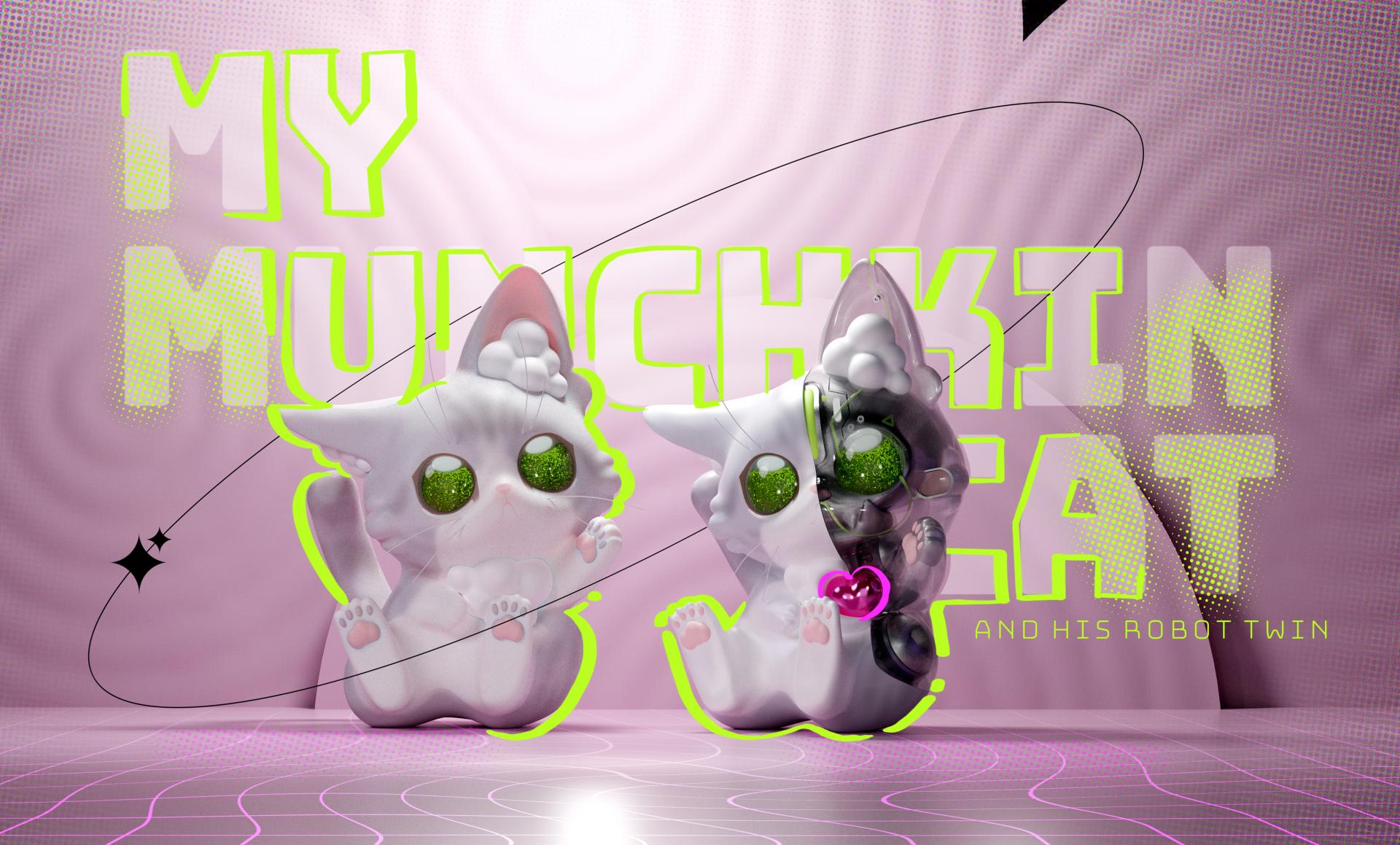
My Munchkin Cat
The Designer Art Toy project aims to create a captivating and visually appealing collectible toy...
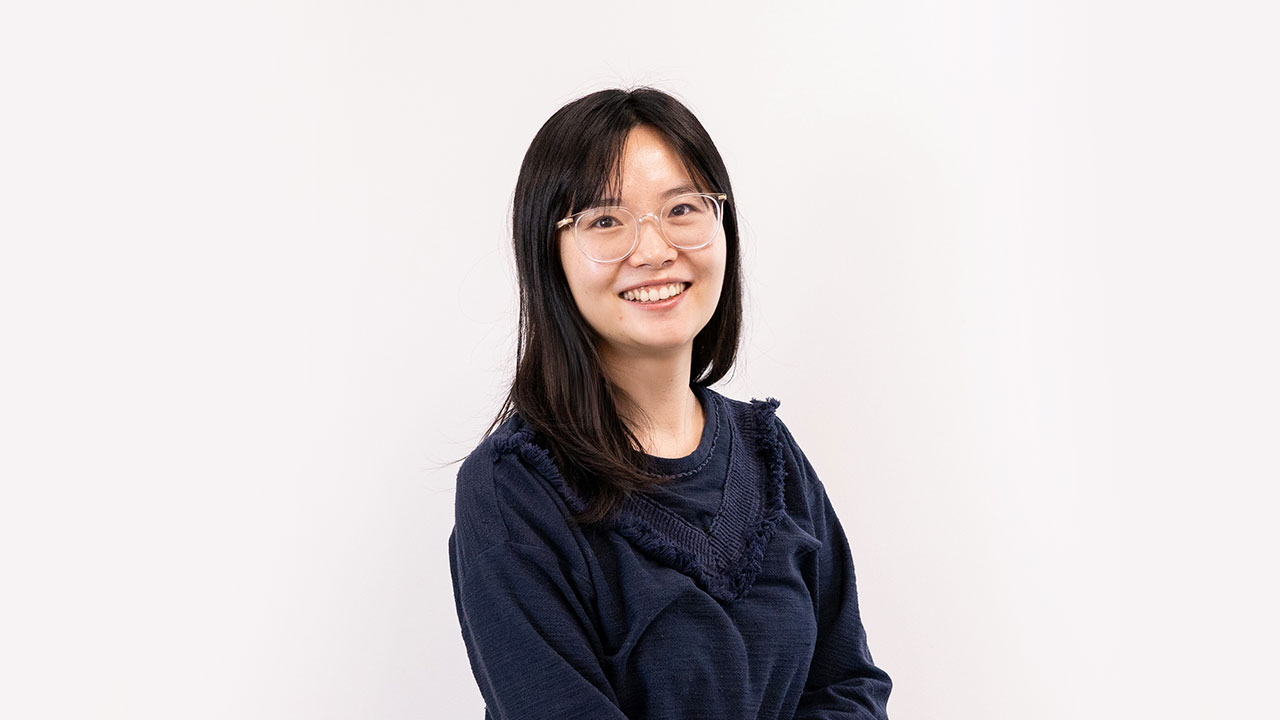
Shixun Chen is an industrial designer and artist whose work exists at the intersection of engineering, design, and fine art. Influenced by functionalism and minimalism, she approaches creativity through both analytical rigor and artistic sensitivity, bridging technical innovation with human expression.
I am an industrial designer and artist with a multidisciplinary background spanning engineering, design, and fine art. I hold a Bachelor of Engineering in Vehicle Engineering and a dual degree from Tsinghua University, followed by a Master of Science in Industrial Design from ArtCenter College of Design.
Strongly influenced by functionalism and minimalism, my career reflects a unique duality, bridging rigorous engineering principles with refined digital craftsmanship. My work has received international recognition, while my fine art has been exhibited in galleries across Beijing, London, Paris, and Los Angeles.
Becoming a designer and artist was not a deliberate decision, but a natural evolution of my fascination with human-made objects and functional beauty. I find the greatest fulfillment in transforming abstract ideas into tangible experiences, bringing concepts to life through thoughtful design and creative exploration.
My practice is shaped by the balance between two complementary perspectives: the industrial designer who approaches challenges through strategy, research, and systems thinking, and the artist who explores emotion through physical craftsmanship and digital sculpting. Together, these disciplines allow me to create work that is both purposeful and expressive, grounded in functionality while remaining deeply human.
Currently, I lead visualization and synthetic media initiatives within the automotive sector at General Motors. My work focuses on creating high-fidelity virtual environments and spatial computing experiences that support the future of automotive design and digital innovation.
Prior to this role, I spent more than five years leading the end-to-end design of advanced autonomous robotics, medical devices, and service systems, guiding projects from early concept development through mass production. Working in agile, engineering-driven environments has expanded my expertise beyond traditional industrial design into adjacent disciplines, including 3D animation, UI/UX design, and data visualization.
To me, design is deeply integrated into everyday life, shaping the way I work, think, and pursue my interests. At its core, design is the process of finding thoughtful and functional solutions to specific challenges.
However, the true essence of design lies in asking the right questions, a critical step that is often overlooked. Great design should be approachable, inclusive, and intuitive, removing unnecessary friction while creating experiences that are accessible, meaningful, and valuable to the people they serve.
My favorite design work is that which brings together complex, emerging technologies and intuitive human experiences.
Whether designing an autonomous healthcare system that enhances dignity and accessibility for elderly users or developing scalable digital pipelines that integrate real-world imagery with virtual assets, I am drawn to solutions that make advanced technologies feel approachable, seamless, and deeply human. I believe the most effective designs are those that translate technical complexity into meaningful experiences that people can easily understand and trust.
In a professional context, good design is defined by its ability to achieve its intended objectives and business goals. Unlike student or self-initiated projects, commercial design requires balancing competing constraints, whether reducing manufacturing costs, working within technical limitations, or leveraging existing components to accelerate time to market.
A product may not always appear conventional, but if it successfully fulfills its strategic, functional, and user requirements, it can be considered successful design. This pragmatic perspective aligns closely with Dieter Rams’ principles, which emphasize that good design should be honest, useful, understandable, and executed with careful attention to detail.
My design style adapts intentionally to the goals of each project, as commercial design and personal artistic practice serve fundamentally different purposes. In my industrial and corporate work, I embrace a minimalist and functionalist approach, where design decisions are guided by usability, reliability, and manufacturing precision.
In contrast, my personal artistic practice, including 3D sculpting and ceramic craftsmanship, embraces a more playful and expressive character. Inspired by my appreciation for animals and storytelling, I create works that evoke warmth, joy, and a sense of comfort. Through these pieces, I aim to offer moments of connection and reflection, bringing a touch of optimism to everyday life.
My professional process is collaborative, agile, and iterative, beginning with in-depth market research and the development of functional product requirements. From there, I move through stages of concept development, 2D ideation, 3D modeling, photorealistic rendering, and virtual validation to refine and evaluate solutions.
Throughout the process, I work closely with engineering and supply chain teams to optimize products for manufacturability, cost efficiency, and logistical considerations. This is followed by the preparation of detailed production documentation and CMF (Color, Materials, and Finish) specifications. Guided by short development cycles and continuous communication, my approach focuses on transforming complex ideas into practical, market-ready products.
Yes, profoundly so. My foundational engineering and design education in China instilled a deep appreciation for structural efficiency, speed, and the scalability required for mass production.
At the same time, traditional Chinese culture continues to influence the emotional character of my personal artistic practice. It has shaped my appreciation for harmony, resilience, and quiet reflection, values that are reflected in the gentle, peaceful, and comforting qualities of my sculptural work. These influences help me balance technical precision with emotional expression, bringing a distinctive perspective to both my design and artistic endeavors.
Receiving this distinction is incredibly meaningful and rewarding. It serves as a valuable affirmation of our work and a recognition of the dedication, creativity, and expertise behind it.
My winning project combines digital character design with emotional storytelling. I submitted it because it reflects my philosophy as a multidisciplinary creator.
The project moves beyond purely functional design to focus on creating a positive emotional connection, offering audiences a moment to slow down, relax, and appreciate the small moments of joy and good fortune in everyday life.
The primary challenge was finding the right balance between the digital and physical aspects of the project.
Translating the soft, whimsical, and organic qualities of a character from a 3D digital environment into a physical object while preserving its original emotional warmth required careful testing of materials, textures, and manufacturing considerations.
Winning a MUSE Design Award has been a meaningful catalyst for professional growth and increased visibility.
It has strengthened my presence within the international design community, created opportunities for more complex cross-disciplinary projects, and provided a globally recognized mark of quality that helps build trust with clients, collaborators, and executive stakeholders.
The Evolution of Digital Tools: The rapid advancement of real-time rendering and simulation technologies continues to expand creative possibilities and redefine the boundaries of design.
The Tangible Impact: Seeing a complex idea evolve into a physical product or digital experience that improves lives, creates value, or brings comfort remains one of the most rewarding aspects of the design process.
Cross-Disciplinary Collaboration: The opportunity to work across diverse fields, bringing together perspectives from art, psychology, supply chain management, and engineering to solve complex challenges and create meaningful outcomes.
The contemporary design landscape in my home country is distinguished by its manufacturing agility, rapid prototyping capabilities, and exceptional market scale.
This creates an environment where designers can iterate quickly, refine ideas efficiently, and bring innovations from concept to market at remarkable speed. The close connection between design, manufacturing, and distribution enables new ideas to be tested, developed, and introduced to global audiences with extraordinary efficiency.
The industry is undergoing a significant shift toward spatial computing, digital experiences, and virtual ecosystems. Physical product design is no longer a standalone discipline; it is increasingly converging with digital content creation, simulation technologies, automation, and AI-driven workflows.
Designers who can navigate the intersection of physical manufacturing and digital innovation will be well positioned to shape the future of the industry. The ability to bridge tangible products and virtual experiences is becoming an increasingly valuable skill in an evolving design landscape.
My advice is to embrace curiosity, remain adaptable, and nurture the creative perspective that makes your work unique. Focus on the disciplines that genuinely interest and inspire you rather than feeling pressured to follow a predetermined path.
The design industry evolves rapidly, making continuous learning and adaptability essential. By staying open to new ideas, developing a broad range of skills, and remaining true to your creative vision, you can build a practice that is both resilient and personally fulfilling.
I highly recommend developing skills beyond the traditional industrial design toolkit. Building expertise in advanced 3D simulation tools and real-time creation engines can help designers adapt to the rapidly evolving digital landscape.
At the same time, exploring multidisciplinary frameworks, such as design thinking and value proposition strategies, can broaden your perspective and strengthen your approach to problem-solving. Maintaining a hands-on creative practice, whether through ceramics or another craft, is equally valuable for preserving a strong connection to materials, form, and tactile experiences.
One of the most defining chapters of my life involved surviving domestic violence and an abusive relationship marked by manipulation, gaslighting, and coercion. Facing institutional indifference and societal stigma at the time left me feeling profoundly isolated.
For me, healing was not about forgetting the past but learning to remember it on my own terms. Choosing to share my experiences and support others facing similar challenges has become an important part of my journey. It is not only a reflection of personal resilience, but also a way of advocating for greater understanding, empathy, and positive change.
I draw continuous inspiration from a wide range of sources, including the organic forms found in nature, diverse cultural traditions, and the experiences that shape everyday life.
Above all, I am inspired by the resilience of individuals who face challenges with strength and perseverance while continuing to show kindness, empathy, and creativity. Their ability to find meaning and create beauty in difficult circumstances serves as a constant source of motivation and perspective.
My key to success has been allowing myself the flexibility to explore rather than attempting to plan every step with certainty. I have found that adaptability, curiosity, and a willingness to embrace change are often more valuable than following a rigid path.
I believe it is important to pursue work that brings genuine focus, purpose, and fulfillment while remaining open to new opportunities and perspectives. Above all, meaningful human connections are built on trust, authenticity, and mutual understanding, values that continue to guide both my personal and professional journey.
One of the biggest misconceptions in our industry is the belief that outcomes are driven solely by design. In reality, factors such as market demands, supply chain considerations, technical requirements, and commercial viability play equally important roles in shaping the final result.
As designers, it is important to view innovation not as a compromise, but as the thoughtful integration of these real-world considerations. The most successful solutions often emerge from navigating complex constraints, where creativity, strategy, and craftsmanship come together to create lasting value.