Night SHIFT
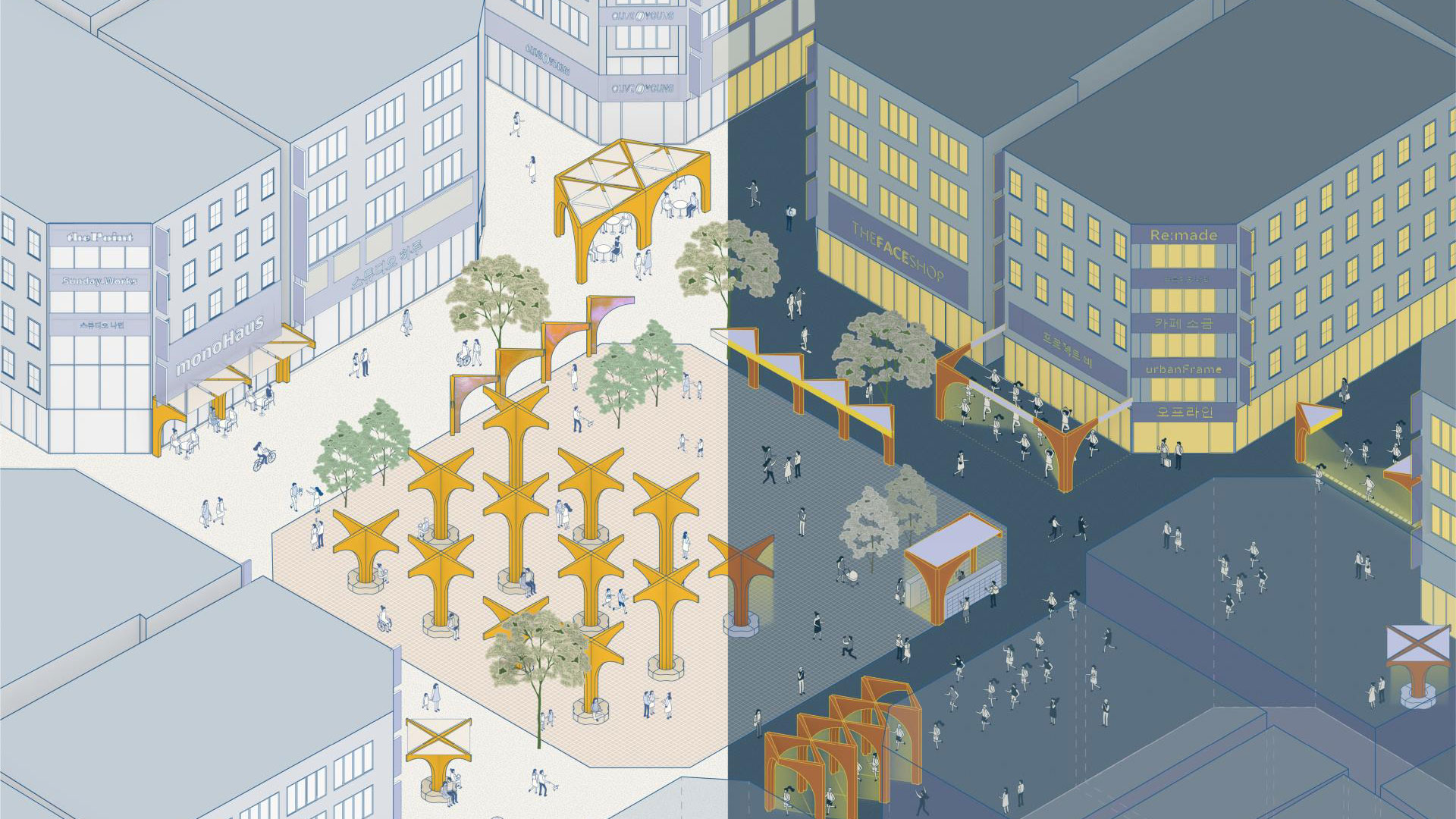
Night SHIFT is a tactical urban design strategy that reimagines Seoul’s Myeongdong district as a...
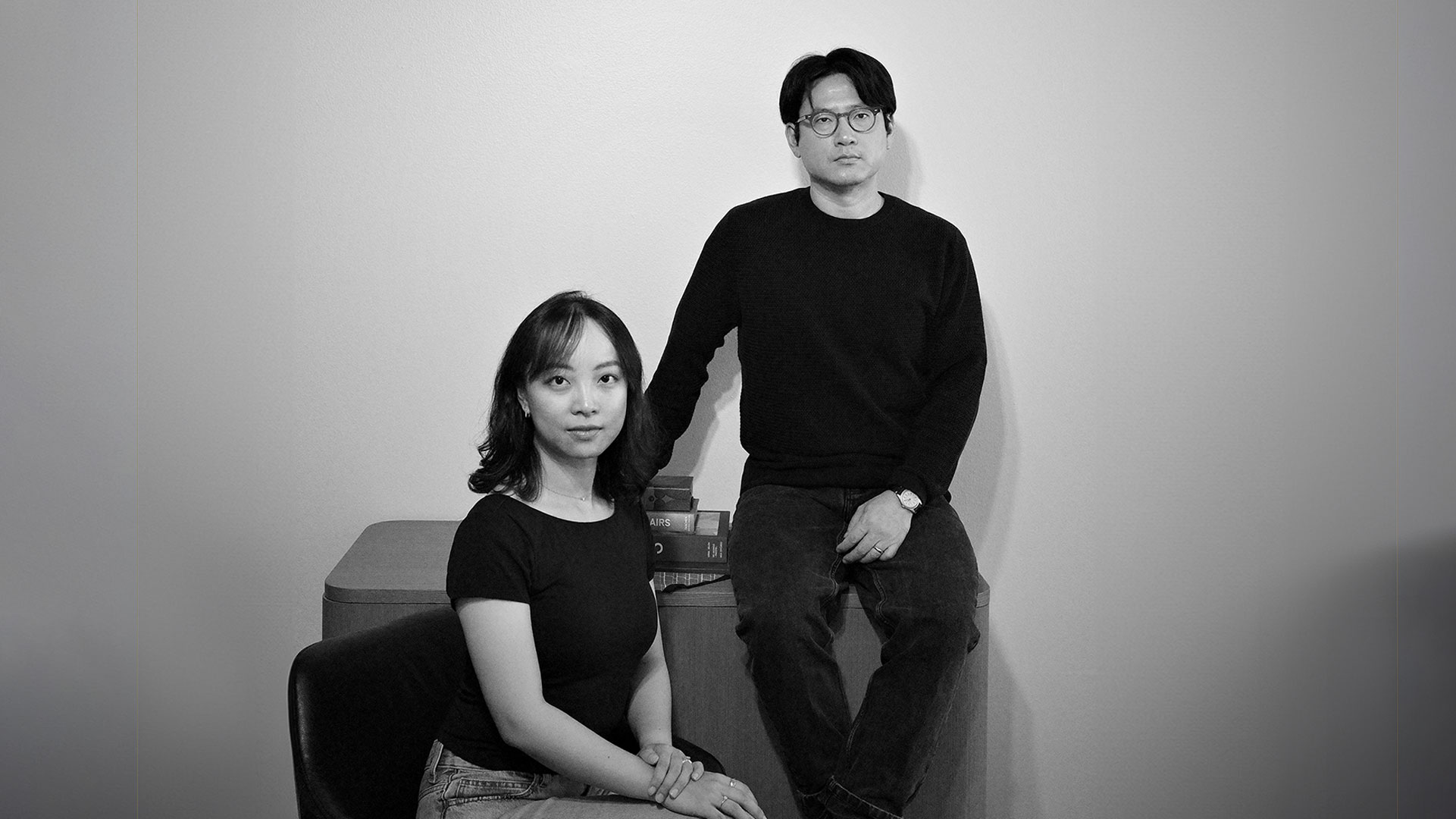
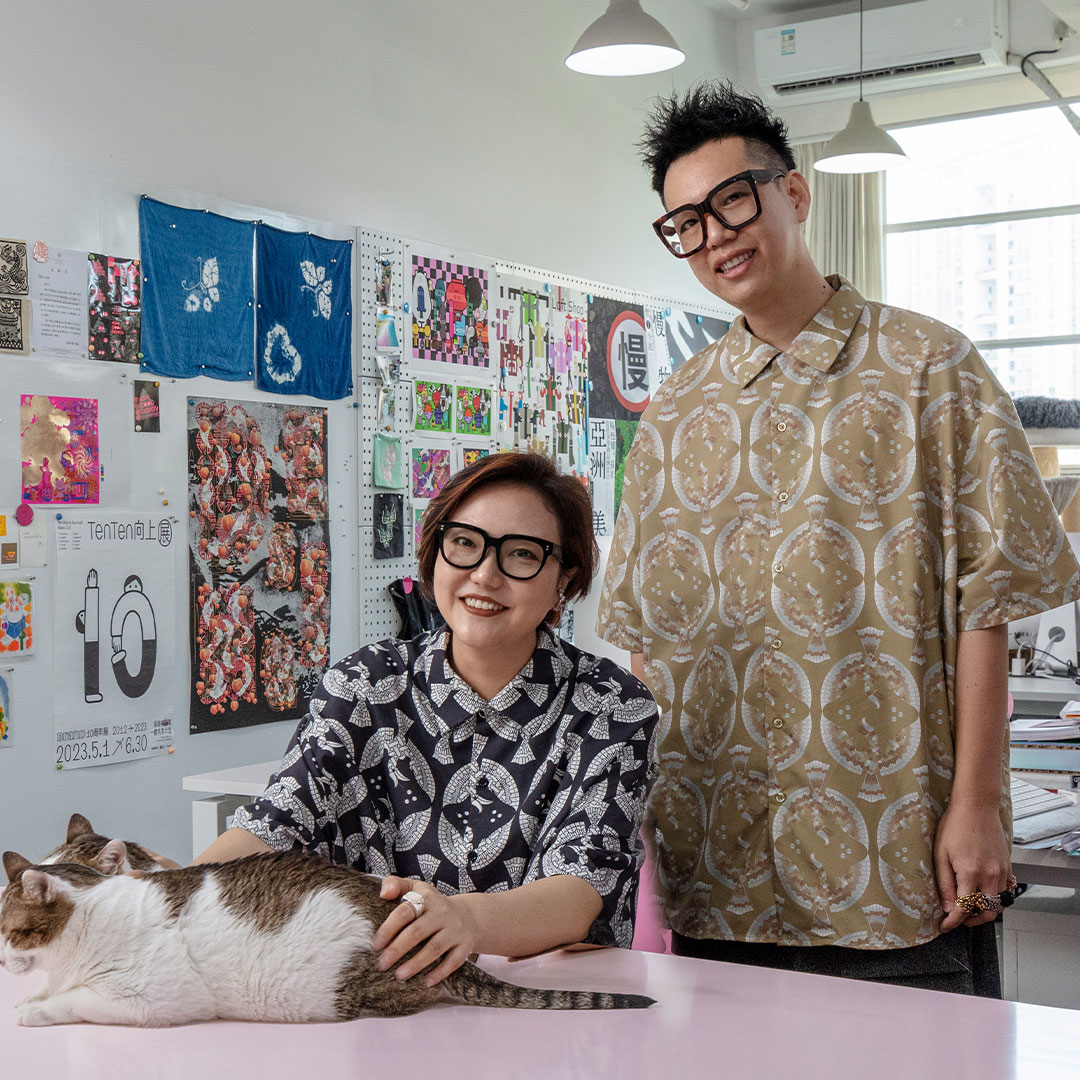
Combining expertise in architecture, landscape architecture, and urban design, Jungjae Park and Jingyi Hu explore how interdisciplinary thinking can create more connected, adaptable, and people-centered urban environments.
Jungjae & Jingyi: We are Jungjae Park and Jingyi Hu. Our journey into design is rooted in our shared academic background at the University of Pennsylvania, where we both studied Landscape Architecture.
Jungjae: Alongside my background in landscape architecture, I also hold a Bachelor of Architecture (B.Arch) and have focused extensively on architectural design and civic infrastructure.
Jingyi: My work has continued to focus on landscape architecture and its role in shaping meaningful public environments.
Jungjae & Jingyi: We believe that architecture and landscape architecture should not exist in silos. Instead, they should be integrated to create holistic, high-performing environments that enrich urban public life.
Being recognized by the MUSE Design Awards is an incredible honor for us. It validates our belief in tactical, time-based interventions and demonstrates that meaningful urban transformation does not always require large-scale, permanent construction.
This recognition also reflects a growing appreciation for adaptive and reversible design strategies that respect a city's existing fabric while fundamentally enhancing how public spaces are experienced and used.
This achievement has further strengthened our commitment to data-driven and adaptable urban design. It has opened the door to exciting conversations about how the modular strategies explored in Night SHIFT can be applied to commercial districts around the world.
The recognition encourages us to continue pushing the boundaries of how cities can leverage temporary infrastructure to create lasting social and spatial transformation.
Experimentation is at the core of our design process. In Night SHIFT, we extensively explored parametric modeling to achieve our dual objectives of Program Adaptability and Spatial Flexibility. We continuously tested how a single modular element could expand, fold, or connect horizontally within the narrow alleys of Myeongdong.
Through this iterative process, we ensured that a structure serving as a shaded resting area during the day could seamlessly transform into an illuminated pathway for runners at night.
For Night SHIFT, our primary inspiration was the concept of time itself. Instead of focusing on physical forms, we examined the temporal gap between 7 p.m. and the closing hours of public transit. We treated this window of time as a material that could be shaped, extended, and activated.
This perspective allowed us to view dormant post-shopping streets not as empty spaces, but as opportunities to introduce an entirely new layer of urban life.
We wish more people understood that successful urban design is not solely about the static structures that are built. At its core, it is about how an environment is managed, experienced, and evolves over time.
True sustainability and urban activation require a deep understanding of temporal rhythms, human behavior, and spatial flexibility, rather than an exclusive focus on permanent aesthetics.
We navigate this balance by ensuring that our conceptual ideas are grounded in practical solutions. With Night SHIFT, our vision was to create a vibrant civic landscape, but we anchored that vision in tangible outcomes such as improving nighttime safety, supporting local vendors, and maximizing the efficient use of materials.
When an innovative design is also highly functional and delivers clear benefits to the community, the tension between expectations and ideas naturally disappears.
The primary challenge was working within the physical constraints of Myeongdong’s narrow alleys while avoiding permanent construction. We addressed this challenge by developing lightweight, reversible, and community-driven interventions.
By emphasizing vertical adaptability—allowing modules to adjust to three different heights—and horizontal flexibility, we created a living infrastructure that integrates seamlessly into existing spatial gaps without disrupting the daytime retail environment.
We recharge by stepping away from our screens and immersing ourselves in public life. Walking through underutilized neighborhoods or observing vibrant civic spaces helps reconnect us with the human scale of design.
Observing the subtle and unscripted ways people interact with their surroundings often sparks new ideas and grounds our complex digital models in real-world experiences.
We consistently incorporate our shared belief in urban equity and wellness into our work. We believe that public spaces should promote health, foster community, and remain accessible to everyone.
This value inspired us to introduce a safe, health-oriented running and walking loop into a district historically dedicated to commerce. Through our designs, we aim to demonstrate that cities can prioritize human well-being just as much as economic activity.
Look beyond the boundaries of your specific discipline. The most innovative and impactful solutions for the future will emerge at the intersection of architecture, landscape architecture, and urban planning.
Rather than treating cities as blank slates, view them as living, evolving ecosystems. Thoughtful and targeted interventions can often have a greater impact than large-scale transformations, helping cities adapt, thrive, and better serve their communities.
We would love to collaborate with the late Cedric Price. His radical concept of the Fun Palace prioritized adaptability, time, and active user participation over static monumentality.
His belief that architecture should function as a flexible framework rather than a fixed enclosure strongly resonates with our approach to creating living infrastructure that can expand and contract in response to community needs.
We wish people would ask, “What happens to the design when nobody is actively using it?”
Our answer is that truly successful design should continue to serve a meaningful purpose even when dormant. In Night SHIFT, when the modules are not actively used for vending or resting, they still provide visual continuity and subtle illumination. They function as passive safety infrastructure, quietly supporting and protecting the neighborhood until the next cycle of activity begins.





.jpg)