The “Hope” Village
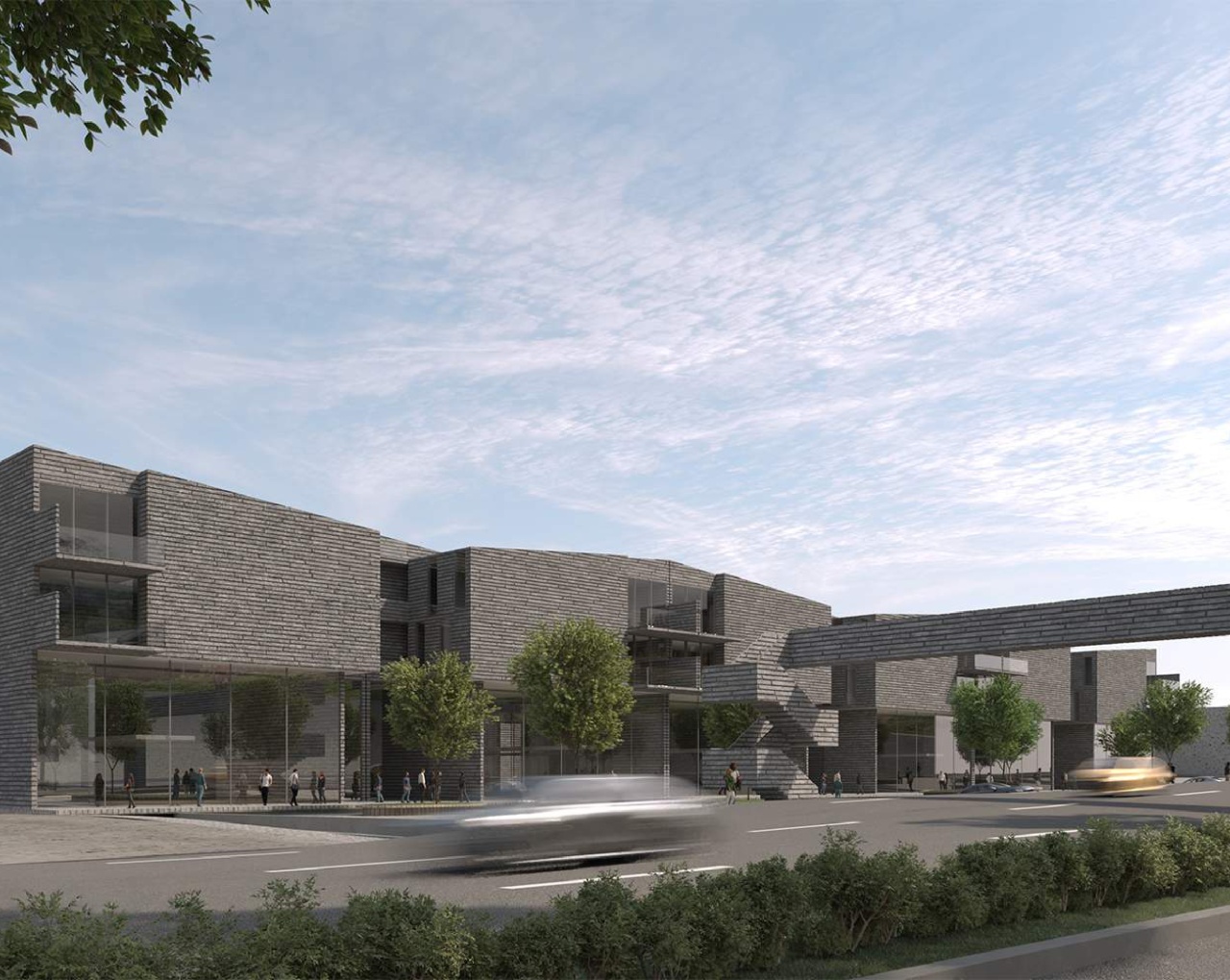
The “Hope” village is a “housing solution” for contemporary Iranian urbanites. “In-house familial or social...
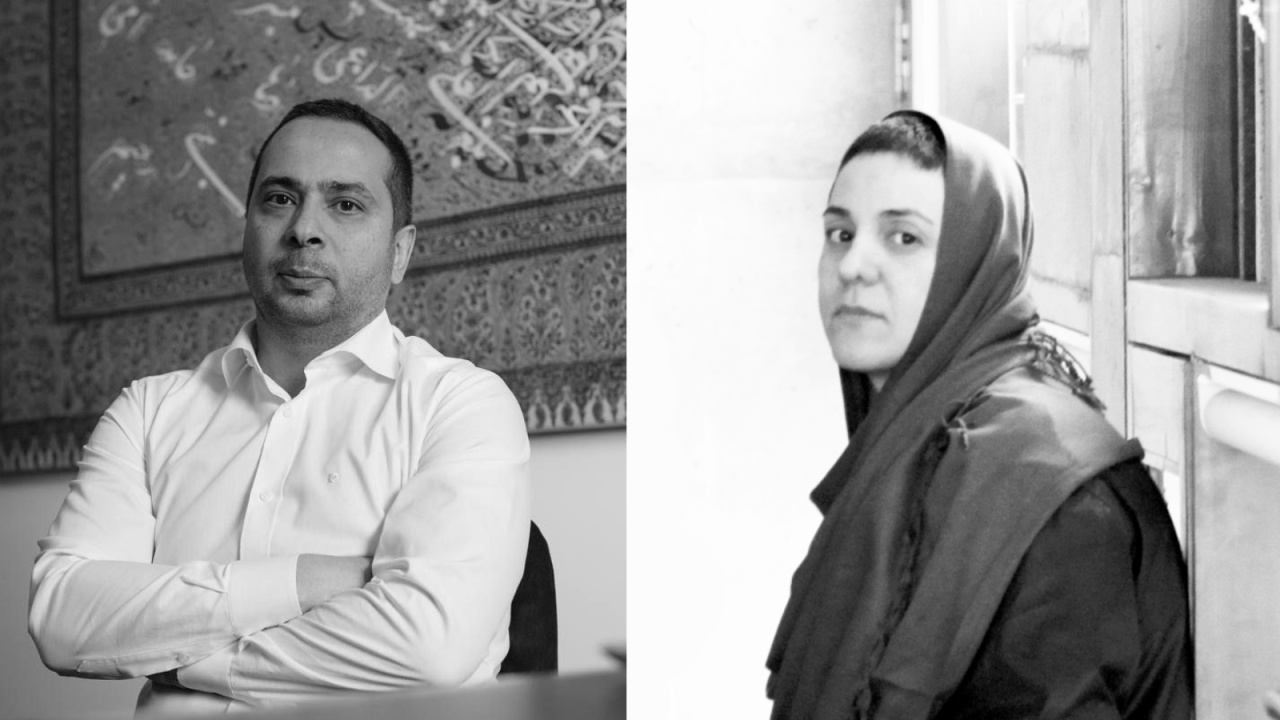
Omid Maleki and Nashid Nabian unite development and architectural expertise to address the changing landscape of urban living. Their project introduces rentable, serviced villas that accommodate modern domestic practices while maximizing spatial efficiency. Together, they highlight the power of collaboration in transforming architectural vision into tangible solutions.
As Architecture — and that with a capital “A” — is a fundamentally discursive discipline, its productions can only be fully understood and evaluated in relation to one another. Accordingly, we decided to submit our project for evaluation on an international platform, in order to see how it might be positioned by critics within the current disciplinary landscape of architecture and urbanism.
“Contemporaneity,” as an overarching concept, when applied to the discipline of architecture, can be understood as the capacity to anticipate change as it unfolds.
With the transformation of multiple aspects of both domestic and public life, the demand for new architectural typologies with alternative programs is on the rise. Within the context of our project, the diminishing size of residential units in urban areas—driven by market forces—necessitates new forms of domesticity. Various everyday activities are now displaced beyond the primary residence of urban dwellers, particularly in metropolitan cities, due to spatial constraints.
Hence, the idea of “temporary second homes”—or “second homes for rent”—emerges as a viable response for families who cannot afford to own or fully rent a second home, yet value the possibility of hosting a larger circle of friends and loved ones when desired.
The project proposes a residential complex composed of “rentable and serviced villas”, designed for short-term stays, enabling families to hold gatherings they can no longer accommodate within the limited spaces of their primary homes, due to the economy of space.
As our project emerges from a collaboration between a developer and an architectural and urban design studio, it seems only appropriate to respond to this question from the perspective of this joint venture.
We believe that architecture possesses multiple agencies through which it can address pressing concerns embedded in the practices of everyday life.
While architects are capable of envisioning possibilities, developers hold the capacity to realize them. When developers do not engage architects, the result lacks imagination and when architects do not engage developers, their designs come short in terms of realizability and how “facts” are incorporated within various layers of designed phenomenon. Hence, the collaboration between these two actants can lead to tangible and meaningful outcomes.
As a joint venture between a developer and an architectural and urban design studio, we are committed to delivering tempo-spatial designs—across the scales of place, architecture, and urban infrastructure—that respond to the users’ needs and desires for a high-quality domestic and social life, as articulated through diverse spatial characteristics and material conditions.
As is inherent in any transdisciplinary collaboration, devising a shared language for mutual understanding is a major challenge for participants coming from diverse disciplinary backgrounds. Yet once such a common language takes shape, the collaboration becomes far more fruitful than any individual or single-discipline endeavor.
In the beginning, the architectural side faced challenges in incorporating the realities of the construction economy, while the developer’s side was somewhat conservative in questioning the orthodox conventions of the market. However, once a common ground was finally established, what followed was a genuine synergy and the emergence of ideas that could not have been imagined otherwise. We would like to call this phenomenon “collaborative intelligence”.
Initially, we approach each project through a typological lens. We commit ourselves to understanding potential spatial solutions from the standpoint of “type.” By type, we refer to a spatial construct in which the relationships of figure and ground, solid and void, and interior and exterior are resolved in a manner that addresses the programmatic requirements of the project.
Once the type is determined, the next stage involves exploring how its repetition or recursion can generate complex urban morphologies. The type is then endowed with architectural form and language—comprising the triad of material condition, the poetics of construction and realization (tectonics), and ornamentation.
Through this articulation of form and architectural language, the conceptual framework of the project is further developed into an executable architectural proposal.
Shared Values, Common Goals, and Collaborative Intelligence.
From the viewpoint of urban morphology, our project seeks to produce a kind of “thick ground” or mat urbanism through the re-appropriation of the courtyard typology. It was both surprising and gratifying for us that fellow architects recognized the value in how we addressed this design problem of formal configuration through a simple typological solution.
Most architects tend to celebrate formal complexity when critiquing a colleague’s design decisions. Yet, in reading our project, our peers acknowledged that although the architectural type we adopted follows a humble and simple configuration, its recursive aggregation across the site has generated a complex and coherent urban morphology.
As we aim to realize this project to its full potential, receiving recognition on such a highly competitive international platform will provide it with the credibility needed for city officials to view the proposal favorably and support its construction and implementation—an essential step toward its materialization.
This validation through recognition further inspires us to continue our collaboration despite its inherent challenges.
We are currently exploring the idea of a “micro-lifestyle.”
By this term, we refer to a mode of urban living in which the size of residential units is intentionally reduced to make home ownership affordable for the creative urban middle class—without compromising the quality of spatial experience or domestic life.
This approach implies that certain domestic activities must be relocated or redefined within shared semi-public and urban spaces. Consequently, this calls for the introduction of new programs—such as the “rentable villas” model—when proposing large-scale urban developments.
The human race is facing serious challenges that endanger its very survival. From radicalized international geopolitics to pandemics and global ecological shifts, it has become evident that architecture—like many other disciplines—must address real problems in a humble and realizable manner, rather than indulging in the mere desire to produce beauty for beauty’s sake.
As we move from pure aesthetics toward operational logics, transdisciplinary collaborations have become a necessity rather than a choice. We believe that our work contributes to this crucial transition.
We view sustainability as a multi-faceted concept that encompasses the social, economic, and environmental dimensions of spatial practice.
Accordingly, when envisioning the programs of the projects we collaborate on, we remain deeply committed to the micro-economies that a project can foster once realized—addressing the economic dimensions of sustainable architecture.
We also emphasize the integration of passive environmental strategies within our designs, particularly those that contribute to energy efficiency and carbon footprint reduction—addressing the environmental and ecological aspects of sustainability.
Furthermore, we remain attentive to the cultural and social impacts of our projects. Our work aims to enhance the sense of community, empower citizens, and strengthen individual identity—addressing the social dimensions of sustainable architecture, including in this project.
The ultimate shared aspiration is to design and realize a spatial construct that is fully responsive to the emergent needs, demands, and desires of its occupants—while remaining capable of adapting gracefully to the changing conditions and circumstances of its context.
Read about From Construction to Creation: A Conversation with CaiBao Guo here, a winner of the NY Architectural Design Awards.