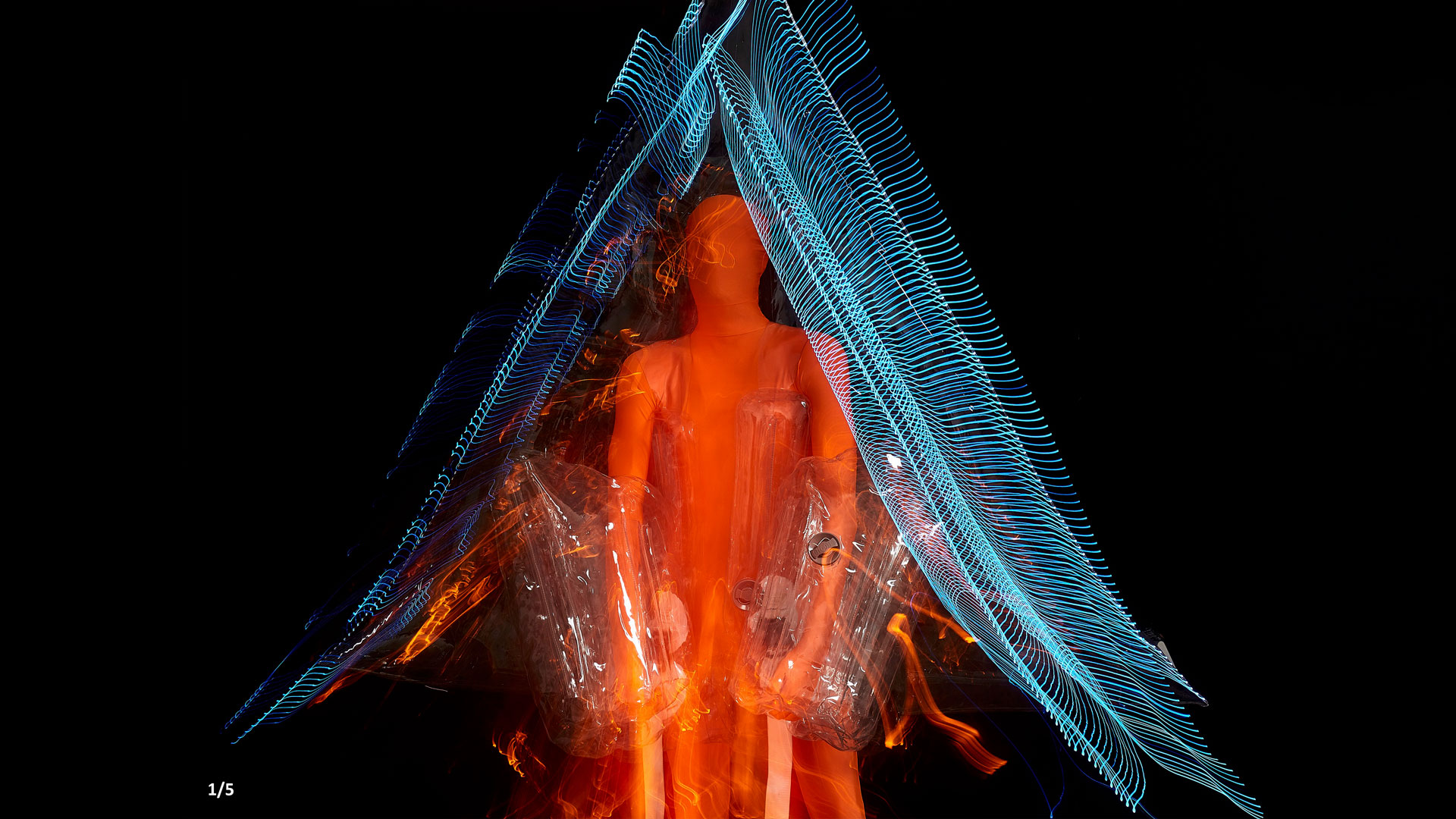
NEXUS Life Jacket System
The core innovation of NEXUS is its revolutionary interconnection system that transforms isolated survival into...

Yiwen Teng is a UX Designer at AtlasIED, where she leads digital experience design for safety and communication systems. Guided by a passion for simplifying complex technology through human-centered thinking, she creates intuitive, meaningful experiences that connect people and technology across products and large-scale systems.
Thank you! I’m Yiwen Teng, a UX Designer at AtlasIED, where I lead digital experience design for safety and communication systems. My journey began with a passion for simplifying complex technology through human-centered design.
From appliances to large-scale system interfaces, I focus on creating meaningful, intuitive experiences that connect people and technology.
I was inspired to submit my work to highlight how thoughtful design can bridge real human needs. Winning this award means a great deal—it reinforces my belief that design can create impact beyond aesthetics.
Professionally, it motivates me to continue driving innovation within technical environments; personally, it reminds me why I began this journey—to make technology feel more human.
The project was born from a desire to make safety feel intuitive and reassuring in moments of fear. I wanted to design a life-saving experience that not only functions well but also brings confidence and calm to the people who rely on it.
Behind this success are countless rounds of research, testing, and refinement. I believe it reflects a shift in today’s design industry—where innovation is measured not only by technology or form, but also by empathy, inclusivity, and the power to protect human life.
What set this project apart was its balance between emotional depth and functional innovation. Instead of focusing solely on technology or aesthetics, I approached it through empathy—understanding how fear and confusion shape behavior in emergencies.
Every design choice was made to restore calm and trust. This human-centered approach turned the project into more than a product; it became a meaningful experience that connects design, safety, and emotion.
One of the biggest challenges was translating emotional sensitivity into a functional design system. Designing for emergencies requires precision, but it also requires empathy—too much emphasis on technology can make a product feel cold. To address this, I continuously tested prototypes with real users and refined every detail based on their reactions.
Through ongoing iteration and observation, I found a balance between usability and emotional comfort, turning a technical product into a human-centered experience.
Winning this award reinforces my belief that design has the power to drive meaningful change. Professionally, it opens doors to new collaborations and encourages me to keep exploring the intersection of empathy, technology, and safety.
Personally, it reminds me to stay curious and courageous when taking on complex challenges. I hope this recognition brings more attention to human-centered innovation and inspires others to create with purpose and compassion.
The most touching feedback came from people who said the project made them rethink how design can protect lives. Many were moved by the emotional balance between safety and empathy, calling it “a design that feels alive.”
Hearing that it inspired both designers and non-designers to see the human side of innovation was incredibly rewarding—it reminded me why empathy should always be at the heart of every design decision.
My advice is to stay curious and never lose empathy. Great design begins with deep observation—understanding people not only through their needs but also through their emotions. Don’t rush to create something beautiful; aim to create something meaningful.
Test, refine, and listen often. Award-worthy work doesn’t come from perfection, but from persistence, honesty, and the courage to care about the human experience behind every idea.
I see the creative industry moving toward a deeper integration of technology and empathy. As AI and automation continue to evolve, the true value of design will lie in understanding human emotion and context.
I hope to position myself at that intersection—using design to make intelligent systems feel more human, accessible, and meaningful.
Don’t wait until you feel ready—sharing your work is how you grow, learn, and discover your own voice as a designer.
Every idea becomes stronger when it’s shaped by diverse voices and real human stories. Stay curious, stay kind, and stay brave. Use your craft not just to impress, but to connect and make a difference. Because true creativity isn’t about competition; it’s about contribution.
I’d like to thank Zeya Chen for collaborating with me on this project. Working together made the process more inspiring and enjoyable—we shared ideas, challenged each other, and turned a simple concept into something truly meaningful.
I’m truly grateful for her support and creative partnership throughout the journey.
A design that transforms fear into trust, because true innovation begins when technology cares for people.
I’m excited to keep exploring how design and technology can work together to create safer, more human experiences. Right now, I’m working on projects focused on school security and communication systems, aiming to make safety technology more intuitive and emotionally responsive.
Moving forward, I hope to continue designing solutions that connect empathy, clarity, and innovation to help people feel protected and supported in critical moments.