inner peace between heaven and earth
For years I searched for the poetic moment. But was there an image that could...
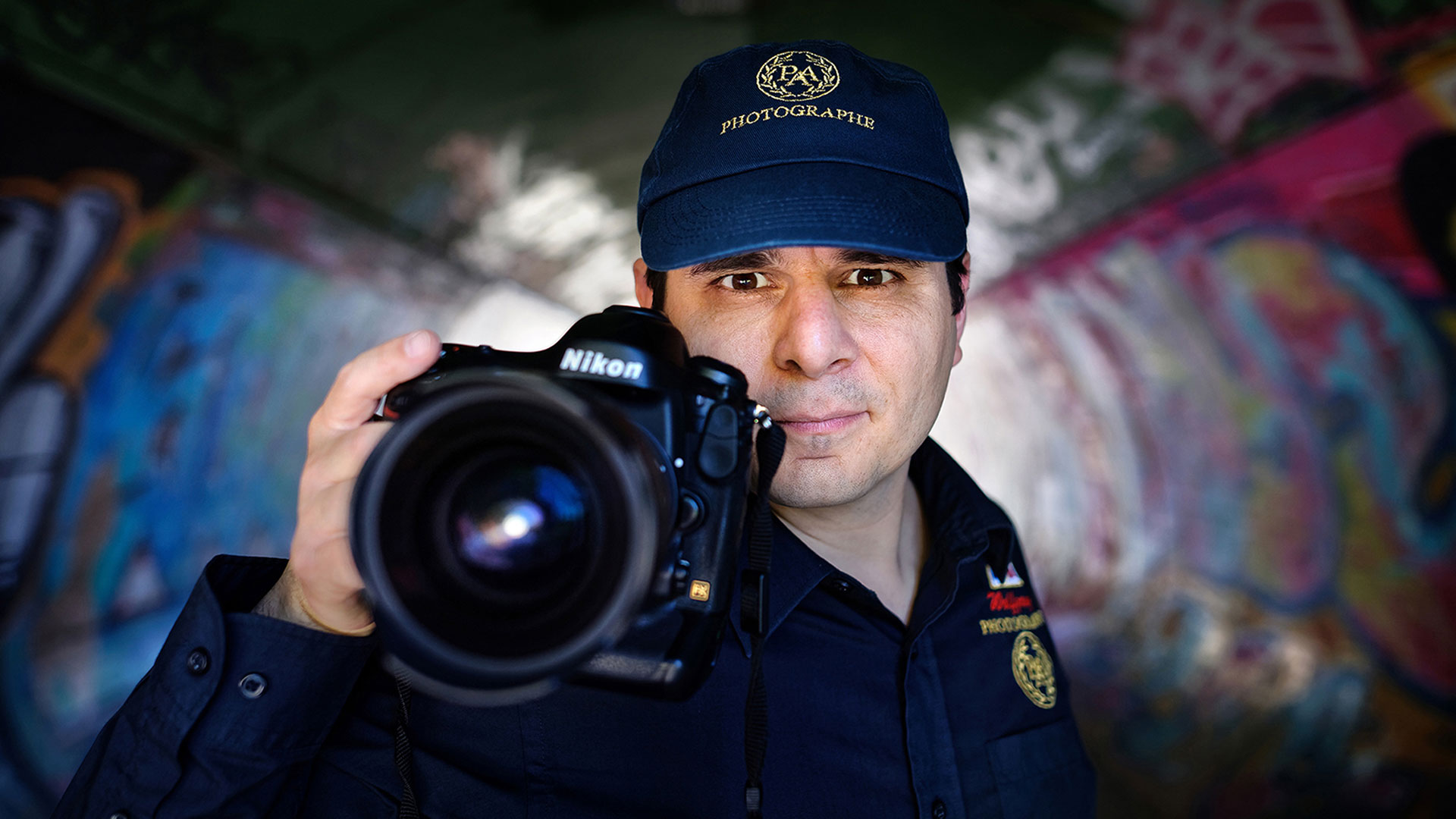
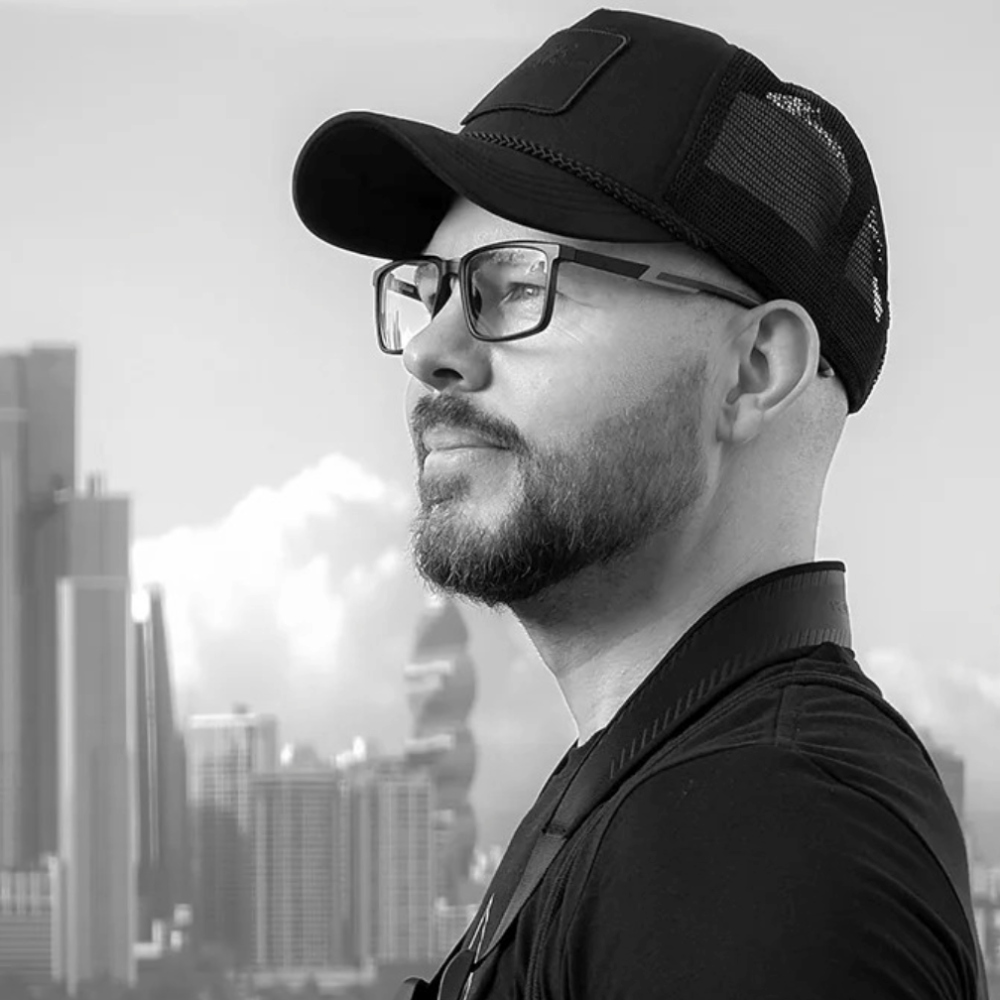
Wolfgang Autexier is a photographer and visual artist whose work spans architecture, landscapes, wildlife, nudes, and portraiture. Influenced by his background in painting, he approaches photography as both an artistic and poetic expression, seeking meaning beyond what is immediately visible.
I am not just a photographer; I come from a painting background. I was a pastel and watercolor artist for a long time. However, I was introduced to photography at a very young age. It was the golden age of digital photography that awakened my interest. Photography as an artistic medium became very flexible and intuitive with digital technology—easy to master. Nevertheless, my first photograph was taken on film, using a genuine old-fashioned process that was entirely manual. It was formative.
In my early days, I was almost exclusively a wildlife photographer for many years. In recent years, I have moved beyond wildlife and expanded my focus to architecture, landscapes, nudes, and even portraits.
I define myself more as an artist and a poet than as a photographer.
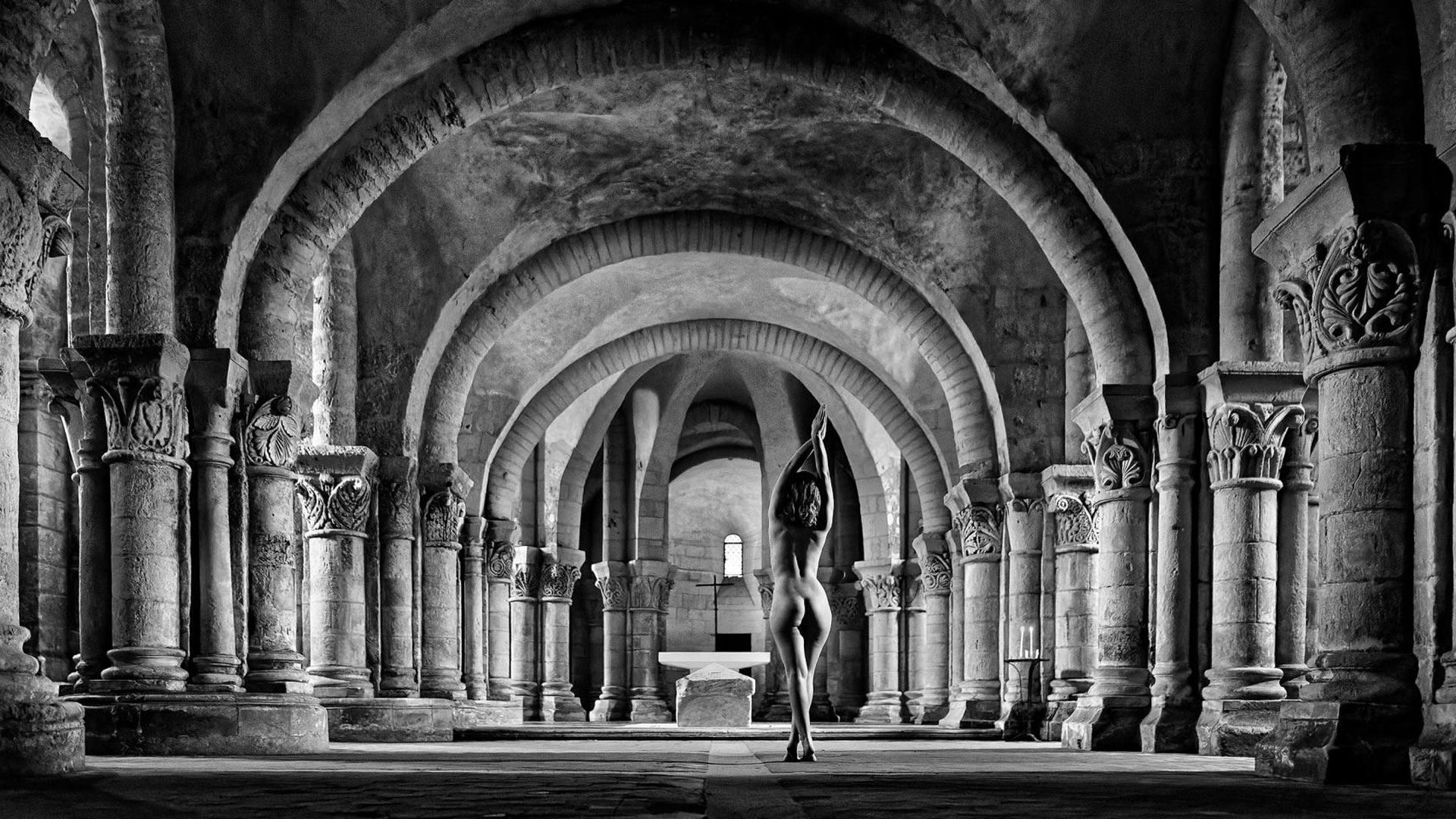
Surprisingly, it was my work in architecture that became the starting point for this project. The connection between spirituality, architecture, and the nude was anything but obvious. Real spirituality is inward—the kind that exists beyond religion.
The setting lends itself perfectly to meditation and introspection. The inspiration came to me during a visit to photograph the architecture. I took the time to stop shooting, to pause for introspection, and to take an inner breath. That is when the idea emerged. This story may sound like a poetic cliché, but it is by giving our emotions space to surface that we create our best work.
I make my selections for competitions based on two lines of thought. On the one hand, each competition and jury has its own character and expectations, and you need to understand that when submitting your work. On the other hand, I have personal favorites—works that I strongly believe deserve recognition.
The piece we are discussing here is my most awarded work in international competitions. For my first participation in the European Photography Awards, it was my strongest submission. It had already received 30 awards in previous competitions and, during the 2026 MUSE Photography Awards, received four additional awards.
I'll answer by going back to my past as a painter. Photography has a more spontaneous and instinctive dimension; we work at the speed of intuition. Photography is an act of the moment. Even a watercolor artist who paints very quickly cannot do that.
It's hard to say. But it seems to me that I've turned black-and-white photography into a real creative playground. It's particularly rewarding to enhance a photograph's expressiveness through black-and-white post-processing.
In the past, I was deeply involved in wildlife photography. It's a challenging field that requires patience, as well as an appreciation for moments of peace in the great outdoors. But as the environment has changed, wildlife has become increasingly scarce, and wildlife photographers are among the first witnesses to a troubling and discouraging reality. That's why I moved away from it.
Nude photography brings me back to my work as a painter. In painting, the nude was one of my favorite subjects. Ultimately, it's difficult to rank my preferences. Every subject offers something stimulating for both the artist and the photographer.
Instinct and intuition are important in my photography. My camera settings need to support that. Furthermore, coming from the world of wildlife photography, I have maintained a strong ability to respond to the unexpected.
My preferred setting has been Manual mode for years, with Auto ISO and ND filters when necessary. It allows me to maintain control over both aperture and shutter speed without compromise. I often work with large and very large apertures. The award-winning photograph I received recognition for this year was shot at f/2.
This photograph is a reflection of meditation and introspection. The place where it was taken is a spiritual space that naturally invites both. This work is both a sharing and an invitation to spirituality, as well as to poetry.
It is also important not to forget the culture and history of the arts. Symbolically, the nude evokes humility before the divine, as the biblical reference in Chapter 6 of the Book of Samuel reminds us. Religious art includes numerous depictions of the nude, notably the many figures painted on the walls and ceiling of the Sistine Chapel. The nude is an essential and fundamental element of religious and spiritual art.
Through this photographic work, I hope to inspire spirituality and poetry, as well as a healthy curiosity for learning and culture.
One of the key challenges was organization. The church is a major tourist attraction, and we had to close it to the public during the day in order to work. Fortunately, we only needed fifteen minutes during an off-peak period. Nevertheless, this remained a significant constraint for such a heavily visited site.
There was a second challenge: the instability of the lighting. The space is illuminated through very small bay windows, and the interior remains dim even on sunny days. This cave-like atmosphere contributes to the charm and poetry of the place, but it is also a significant constraint. On days with poor weather, the space becomes extremely dark.
As a result, the photograph needed to be taken using natural light regardless of the overall lighting conditions. That is why I chose to shoot at f/2. On the day of the session, the light was limited due to a heavily overcast sky, and postponing or canceling the shoot was not an option.
Water. I believe there is something deeply inspiring about water for me, even though it is not present in the award-winning photograph discussed here. I also have a strong appreciation for expansive viewpoints, dramatic perspectives, and majestic landscapes. The winning image is one of those works in which the volume and perspective of the space play a particularly important role.
It's difficult to disentangle the influences we absorb from our environment, surroundings, and culture. However, it seems that my background in painting has shaped me into a photographer who interprets the world rather than simply documenting it.
It is the essence of painting that resurfaces in my photography. My grandfather, who introduced me to photography, had a very classical photographic background rooted in traditional black-and-white photography. I believe that influence has left a lasting mark on my work.
I believe that to succeed at the highest level, you need to adopt the same mindset as great athletes: be courageous, persevere, make sacrifices, and avoid wasting energy unnecessarily. Questioning yourself is also a key factor in success. Art and photography are not magic; they are the result of hard work.
The success of an artist, regardless of their specialty, depends on their own abilities, but also on the people they meet and those around them. Surround yourself with the right people and seek good advice.
Good advisors are not necessarily the ones who flatter you. Success requires both competence and sincerity.
Today, we are extremely demanding when it comes to the finishing of photographs. There is a kind of escalation in the pursuit of the perfect image. Even when striving for an organic rendering, I remain influenced by this artistic trend. Retouching is therefore a key element in the finishing of my work.
Furthermore, we must not forget that I come from the world of painting, where everything is ultimately retouched. For me, it is natural to approach the creation of a work of art this way, even when it is photographic.
Many technological innovations have been beneficial. Photography itself was once a technological innovation in the world of art.
Nevertheless, I believe we should be concerned about the rise of AI. It has the potential to be harmful. What makes a work of art valuable is the part that comes from the soul of its creator—the part that emerges from the depths of our sensitivity. It is the pure authenticity of people; it is our true humanity.
Can AI-generated works claim that? Obviously not. They will never be human. By delegating artistic creation to machines, we risk losing a part of our humanity. That is the danger.
It's difficult to choose when all the options are open. However, I think I have a preference for wide open landscapes, spaces free from development and construction, and wild, unspoiled lands.