Fragment
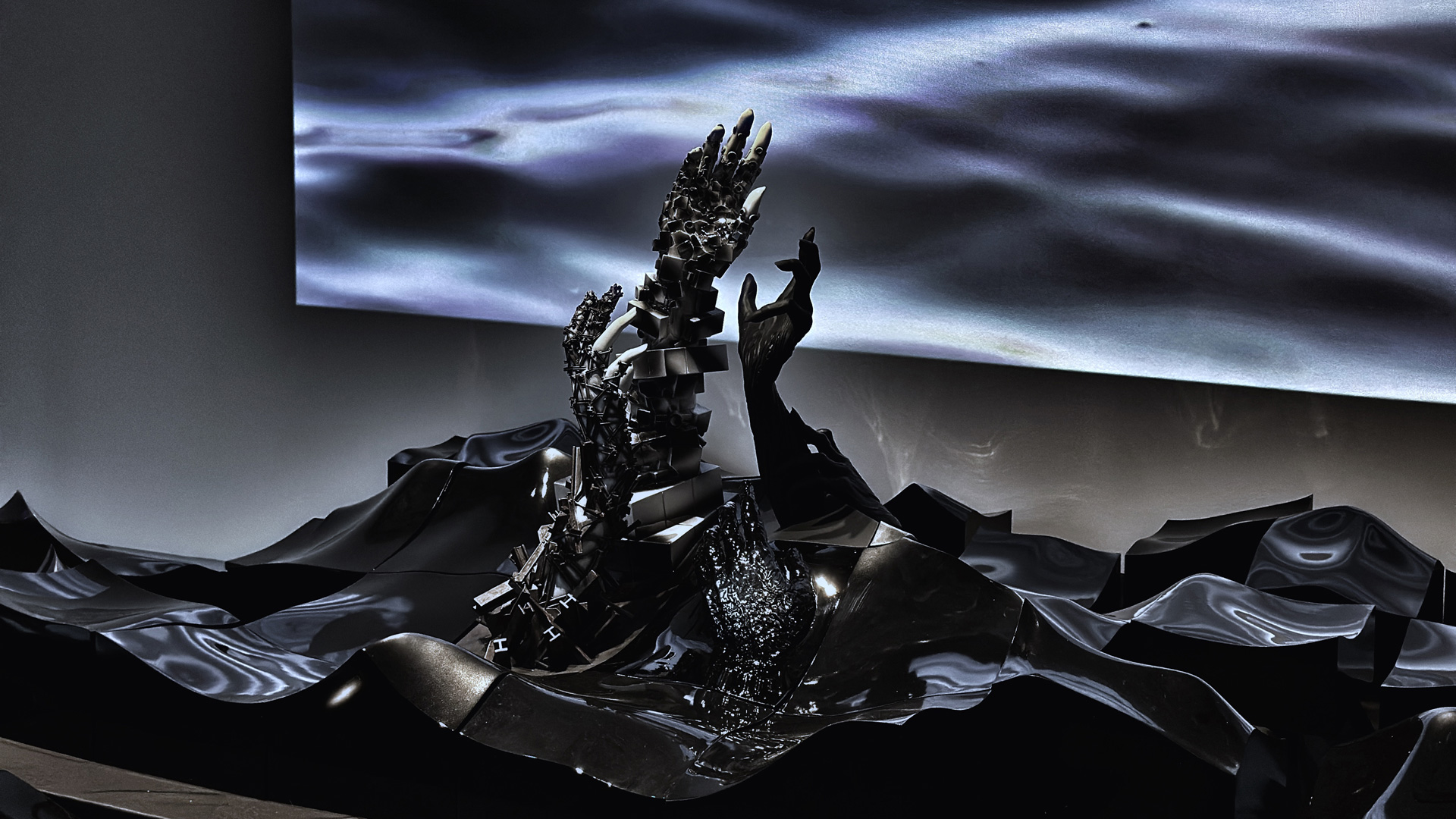
Fragment is a sculptural installation that reimagines fragmentation not as loss, but as a generative...
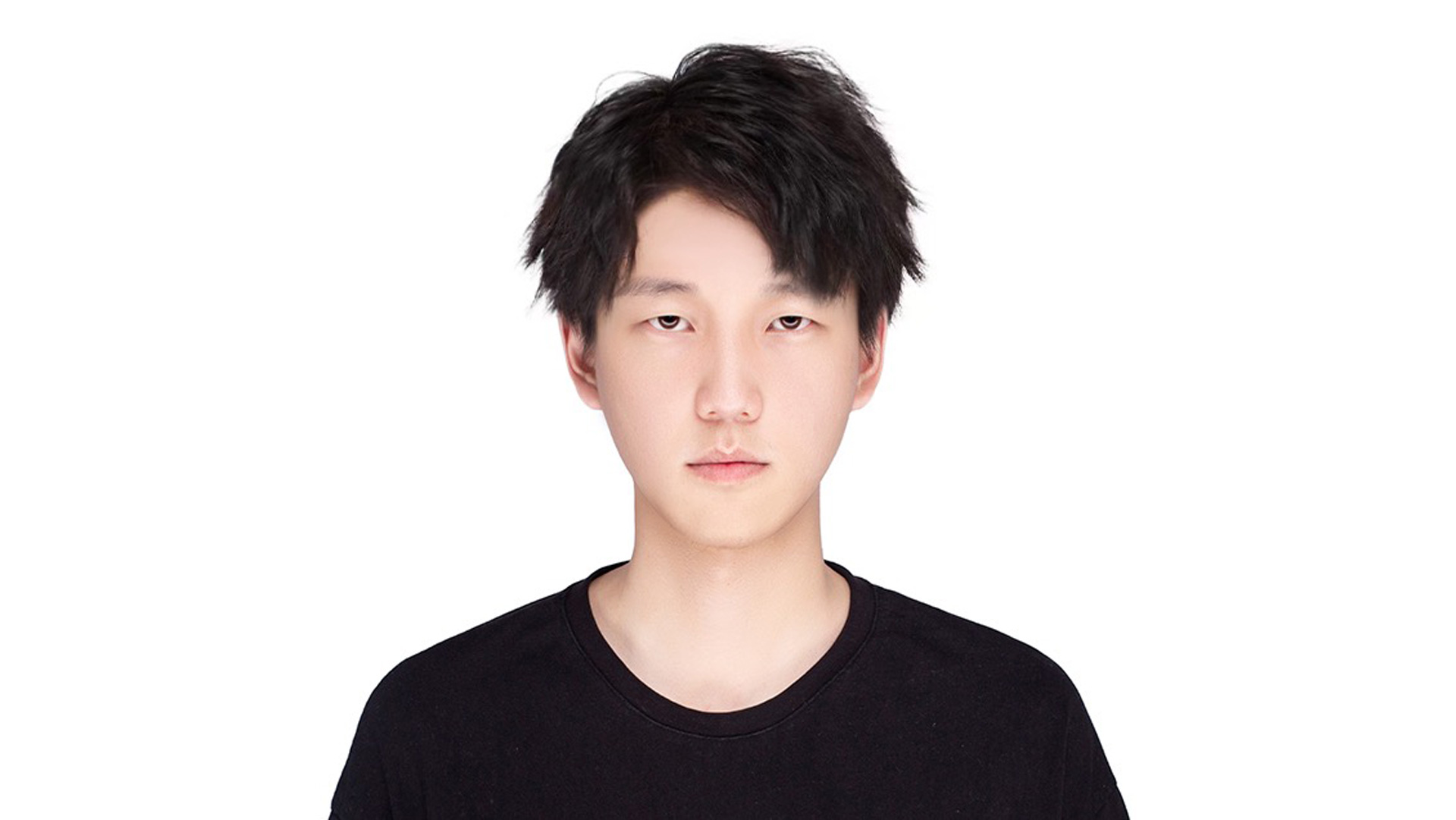
Wenyu Zheng is a creator working at the intersection of art and design, where his practice is driven by a persistent, almost stubborn pursuit of beauty. Rooted in both disciplines, his work explores how form, material, and perception can come together to express ideas that move between the visual and the conceptual.
I am a creator working at the intersection of art and design. These two fields have always felt like a natural fit for me, driven by a persistent, almost stubborn pursuit of beauty. I began learning art and drawing at a young age, which gradually led me onto this path.
I later pursued formal studies in this field and completed my graduate degree at the School of the Art Institute of Chicago (SAIC). Today, I work as an independent artist while drawing on my background in design, combining the two to explore a practice that exists between art, design, and making.
I have been aware of the MUSE platform for quite some time and have always seen it as a highly influential international award.
This year, I noticed a category that aligned well with my work, and at the same time, this particular project had reached a stage where I felt it was ready to be shown. I decided to submit it, partly out of curiosity — to see how it would be received in a broader context and whether it might be recognized.
Winning has made me genuinely happy. For me, it is not only an honor, but also a strong source of encouragement. It gives me greater confidence in my future practice, as if affirming that I can trust my own aesthetic and judgment, and that I should continue creating more ambitious, fully realized work to share with others.
The work grew out of a period of self-reflection on design and art. Conceptually, it is built around a logic of memory and “fragments.” I realized that when we recall an event, we rarely experience it in a linear way. Instead, we often begin with a single detail or image, then move forwards and backwards from that point, gradually reconstructing the larger scene.
I feel that the creative process works in a similar way. We begin with small, scattered sparks of inspiration, and through extension, association, and the linking of cause and effect, a complete work gradually takes shape. This piece is my attempt to visualize that fragmented state of both design and memory.
In a way, it also functions as a fragmentary personal memoir, containing my feelings, observations, and thoughts from a particular period of time. Rather than constructing a clear narrative with a beginning and an end, I am more interested in extracting certain emotional and atmospheric elements from those moments.
When viewers encounter the work, I hope these fragments can trigger their own memories — so that through a single detail, they are invited to reconstruct their own internal images. As for what the work represents in today’s creative industry, I would say it is, first and foremost, a deeply personal exploration.
It did not begin from any existing industry discourse or trend. If anything, it reflects how a younger generation of artists may approach art more independently, without being overly constrained by established frameworks or precedents.
While it is difficult to objectively explain why this project stood out in such a competitive field, I believe it reflects the high standards I hold for both aesthetics and execution in my work. If a piece does not satisfy me across multiple dimensions — its form, materiality, structure, and conceptual or emotional coherence — I would not feel comfortable presenting it publicly.
With this work, I pushed myself to refine both the visual details and the conceptual layers until I could genuinely stand behind it. Perhaps it is this commitment to the overall quality of the piece — not just a single “wow factor” — that allowed it to feel more complete from the jurors’ perspective, and ultimately be selected among many strong entries.
The most challenging part of this project was not technical, but conceptual. As an abstract work, it does not begin with a straightforward, linear narrative. Within the piece, there are four hand motifs.
Many people might assume that I first designed the hands and then assigned meanings to them, but in reality, the process was the opposite. I began with a large number of scattered ideas and sensations — far more than four — and they were quite chaotic. The challenge was to filter and refine these concepts, eventually distilling them into a small number of core ideas that could be convincingly embodied in the work.
During this stage, I had to constantly ask myself “why”: Why these concepts? Why this particular combination? Why is this way of expressing them necessary? Many of the answers came from deeply emotional and intuitive experiences, but to make them coherent, I had to repeatedly revisit my own memories and examine my thoughts and feelings from different perspectives. That process of internal questioning and self-dialogue was the most demanding part for me.
By comparison, the technical challenges were much more manageable. For example, I used VR to build the 3D forms, which was a new tool and workflow I taught myself specifically for this project. It required time and effort, but with enough practice and iteration, those challenges were ultimately resolved.
Winning on such a well-recognized platform gives me a strong sense of being “seen.” It makes me feel that my aesthetic choices, the direction of my work, and my overall abilities have been acknowledged, at least to some extent. This kind of external recognition becomes a form of internal support, giving me greater confidence to stay committed to my own judgment rather than being easily influenced by external pressures or trends.
In terms of concrete changes or opportunities, I feel that things are still in an early stage of unfolding. If institutions, brands, or curators discover my work through this award and reach out for collaborations or exhibitions, I would be very excited about that.
Beyond my personal practice, I also take on a “bridge” role in production, helping artists and designers in the United States connect with factories in China so their projects can be realized efficiently, with high-quality materials and more competitive costs. I have already had a few successful collaborations in this area, and I hope that the visibility from this award will allow more people who need this kind of support to find me.
My friends and teachers were genuinely happy for me when they learned that this work had won an award, and that kind of support from people around me means a great deal. One moment that left a particularly strong impression on me was a conversation with a magazine editor. After seeing the piece, he instinctively associated it with certain historical narratives and images. He could not fully explain why — it felt more like an immediate trigger of memory.
That response was very meaningful to me, because my original intention for this work was to activate the viewers’ own memories and experiences, allowing them to “complete” the fragments from within themselves. Seeing someone form such a spontaneous association, without any explicit guidance, made me feel that the work had, in a way, fulfilled its purpose.
Rather than a strict “methodology,” I believe the most important thing is actually quite simple: take the time to genuinely understand yourself, identify what you are truly good at and what you truly care about, and then commit to it over the long term.
Along the way, you may need a kind of slightly irrational confidence — a quiet but firm persistence that often only you can see — along with a sense of ambition that keeps you moving forward even when things are difficult. There will be phases where others may not fully understand why you keep going, and you can only rely on yourself to continue. But those unseen moments of persistence are often what ultimately make your work uniquely your own.
The changes in the creative industry are very visible, especially with the rapid rise of AI in recent years, which has encouraged many to rethink the boundaries of creation.
For me, however, art remains a very special field. It does not operate on the same logic as efficiency or automation. Many things that truly move people still come from a slower process — from experiences, contradictions, and reflections that are allowed to accumulate over time.
Looking ahead, I hope to position myself as an independent artist with a sustained practice, with ongoing opportunities to create and exhibit, and to present work across different countries and cities.
At the same time, I hope to receive support from institutions or collectors so that I can realize larger-scale projects. I am especially drawn to observing cultural differences and visual languages in different places, and the idea of traveling with my work and allowing it to exist across various contexts around the world feels very meaningful to me.
I completely understand why many people hesitate to enter awards, especially when they are just starting out and feel that they are “not ready yet.” But in my experience, the most important step is simply putting your work out there.
Even if the outcome is uncertain, submitting to a competition is a way of placing your work into a larger conversation. It allows you to see your work from a more objective distance, and sometimes helps you realize that you have already come further than you thought.
If you are unsure, I would suggest treating your first submission as a form of practice rather than a final exam — an opportunity to have your work seen, rather than a judgment of your value. As you accumulate more of these experiences, your confidence in sharing your work will naturally grow.
I have always felt that the creative industry is an ecosystem where we lift each other up. The more sincerely and deeply you commit to your work, the more you open up possibilities for others to be challenged, inspired, or moved by it.
So my hope is that, even under pressure and deadlines, we can still preserve a sense of “unnecessary sensitivity” and “unnecessary curiosity” — taking the time to notice things beyond our immediate work, and allowing ourselves moments that are not driven by productivity.
On a more practical level, I deeply value relationships where peers support one another by sharing ideas, exchanging resources, and offering encouragement when needed. Whether in art, marketing, or advertising, we are all trying to communicate with the world. If we can do so with more honesty, patience, and mutual support, I believe the work that emerges will carry a very different kind of vitality.
I would like to dedicate this achievement first to my family and friends, who have consistently supported me, even in the moments when I doubted myself the most. Their trust and encouragement are a big part of why I am able to continue on this path.
At the same time, I would especially like to dedicate this to the teachers who have profoundly shaped my practice, particularly my professor Nick at SAIC. He was the person who guided me from a more fashion design oriented path into a broader, more open ended artistic practice. In the end, one’s path is something you have to walk yourself, but as a mentor, he showed me a kind of genuine passion that is rare to encounter.
The way he speaks, the way he carries himself, and the way he remains committed to his principles in art have all influenced me in very real ways. They helped me understand that those who go far in this field are not only talented, but also grounded in a strong sense of passion and integrity. I am deeply grateful to him, and to everyone who has offered me opportunities, advice, or even criticism along the way. For me, this award is something I share with all of them.
If I had to describe this work in one sentence, I would say:
“It is a self-portrait assembled from fragmented memories, with enough space for each viewer to insert their own.”
I describe it this way because, on one hand, the piece is very personal and rooted in my own experiences and emotions; on the other hand, it is intentionally open. It does not prescribe what the viewer must see or feel, but instead invites them to complete the fragments with their own memories.
Looking ahead, I am working on a new project that also revolves around the idea of time. It will combine sculpture with living plants, exploring a form of work that grows, changes, and perhaps even partially disappears over time.
At the moment, I am still testing materials and pacing, exploring how to make it not just a static object to be viewed, but a process that unfolds in real, physical time.
Once the project reaches a more developed stage, I plan to bring it into public view, whether through exhibitions, public programs, or other formats. I will continue to develop along the threads of “memory,” “fragments,” and “time,” and experiment with how different mediums can speak to one another. I hope this will also become a way for me to connect with audiences across different cities and contexts.