Weci | Koninut
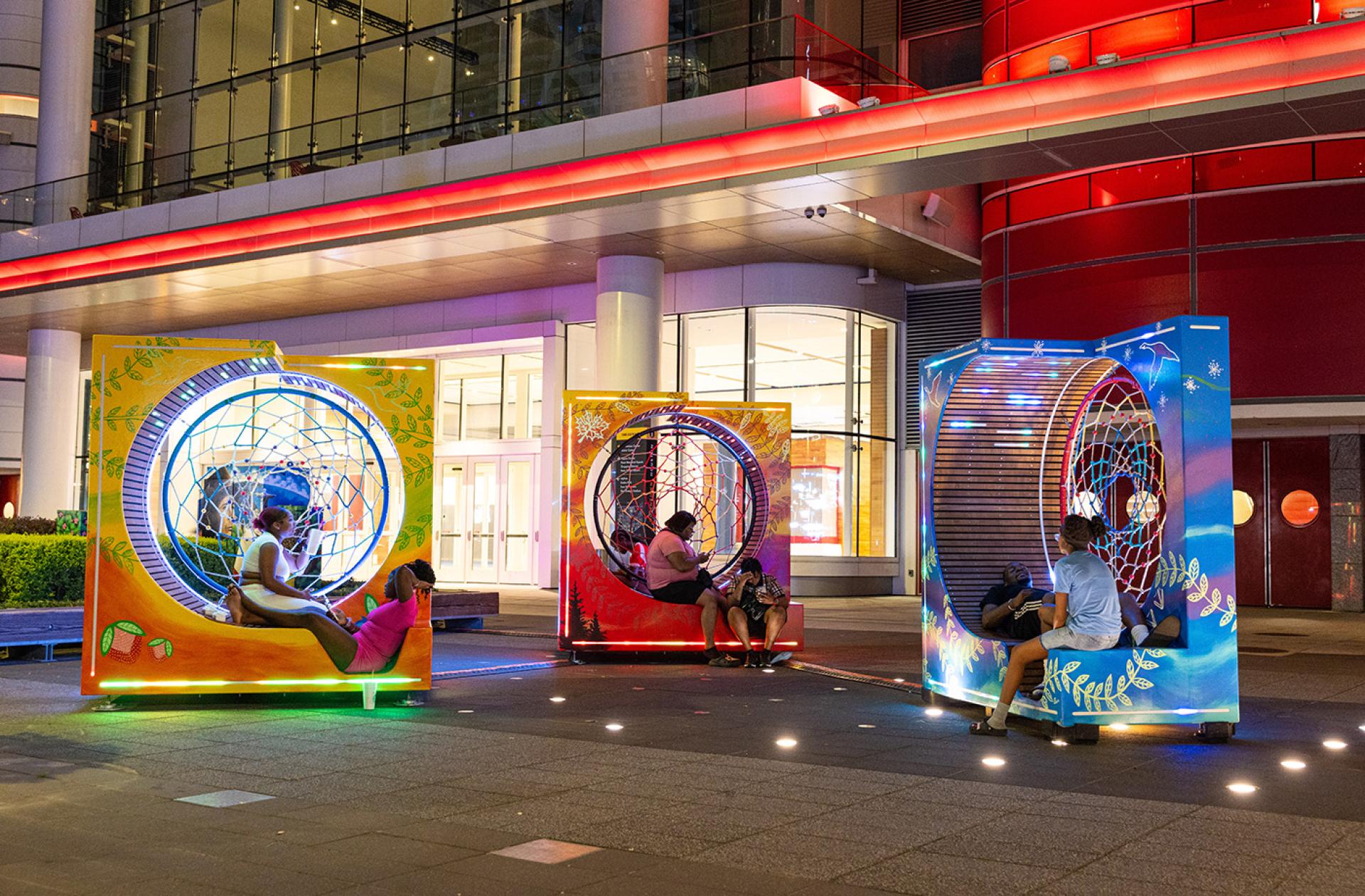
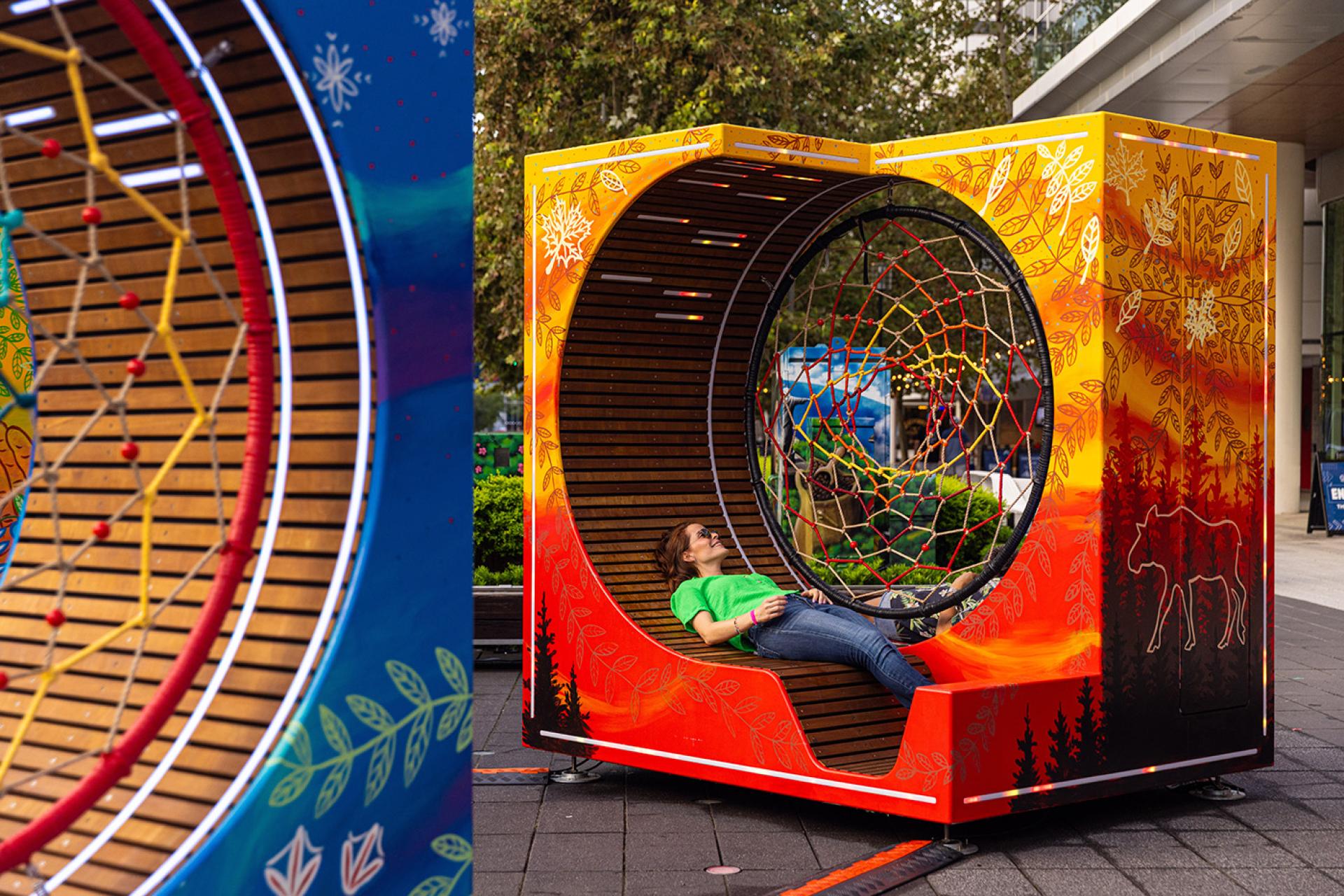
Weci | Koninut is a large-scale immersive public installation inspired by the six-season worldview of...
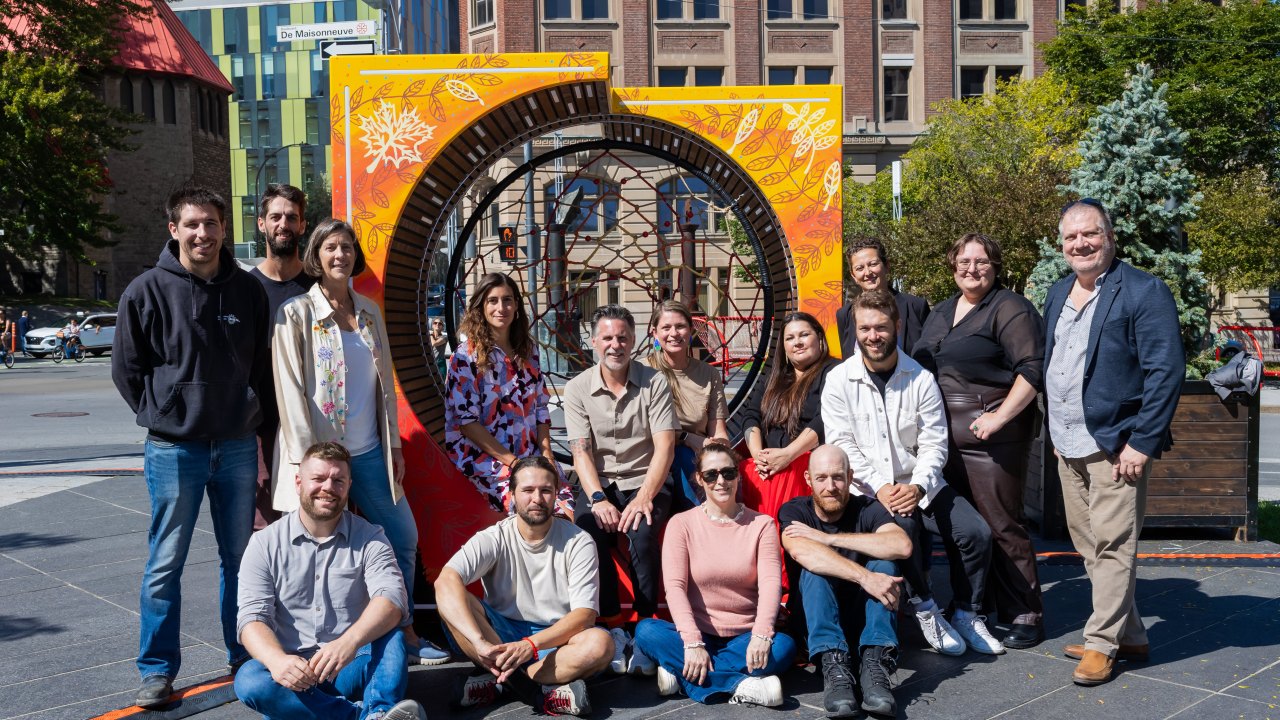
Init Development Inc. is dedicated to shaping impactful developments through a design-centered approach. By integrating creativity, practicality, and innovation, the company creates spaces that support both people and communities.
Thank you! This recognition is deeply meaningful for everyone involved in Weci | Koninut.
We felt the NY Architectural & Interior Design Awards was the right platform for this project because Weci | Koninut exists at the intersection of public space, experiential design, and cultural storytelling. The installation brings forward Indigenous narratives and relationships to territory that remain underrepresented in large-scale urban experiences.
Created in collaboration with Indigenous artists and knowledge keepers from Quebec, the project explores dreaming, transmission, and the six Atikamekw seasons through an immersive public environment designed to invite reflection, presence, and connection.
The project also strongly resonated with the mission of the NY Architectural & Interior Design Awards, which celebrates designs that shape communities and shared spaces. Through Weci | Koninut, we wanted to highlight how Indigenous storytelling and public art can meaningfully contribute to the way people experience contemporary urban environments.
“Weci | Koninut was born from a dream: to create a work that brings people together, that travels, and that bears witness to the richness of Indigenous cultures in Quebec — a work rooted in tradition and oriented toward the future.”
This vision, imagined by co-creators Dave Jenniss and Julie-Christina Picher, grew from the image of an ancestor walking through the forest — a journey through territory, seasons, and inner reflection that became the narrative foundation of the installation.
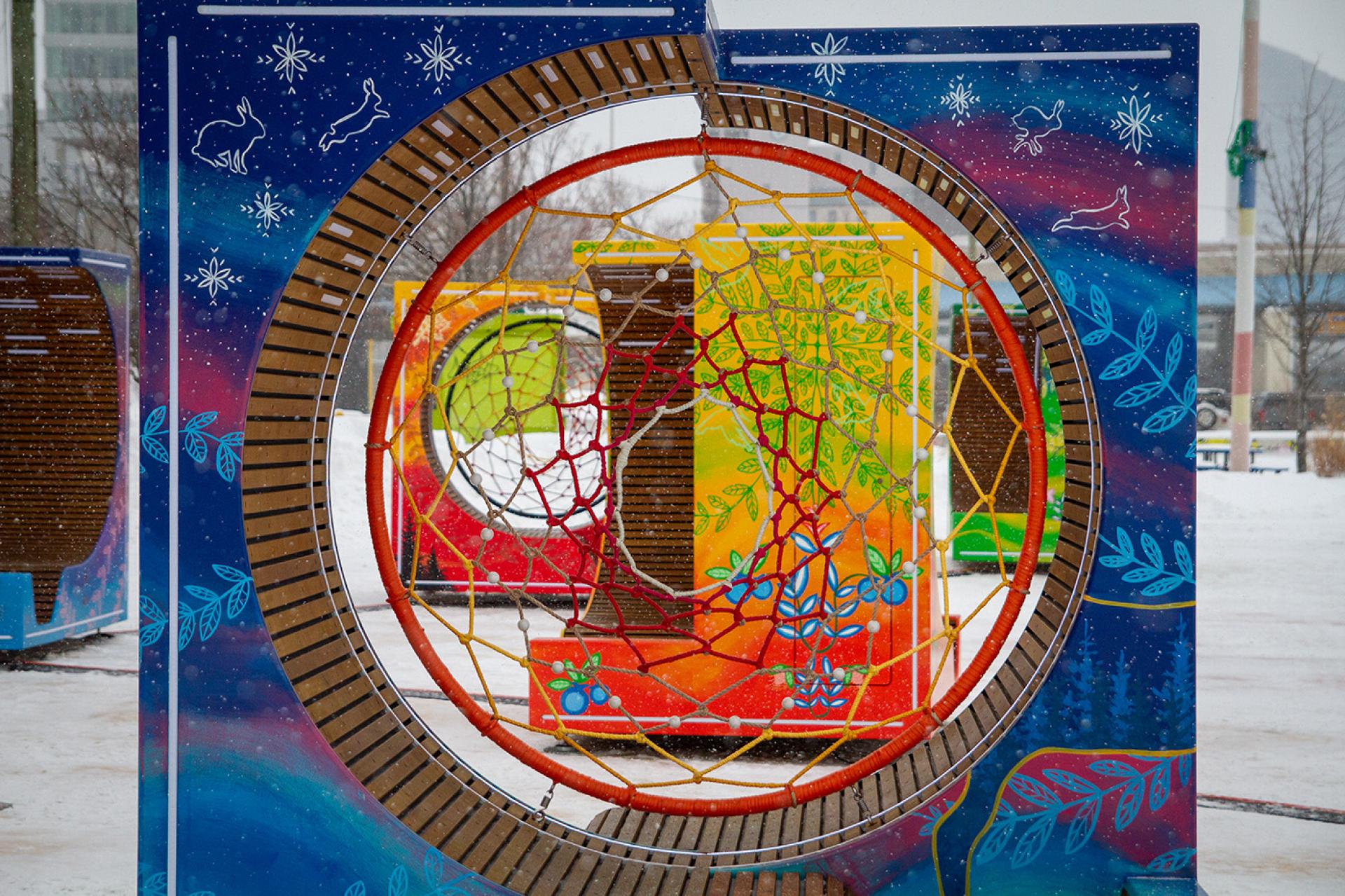
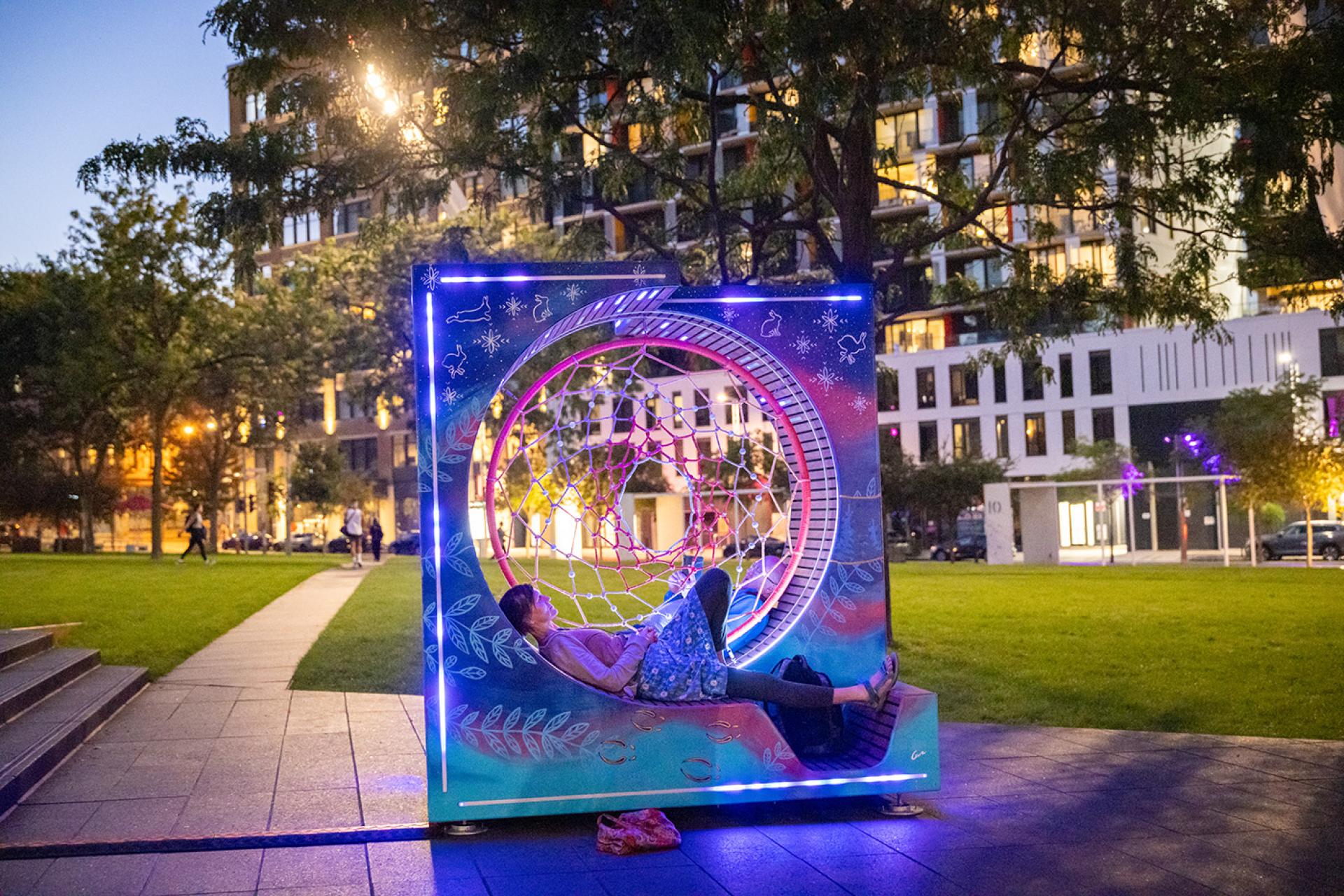
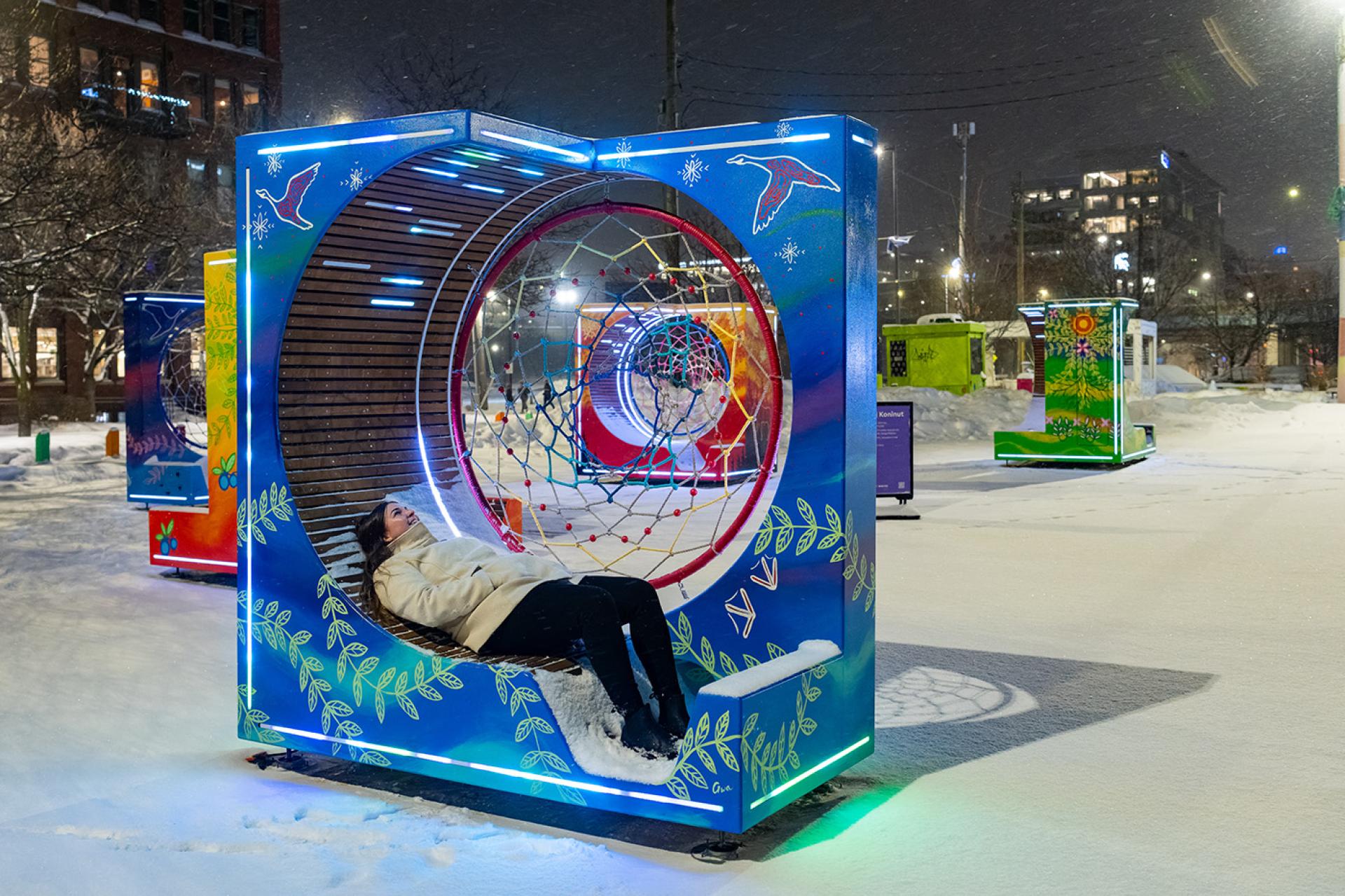
Inspired by the six Atikamekw seasons, the project takes shape through six monumental dreamcatchers animated by light, sound, pictorial environments, and symbolic storytelling.
More than a structure to observe, Weci | Koninut was designed as a space to inhabit — a nomadic work conceived to travel across territories, encounter communities, and carry its stories from place to place.
While we’re not architects in the traditional sense, our journey is deeply rooted in design, storytelling, and placemaking. Init is a creative studio that brings together scenographers, engineers, multidisciplinary artists, and makers to design immersive experiences that reshape how people engage with public space.
Over the past several years, we’ve created installations that spark wonder, connection, and a sense of belonging because we believe public spaces play an essential role in collective well-being.
With Weci | Koninut, that approach took on a particularly meaningful dimension through the collaboration with creators Dave Jenniss and Julie-Christina Picher, whose scenographic background brought a strong narrative and sensory sensitivity to the project. Together, we explored how an immersive artistic language could be experienced freely within everyday urban environments and across different communities.
At Init, our mission is to create artistic experiences that transform public space into places of connection, reflection, and shared discovery. We design immersive installations that invite people to slow down, engage with their surroundings, and experience cities in more human and meaningful ways.
Our work brings together scenography, design, technology, and fabrication to create projects that are both emotionally resonant and operationally adaptable. Because most of our installations are designed to tour, accessibility, durability, and flexibility are central to our approach from the very beginning.
Beyond design and production, we also see ourselves as facilitators of placemaking. Whether through temporary installations or long-term collaborations, our goal is always to create experiences that generate positive social impact and strengthen the relationship between people and public space.
One of the most significant challenges was translating the symbolic and handcrafted language of the dreamcatcher into a monumental public installation capable of travelling between cities and climates without losing its sensitivity or authenticity.
The weaving techniques traditionally used at an intimate scale had to be adapted to an architectural dimension while remaining faithful to their cultural meaning and material presence. This required extensive prototyping, close collaboration with artisans and knowledge keepers, and the integration of discreet contemporary solutions to ensure long-term durability and safety in public space.
Another important challenge was finding the right balance between organic materiality and structural resilience. From the beginning, the team wanted the installation to feel warm, tactile, and grounded in natural materials rather than industrial aesthetics. At the same time, the work needed to withstand transportation, outdoor conditions, and repeated installations across North America.
In many ways, these constraints shaped the final identity of Weci | Koninut. They pushed the project toward a more thoughtful and integrated relationship between storytelling, materiality, mobility, and public experience.
Our design process is deeply collaborative and evolves through constant dialogue between artistic vision, material exploration, and public experience.
Each project begins with a strong creative intention. With Weci | Koninut, Dave Jenniss and Julie-Christina Picher’s initial vision shaped the emotional and narrative foundation of the work. From there, the process became a collective effort involving artists, artisans, designers, fabricators, technical teams, and cultural collaborators.
At Init, we always think about how a project will live in public space from the earliest stages of development. How will people move through it? How will they feel inside it? How can the experience remain intuitive, meaningful, and accessible across different contexts and communities?
Experimentation is also an essential part of the process. Weci | Koninut required extensive prototyping, material research, and close collaboration between traditional craftsmanship and contemporary production techniques. Because the installation was designed to tour, durability, modularity, and adaptability were integrated into every design decision from the beginning.
Ultimately, our process is about creating experiences that feel both emotionally resonant and technically grounded — where storytelling, space, and human interaction become inseparable.
Collaboration, transmission and discovery.
One of the most meaningful aspects of Weci | Koninut has been seeing how naturally people slow down and spend time within the installation, even in fast-moving urban environments.
Across different cities, we received feedback from visitors describing the experience as calming, reflective, immersive, and emotionally grounding. Many people shared that they unexpectedly felt a sense of peace or connection while moving through the work — something particularly striking in dense public spaces where experiences are often brief and transactional.
We were also deeply touched by the response from cultural and civic partners. Houston First described the installation as “building bridges between people,” while the Quartier des Spectacles highlighted its ability to transform public space into a place of discovery, contemplation, and connection with Atikamekw culture.
What surprised us most was how broadly the project resonated across generations and communities. Whether through media coverage, social media reactions, or conversations on site, people connected not only with the visual experience but with the atmosphere and presence the installation created around them.
Receiving this recognition is deeply meaningful because Weci | Koninut was, from the very beginning, an intensely collaborative project shaped by many voices, origins, disciplines, and forms of expertise.
For everyone involved, the award validates the entire journey behind the work, from the initial dream and artistic vision to its realization within public spaces. It recognizes not only the artwork itself, but also the care, dialogue, experimentation, and collective commitment required to bring it to life.
For Init, this recognition reinforces our desire to continue pushing the boundaries of temporary public art and creating experiences that can meaningfully transform how people inhabit and connect within shared spaces.
It is also especially meaningful for the creators, as Weci | Koninut marks their first large-scale public installation. Seeing this work resonate internationally and receive this kind of recognition has been incredibly rewarding for the entire team and every collaborator who contributed to the project.
This recognition reinforces our belief that public art can create meaningful and lasting connections between people, culture, and place.
For Init, it validates the care, rigour, and collaborative approach that guide our work. It also encourages us to keep pushing the boundaries of temporary public art while staying grounded in the values that have shaped our practice from the beginning.
More than anything, the award motivates us to continue creating immersive experiences that bring sensitivity, imagination, and human connection into everyday public spaces.
We’re constantly inspired by projects that transform public space into places of emotion, interaction, and shared experience.
Right now, we’re especially excited about Bouquet, a new large-scale installation premiering in 2026. Through light, colour, and monumental floral forms, the project explores new ways of creating wonder and connection within everyday urban environments.
We believe the future of architecture and public space will become increasingly experiential, human-centered, and emotionally driven.
People are looking for spaces that do more than serve a function — they want environments that create connection, reflection, interaction, and a sense of belonging. We also believe there will be a growing importance placed on cultural narratives, inclusivity, and the ability of public spaces to reflect the identities and stories of the communities that inhabit them.
At Init, we hope to contribute to this evolution by continuing to create immersive public art experiences that bring together storytelling, design, technology, and collective experience in meaningful ways.
We see sustainability as something that goes beyond materials alone. It also involves creating public spaces and experiences that people genuinely connect with and want to care for over time.
At Init, many of our installations are designed for touring, which encourages us to think carefully about durability, modularity, transportation, and long-term adaptability from the earliest stages of conception. Creating projects that can evolve through different cities and contexts is already part of a more sustainable approach to temporary public art.
With Weci | Koninut, particular attention was also given to materiality. The installation combines durable and reusable materials, with a strong presence of wood and modular structural elements designed to maximize longevity, maintenance, and future reuse.
More broadly, we believe the future of sustainable public design also lies in creating experiences that foster presence, connection, and a stronger emotional relationship between people and the spaces they share.
If we could design without limits, we would love to create a large-scale journey of interactive installations unfolding across unexpected open landscapes, revealing the hidden potential of underused spaces through art. Projects like these could help raise awareness among landowners, cities, and institutions about the value of making more spaces accessible for cultural and artistic activations.
Beyond the scale of the installations themselves, our greatest ambition is simply for our work to reach more communities, especially places where access to large-scale cultural experiences is more limited.
Read another insightful interview about Architecture, Landscape, and the Future of Public Space with Chentian Liu through this link here.