MedAI.li: Analyzing the Past to Change the Future
This approach became the foundation of Longitudinal Intelligence—her methodology for analyzing medical data across decades....

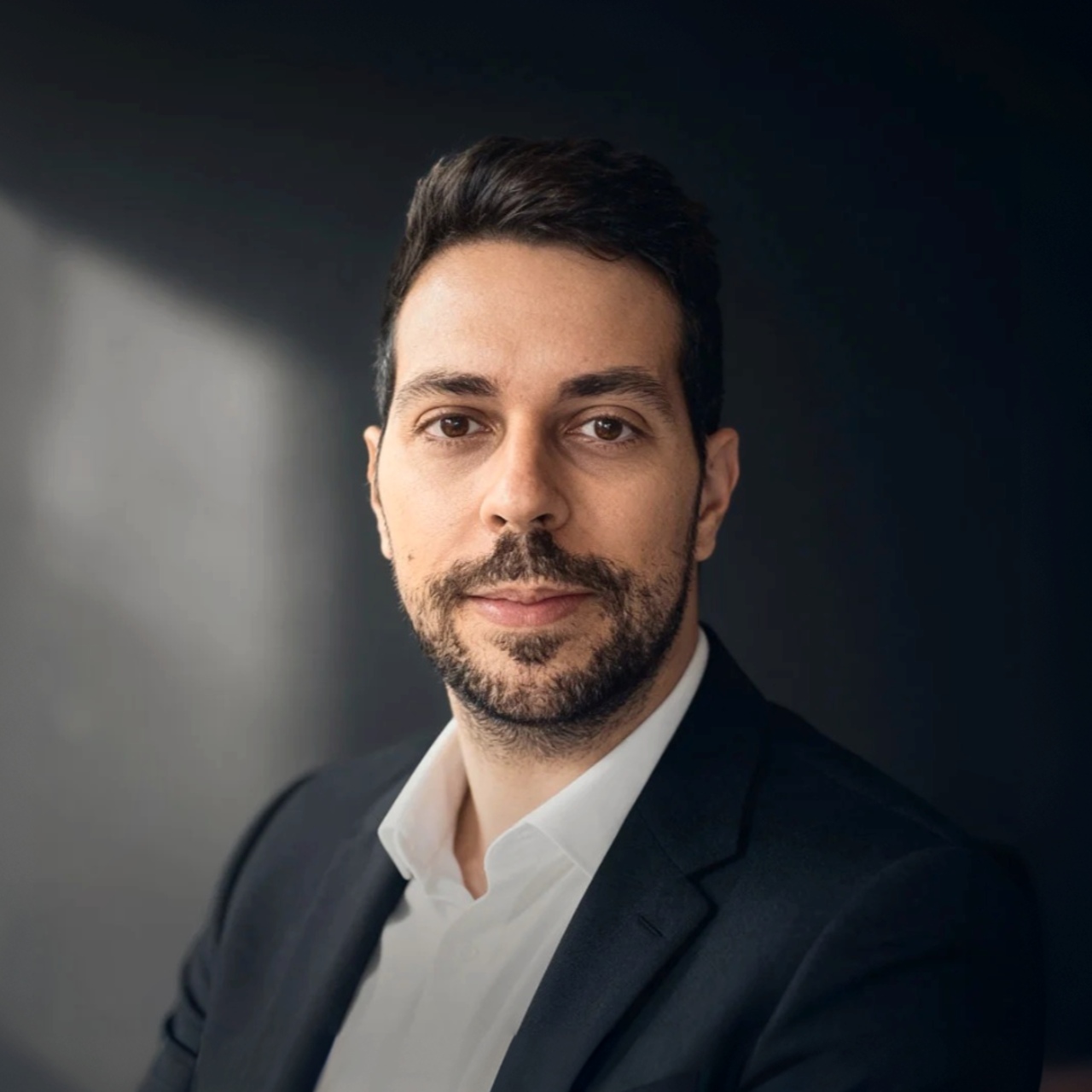
Natalia Sokolova is a precision medicine data scientist and founder of MedAI.li, specializing in longitudinal clinical data analysis. She applies mathematical modeling to unify complex, multi-system patient records, revealing overlooked patterns and validating clinical decisions with high precision. Her approach transforms fragmented data into actionable intelligence for advanced medical care.
Thank you. I am Natalia Sokolova, an International Expert in Longitudinal Intelligence and a Clinical Data Strategist. I serve as a Clinical Data Validator and Precision Medicine Data Scientist, and I am the founder of MedAI.li. My mission is to eliminate situations in which critically important findings in medical data remain unnoticed due to their fragmentation and volume.
This TITAN Business Awards Gold recognizes our methodology. I do not treat diseases. I model clinical events, reconstruct missing links in patient histories, and identify errors that have been overlooked — using precise calculations, not assumptions.
My methodology is built on an advanced academic foundation through specialized programs from Johns Hopkins University (focusing on health informatics, biostatistics, oncology biology, and neuroscience/neuroimaging) and the University of Colorado (specializing in artificial intelligence applications for healthcare systems).
At MedAI.li (medai.li), I deliver a Data-Driven Second Opinion that functions as a Strategic Command Center for complex, multi-system cases regardless of diagnosis. My method is disease-agnostic: I fuse decades of fragmented records — CT, MRI, EEG, lab results, drug logs, seizure diaries, surgical protocols — into a single, chronologically precise matrix. I examine all body systems simultaneously — cardiovascular, respiratory, nervous, endocrine, digestive, urinary, musculoskeletal, immune, reproductive — because no pathology exists in isolation.
I then apply mathematical modeling of clinical events: verifying every clinical calculation, restoring missed connections, and uncovering hidden correlations. Where fine-tuning of complex equipment is required — for instance, neurostimulators — my calculations are also able to identify optimal parameters based on the accumulated body of prior data. Every conclusion is anchored in current international clinical guidelines — NCCN, ESC, ACOG, ASCO, EASL, KDIGO and others — so that the treating physician receives not only processed data but also reasoning that complies with the most rigorous modern standards.
In one case, I unified 36 years of scattered epilepsy data — reinterpreting EEG spectra, mapping drug-attack correlations — and for the first time gave neurosurgeons objective grounds to perform a curative resection that had been denied for decades. In another, I conducted a longitudinal audit of chemotherapy safety and identified a lethal drug incompatibility missed by multiple specialists — within 24 hours.
The deliverable is a Strategic Navigation Roadmap: a mathematically grounded, guideline-aligned document that equips the treating physician with an objective evidence base for decision-making. In many cases, this analysis makes it possible to find an organ-preserving alternative and avoid an unjustified radical intervention. This level of analytical support cannot be obtained in any standard medical appointment — it requires the kind of deep independent data analysis that I perform.
I work with patients trapped in diagnostic uncertainty, as well as HNWI and Concierge Medicine Services that require independent quality control. I do not provide diagnoses; I provide the mathematical evidence on which clinical confidence is built.
When I learned about the win, I was overwhelmed with such joy that I couldn’t sleep for almost two days! But very quickly, the emotions were replaced by a deep professional satisfaction. This TITAN Business Awards Gold is a vital confirmation that the Longitudinal Intelligence technology, implemented in the MedAI.li (medai.li) platform, is not just an analytical tool but a necessary level of quality control.
For me personally, this award is a great responsibility. Professionally, it provides a global platform to demonstrate: a physician who receives a strategic navigation roadmap — grounded in precise calculations and international guidelines — makes decisions on a fundamentally different evidence base. In essence, this roadmap acts as intellectual insurance against clinical oversights and iatrogenic errors.
For me, this win is a signal that the independent data analysis offered by medai.li can no longer remain behind the scenes. It must become a safety standard in the treatment of complex, multi-system cases.
I was inspired to submit my entry by the realization that the Longitudinal Intelligence method, implemented on the MedAI.li (medai.li) platform, had reached a level of precision that deserved to be presented on a global expert stage. I knew that our results — for example, the reconstruction of a 36‑year epilepsy history or the detection of a lethal drug incompatibility within 24 hours — speak for themselves. This is not just a "second opinion"; it is a full-scale independent clinical audit based on mathematics and current international guidelines.
My confidence in the entry was rooted in the very architecture of our work. The depth with which we restore the chronology of events, model clinical scenarios, and uncover hidden correlations in fragmented data is unique. I felt certain that the jury, composed of world-class experts, would be able to fully appreciate this approach.
Yes, there was such a moment, and I remember it in the smallest detail. I was working on the case of a patient with drug-resistant epilepsy who had been denied surgical treatment for more than three decades. His data were scattered across dozens of clinics: paper EEG reports, MRI conclusions, seizure diaries, drug lists spanning 36 years. No one had ever assembled them into a single chronology and analyzed them as a complete system.
For the first time, I applied the approach that later became the foundation of Longitudinal Intelligence on the medai.li platform: I fused all records into a chronological matrix, mathematically recalculated EEG spectra for each lead, and correlated seizure clusters with changes in drug therapy. Hidden correlations emerged — the true dynamics of the disease became visible.
The result was a turning point: the neurosurgeons, who previously had no objective grounds for intervention, received a mathematically grounded picture and performed a successful resection. It was at that moment that I understood that independent data synthesis, supported by precise calculations and international guidelines, is capable of changing clinical decisions at the highest level. This case shaped the entire subsequent architecture of MedAI.li and ultimately led our methodology to be recognized with TITAN Business Awards Gold.
Absolutely, such obstacles existed, and they fell into two categories: external and internal.
Externally, the main challenge was that my role — an independent clinical data validator without a medical license — was initially met with caution. In a field that relies heavily on clinical judgment, the idea of a “mathematical audit” of data needed to prove its safety and effectiveness. We overcame this barrier through radical transparency: every document we produce states clearly that we do not make diagnoses and work exclusively with anonymized data. All conclusions are anchored in current international guidelines — NCCN, ESC, ACOG — which makes our reasoning fully verifiable.
Internally, the technical complexity was enormous. Fusing 36 years of paper EEG reports, MRI scans, lab results, and seizure diaries into a single, chronologically precise matrix, and then performing mathematical modeling of clinical events, was a task for which no off-the-shelf solution existed. We built our own cross-validation algorithms and developed the very Longitudinal Intelligence methodology that now underpins the medai.li platform.
It is precisely these technological solutions that allow us to detect a lethal drug incompatibility within 24 hours, to calculate a safe dose-escalation corridor for a chemotherapy drug taking all comorbid risks into account for an elderly patient, or to give neurosurgeons objective grounds for a procedure that had been denied for decades.
And in the case of a child who did not speak until the age of six and had undergone exhaustive genetic testing with no findings, it was the functional synthesis of all neurophysiological data that identified the key pathological link — impaired conduction at the brainstem level — and made it possible to build a targeted rehabilitation strategy.
This award is a powerful instrument for taking the mission of MedAI.li (medai.li) to a fundamentally new level. I plan to leverage the recognition of the TITAN Business Awards in three directions.
First, to make the Longitudinal Intelligence methodology accessible to a greater number of patients and physicians worldwide. We already operate in Russian, English, and European languages; I am currently preparing educational materials that will help the medical community understand exactly how independent data synthesis and mathematical event modeling integrate into clinical practice.
Second, to strengthen the role of an independent audit as a mandatory safety standard in complex, multi-system cases. To this end, I am initiating a dialogue with professional associations and insurance partners in order to demonstrate that a navigation roadmap grounded in international guidelines and precise calculations actually reduces the risk of iatrogenic errors. In essence, this is precisely the “intellectual insurance policy” I mentioned earlier.
Third, and most personal: I want to inspire other experts — biostatisticians, data scientists, specialists in health informatics — to see that their work can directly save lives rather than remaining behind a laboratory door. An award of this caliber gives me the right to say out loud: independent clinical analytics is a full-fledged profession, and medicine needs it right now.
I believe the greatest benefit of entering awards like the TITAN Business Awards is the unique chance to step back and examine your own work from the outside, articulating its value in a language understandable to the international community.
When you are immersed every day in the analysis of the most complex clinical cases, in mathematical modeling, and in the verification of guidelines, you inevitably start to think within your own professional "bubble." Preparing the submission forced me to go beyond it and clearly articulate: what exactly makes the Longitudinal Intelligence methodology so effective, why an independent data audit is critically important for patient safety, and how the medai.li platform is changing the standards of clinical decision-making.
Moreover, evaluation by a world-class jury provides invaluable external validation. When your work is recognized by experts representing global technology corporations and leading healthcare organizations, it means the methodology has been tested at the highest level and is moving in the right direction.
Finally, entering such awards creates a platform for dialogue with those who might never have learned about the existence of an independent clinical audit. It broadens horizons and helps build bridges between isolated worlds — data analytics and practical medicine.
I see three key trends that will fundamentally change the landscape of medical data analysis in the coming years.
First, the definitive shift from "here and now" diagnostics to Longitudinal Intelligence. Medicine is finally realizing that fragmented visits to different specialists and isolated examinations do not provide a complete picture. Fusing all of a patient's data spanning decades into a single chronological matrix, analyzing the dynamics of every indicator, and uncovering hidden correlations — this is the next standard of clinical thinking. This approach is already working in real cases on the MedAI.li (medai.li) platform.
Second, explainable AI that a physician can trust. It is not enough for an algorithm to produce a "recommendation." The physician must see the precise basis on which the conclusion was reached — what mathematical models, international guidelines, and statistical calculations stand behind it. This is exactly the architecture we have built into the Longitudinal Intelligence methodology at MedAI.li (medai.li).
Third, ethical and secure data sharing. As the volume of digital medical records grows, preserving complete patient confidentiality becomes critically important. We address this challenge radically: we work exclusively with anonymized data, which completely eliminates any risk to privacy while maintaining the full depth of analysis.
In preparation for these changes, we are already embedding into our work algorithms that not only identify errors but also give physicians a reproducible, mathematically grounded evidence base for every decision.
I would tell my younger self one thing that no one articulated out loud at the time: the medicine of the future is not magic — it is mathematics. Do not wait for physicians to "recognize" you. Just take the data and show the result in numbers. The more complex and seemingly hopeless the case, the more clearly the difference will be seen between a chaotic set of records and a chronologically precise analytical matrix.
To those who are starting out today at the intersection of clinical data and machine learning, my advice is this: do not hide behind abstract "algorithms." Master international clinical guidelines — NCCN, ESC, ACOG — learn to read medical documentation, and understand what lies behind each lab value. The ability to translate the language of a physician into the language of numbers, and then back into a clinically meaningful conclusion — that is the core skill.
And one more thing: do not be afraid to work with cases that others have abandoned. It is precisely there that your independent analytics will become not just a "second opinion" for the physician, but the only source of objective truth.
To those considering entering the TITAN Business Awards or a similar competition, I would offer one practical piece of advice that worked for me: the key is not to limit yourself to describing the idea, but to back it up with measurable results.
When I prepared our entry, I understood that the jury would evaluate not a beautiful story but evidence. That is why, instead of general phrases, I included in the submission the real outcomes of the Longitudinal Intelligence methodology on the MedAI.li (medai.li) platform: the reconstruction of a chronology of events from decades of fragmented records, the detection of hidden correlations that changed clinical decisions, and the mathematical modeling of safe therapeutic corridors grounded in international guidelines. It was these figures and facts that made the submission compelling.
And second: clearly articulate what makes your approach unique. We do not simply "analyze medical data." We model clinical events, relying on rigorous mathematics and current clinical guidelines, and deliver a strategic navigation roadmap — an objective evidence base for decision-making — to the treating physician. This clarity of positioning allowed the jury to understand instantly how we differ from hundreds of other projects.
The news of the win gave me not only joy but also the professional courage that is sometimes lacking when you work alone. Almost immediately after the results were announced, I made the decision to invest in advanced computing hardware that will allow the MedAI.li (medai.li) platform to reach a fundamentally new level of power. In terms of its specifications, this hardware is comparable to the computing systems used by the world's leading laboratories and medical research centers.
This means that the Longitudinal Intelligence methodology will soon receive even deeper mathematical support: heavy machine learning algorithms and models that demand enormous computational resources will finally be able to operate at full capacity. And these are not distant plans — the hardware is already on its way, the algorithms are prepared, and within a few months we will reach a computational capacity that was previously unattainable for us.
In parallel, we are expanding partnerships with concierge medicine services — precisely where patients with multi-system diseases receive treatment in multiple countries and desperately need all of their data fused into a single analytical picture. And of course, I continue direct work with treating physicians who need an objective navigation roadmap for complex cases — this remains the heart of what I do.
I would like to conclude this interview with a simple but most important thought. For many years, I have seen how patients with severe diagnoses go in circles for years because their data is scattered across different clinics, and physicians, limited by appointment time, have no opportunity to assemble the full picture.
The Longitudinal Intelligence methodology and the MedAI.li (medai.li) platform were born from the realization of a simple fact: mathematics can see in dozens of fragmented documents what the human eye cannot. And when a physician receives a strategic navigation roadmap grounded in precise calculations and international guidelines, their decision ceases to be a matter of intuition and becomes a matter of evidence.
This TITAN Business Awards recognition is not the finish line but a confirmation that our path is the right one. We will continue to do everything possible so that no critical medical decision is ever made blindly.

Click here to read about the interview on The Layers of Enterprise Intelligence by Abhradeep Chatterjee.