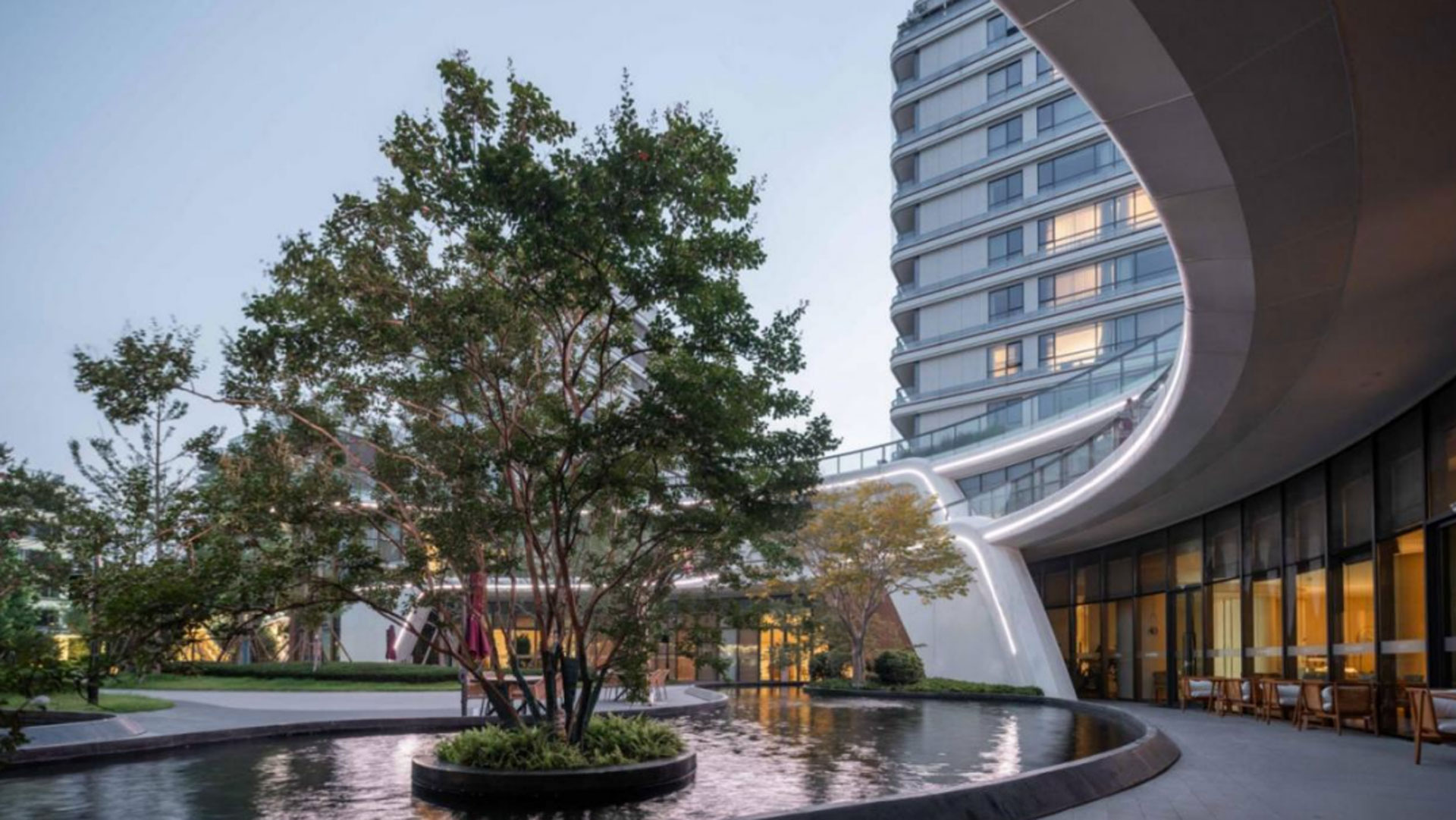
Chengdu BOE Smart Medical and Elderly Care Community
The landscape of Chengdu BOE Smart Healthcare & Elderly Care Center is centered on the...
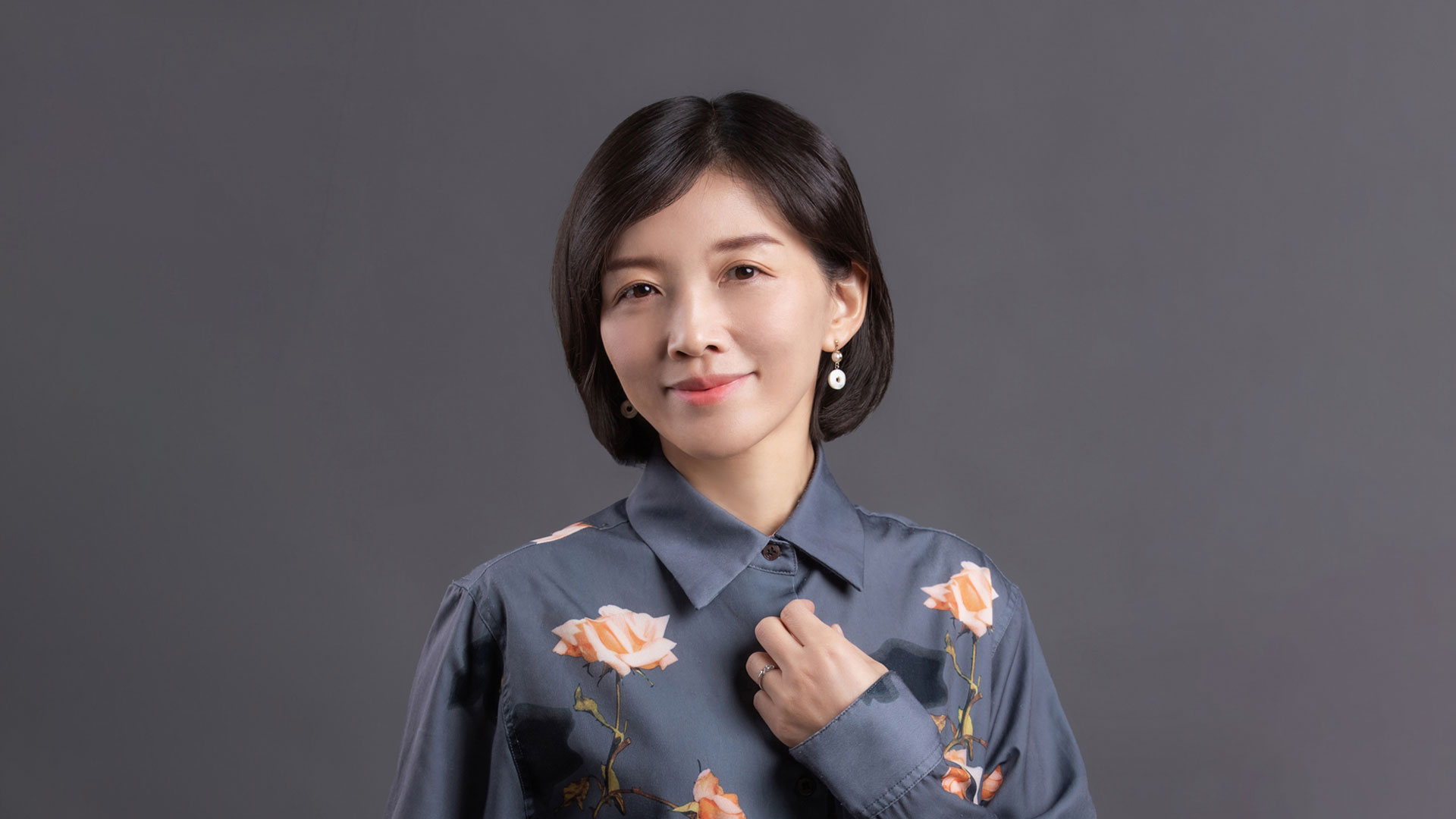
Hang Kou is a landscape architect and lead designer at BJF International Architecture and Landscape Design. Her work focuses on creating people-centered environments that promote healing, connection, and long-term public value through urban regeneration, public space, and healthcare-oriented design.
My name is Hang Kou, and I am a landscape architect and lead designer at BJF International Architecture and Landscape Design. Throughout my career, I have focused on projects with public and social impact, including urban parks, urban regeneration initiatives, and healthcare-oriented communities.
What inspired me to pursue design was the belief that landscape architecture is not simply about beautifying a site, but about reshaping how people live, move, heal, and connect through space. I have always been drawn to projects where design can respond to real-world challenges, whether that means transforming underutilized urban land, improving the quality of public spaces, or creating environments that better support specific communities, such as older adults.
That belief has guided my work from the very beginning and continues to shape my approach today. I see landscape as a meaningful framework for public life, rather than a decorative element added at the end of the design process.
Being recognized by the MUSE Design Awards is meaningful to me because it affirms that landscape projects rooted in real human needs and long-term public value can achieve international recognition.
For me, this award is not only a recognition of a single project, but also of a design philosophy I have developed throughout my career—one that views landscape as an active contributor to daily life, healing, and community rather than a purely visual element.
In the Chengdu BOE Smart Medical and Elderly Care Community, this approach was especially important. The project was designed to support dignity, comfort, accessibility, and emotional well-being for an aging population.
Professionally, the award reinforces my belief that socially responsive design can have an impact beyond its immediate site. It encourages me to continue pursuing projects where landscape can contribute to broader conversations about public space, care, and urban transformation.
This recognition has strengthened both my professional direction and my team’s confidence in the type of work we choose to pursue. It affirms that projects centered on public value, care, and long-term spatial quality can be recognized on an international stage.
For my career, it reinforces the approach I have developed over the years—treating landscape as a strategic and socially responsive component of the built environment, particularly in projects involving public spaces, urban transformation, and healthcare-oriented communities. For my team and agency, it also validates a design culture that prioritizes built outcomes, interdisciplinary collaboration, and meaningful user experiences rather than visual impact alone.
In practical terms, recognition like this enhances both visibility and credibility. It creates opportunities for higher-level conversations with clients and collaborators, especially on projects where design is expected to deliver more than aesthetic value. It also provides momentum for future work in areas such as elderly care, healing environments, and other socially significant public projects.
Experimentation plays an important role in my creative process, but it is never pursued for its own sake. Instead, it serves as a way to test how spatial ideas can respond more effectively to human behavior, environmental conditions, and long-term patterns of use.
In landscape design, experimentation often emerges through the relationship between movement, scale, materiality, and atmosphere. In the Chengdu BOE Smart Medical and Elderly Care Community, for example, I explored how a healthcare-oriented landscape could feel supportive and restorative without becoming overly clinical or decorative. This involved testing how circulation routes, gathering spaces, planting strategies, and sensory experiences could work together to create a calm yet engaging environment for older adults.
That process helped refine an approach that continues to guide my work: using design experimentation not simply to create novelty, but to develop spaces that are more humane, adaptable, and meaningful in everyday life.
One unusual source of inspiration for me is not an object or image, but patterns of everyday behavior, particularly the quiet routines of people who are often overlooked in the design process.
In projects related to public space and elderly care, I have found that some of the most meaningful design insights come from observing how people pause, rest, walk, wait, or seek comfort in ordinary moments. These behaviors may seem subtle, but they often reveal what a space truly needs to support. In that sense, daily life itself has become a powerful source of inspiration.
This perspective has shaped my work in a fundamental way. Rather than beginning with form alone, I often begin with patterns of use, rhythm, and human experience. That approach has helped me create landscapes that are not only visually cohesive, but also socially responsive and deeply grounded in real life.
One thing I wish more people understood is that design is not simply the creation of form—it is the process of making informed decisions that balance human needs, site conditions, long-term use, and practical implementation.
In my field, some of the most important work happens long before a final image is produced. It involves understanding how people will move, gather, rest, heal, and interact with a place over time. A successful project is not only visually compelling; it must also function effectively, respond to real-world constraints, and continue serving its users long after construction is complete.
That is why I see design as both a creative and strategic discipline. Its true value is measured not only by appearance, but by how meaningfully it improves the life of a place.
I do not see these as opposing forces. In my experience, the best design outcomes come from identifying the deeper purpose behind both the client’s goals and the designer’s vision, then translating that understanding into a stronger spatial solution.
Clients often begin with practical objectives, operational requirements, or market expectations. My role is to understand those needs clearly and transform them into a design framework that also supports long-term value, spatial quality, and human experience. This requires both careful listening and thoughtful leadership.
In this regard, I have always been inspired by I. M. Pei. I admire his patience and clarity, particularly his belief that not every disagreement needs to be resolved immediately. If consensus cannot be reached today, sometimes the best approach is to step back, reflect, and return with a clearer perspective. I relate strongly to that way of working.
In my own practice, when discussions reach an impasse, I prefer to pause, evaluate the situation carefully, and return with a more considered solution rather than force agreement too quickly.
In many of my projects, especially those involving public spaces or healthcare-oriented environments, I have found that alignment often happens when design ideas are presented not only as aesthetic decisions, but as strategies that improve usability, identity, and long-term performance. That is where meaningful collaboration is built—when design is understood as a source of value beyond appearance.
One of the main challenges was creating a healthcare-oriented landscape that felt supportive and humane without becoming overly clinical or excessively decorative.
For the Chengdu BOE Smart Medical and Elderly Care Community, the environment needed to address practical requirements such as accessibility, safety, circulation, and everyday usability, while also providing dignity, comfort, and emotional well-being for older adults. Achieving that balance was not straightforward. If the design focused too heavily on function, it risked feeling institutional; if it emphasized aesthetics alone, it would fail to meet the needs of those who use the space every day.
I addressed this challenge by treating the landscape as an integral part of the care environment. Walking routes, resting areas, planting, shading, and spatial transitions were carefully designed to support both physical activity and psychological comfort. Ultimately, overcoming this challenge required discipline, empathy, and a strong belief that design should serve real life first.
When I encounter a creative block, I usually return to reality rather than force ideas. For me, the most effective way to recharge creativity is to step back from the pressure of producing form and reconnect with how people actually experience space.
Sometimes that means revisiting a site, observing movement and everyday behavior, or simply walking through other environments with fresh attention. At other times, it means creating distance—reading, traveling, or allowing ideas to settle before returning to the work. I have found that clarity often comes not from pushing harder, but from better understanding what a project truly needs.
I also believe that creativity depends on broad intellectual curiosity. Reading beyond design—particularly history, philosophy, and cultural studies—has been important to my development. These disciplines help me think beyond immediate form and engage with deeper questions about time, memory, human values, and the ways people relate to place. In that sense, creativity is shaped not only by visual inspiration, but also by how widely and deeply one thinks.
For me, creativity is not only about invention. It is also about patience, observation, and a willingness to return to the essential question behind the design.
I try to bring several personal values into my design practice: curiosity, empathy, resilience, optimism, and a deep sense of responsibility for how people experience space.
Curiosity is essential because it encourages me to keep asking questions about the site, the users, the cultural context, and the broader purpose of a project. Empathy is equally important because design is ultimately about people. I strive to understand not only how a space looks, but also how it feels, functions, and is experienced by different groups in everyday life, particularly those whose needs are often overlooked.
Resilience also plays a significant role in my work, as meaningful design rarely emerges without challenges. It requires patience, revision, collaboration, and the willingness to refine ideas throughout the process. At the same time, I believe in maintaining an optimistic and forward-looking perspective. Rather than focusing solely on problems, I look for opportunities—how an underused site can regain purpose, how a public space can become more vibrant, or how a healthcare environment can become more supportive and humane.
These values are not separate from design; they shape how I think, collaborate, and approach every project from initial concept to built reality.
I would say that success in design begins with passion, but it is sustained by conviction, discipline, and intellectual depth.
Passion provides the motivation to begin, but conviction is what allows you to continue, especially when the process is challenging, slow, or filled with uncertainty. Designers must believe that thoughtful work has value, even when it is not immediately recognized. That sense of purpose is essential.
I would also encourage aspiring designers to read and think broadly. Strong design does not emerge solely from studying other design. It is enriched by engagement with history, philosophy, culture, literature, and the many ways people have interpreted the world throughout time. A broad intellectual foundation helps designers move beyond surface aesthetics and develop deeper judgment.
Most importantly, stay curious, stay patient, and resist the urge to imitate. Lasting success does not come from following trends, but from developing a way of thinking that is genuinely your own.
I would choose I. M. Pei. He has long been a source of inspiration to me, not only because of his architectural achievements, but also because of the way he moved so effortlessly between cultures, ideas, and modes of expression.
What I admire most is his deep understanding of both Eastern and Western traditions and his ability to translate Eastern sensibilities into a modern design language with remarkable clarity and elegance. His work never treated tradition as something literal or decorative. Instead, he expressed it through spatial order, proportion, atmosphere, and meaning.
I am equally inspired by his character. He was thoughtful, refined, and exceptionally skilled at communication. In a profession where strong ideas often require patience, dialogue, and negotiation, I find those qualities especially meaningful. To me, he represents not only design excellence, but also a model of how a designer can remain intellectually rigorous, culturally grounded, and gracious in working with others.
One question I wish people would ask more often is, "How does space guide emotion in your design?"
My answer would be that emotion in space is never created by a single element. It emerges through the relationship between spatial form, light and shadow, materiality, and the ways a place encourages people to interact with one another.
I am deeply interested in how space can shape emotional experience in subtle ways—whether by creating a sense of calm, openness, dignity, intimacy, or connection. Sometimes this comes through proportion and sequence; at other times, it comes from texture, atmosphere, or the opportunities a space provides for natural human interaction.
For me, emotion is not separate from function. The way a place is organized, used, and experienced over time also defines its emotional character. That is why I see emotion in design not as something decorative, but as something embedded within the spatial logic of everyday life.