THE WRAP: A Living Canvas of Civic Voices
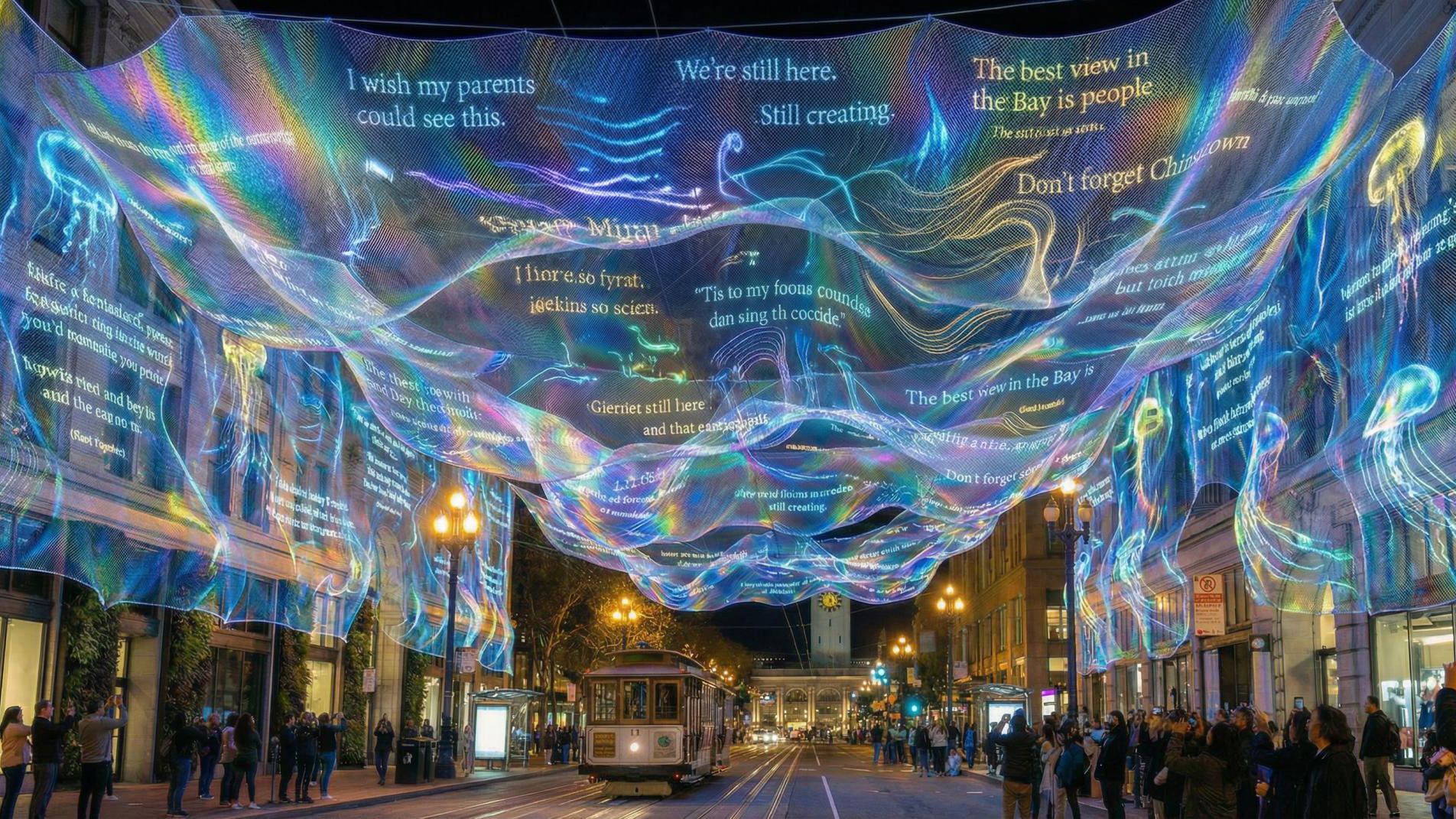
The Wrap is a bold urban festival that reimagines San Francisco’s Market Street each summer...
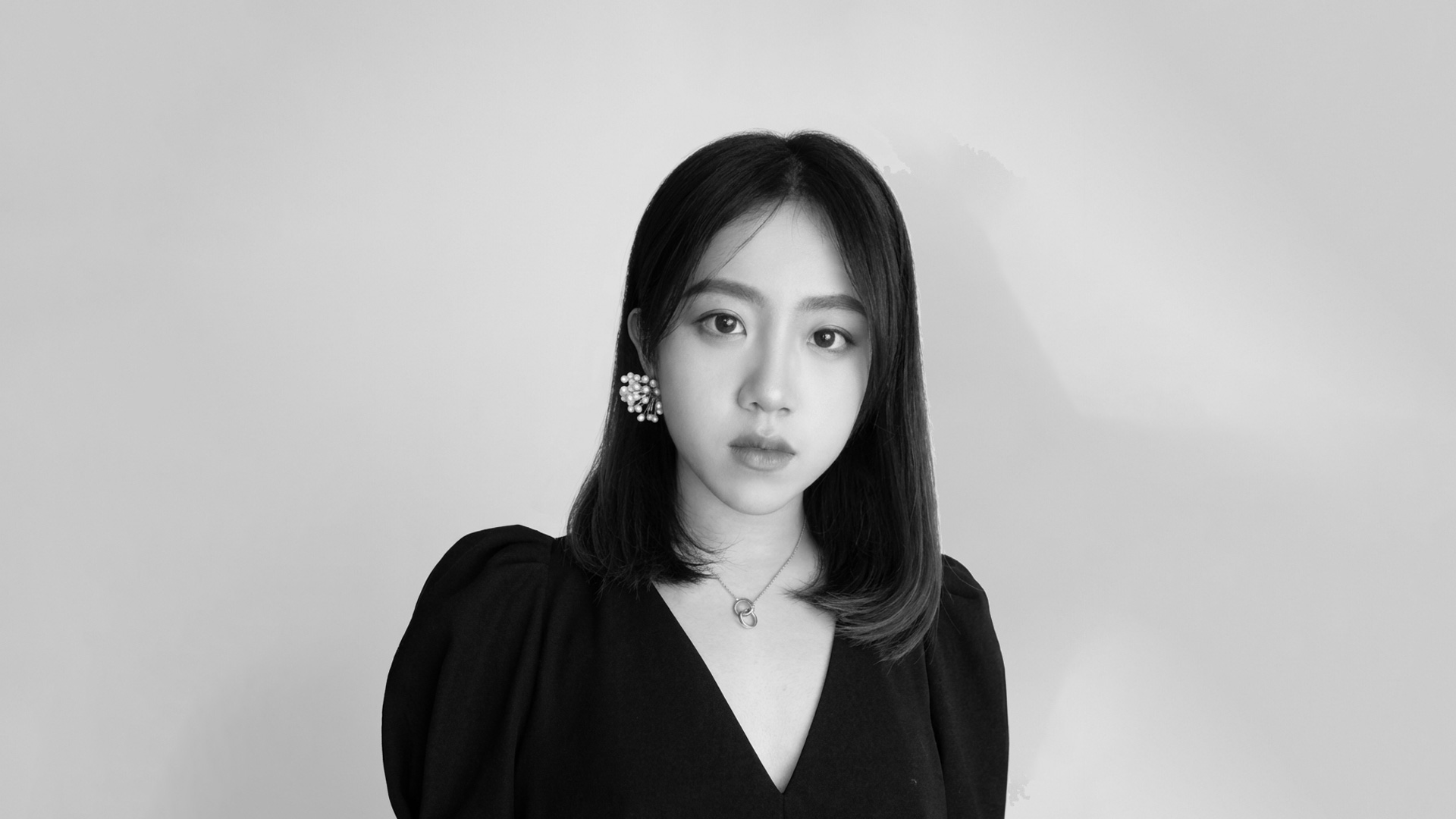
Yifan Cai is a Los Angeles–based landscape architect and multidisciplinary designer exploring the intersection of landscape, urban space, visual storytelling, and emerging technologies, driven by a desire to create more meaningful connections between people and the world around them.
Thank you so much. I’m Yifan Cai, a landscape architect and multidisciplinary designer based in Los Angeles. My work spans landscape, urban space, visual storytelling, and emerging technologies, and I’m especially interested in how design can create deeper connections between people, their environment, and the world around them.
I was drawn to design from a very early age because I’ve always been highly sensitive to space and atmosphere. I noticed how a street, a garden, or a public plaza could shape people’s emotions, behavior, and even their sense of belonging. What began as a love for beauty gradually became a deeper question: how can design not only create form, but also build relationships—between people and place, between memory and future, and between individual experience and collective identity?
That curiosity led me to pursue design as a career. Through my education and professional practice, I developed a strong spatial foundation, but over time, I realized that my design thinking was most original when I moved beyond traditional boundaries. I became increasingly interested in combining design with new technologies—especially AI, immersive media, and interactive systems—to create environments that are more responsive, expressive, and participatory.
For me, technology is not just a tool for efficiency; it is a new design medium. It allows us to visualize hidden stories, simulate new futures, and transform public space into something more alive and communicative. I’m excited by the possibility of using design alongside emerging technologies to connect people more meaningfully to their environment, to each other, and to larger cultural and ecological systems. In that sense, design becomes not only a way to shape space, but also a way to expand awareness.
What continues to inspire me is the belief that space is never neutral. It can heal, provoke, invite, or exclude. As a designer, I strive to create work that is visually compelling, emotionally resonant, and socially open—work that helps people feel more connected to where they are, and more hopeful about where we can go.
I would also like to acknowledge Xiaohan Qiu for his valuable contributions to this project. In particular, I would like to credit him for his creative input, in-depth analysis, and strong graphic skills, all of which played an important role in supporting and shaping the development of the work.
Being recognized by the MUSE Design Awards means a great deal to me because it affirms a way of thinking that I deeply believe in: that design can be visionary, beautiful, and socially meaningful at the same time.
For me, this recognition is not only about one project. It validates a broader design approach—one that brings together landscape, urban storytelling, material experimentation, and emerging technologies such as AI and immersive media to create new relationships between people, place, and public life. I see design as a bridge: between art and infrastructure, between civic identity and everyday experience, and between human emotion and technological possibility. To have that approach recognized on an international platform is incredibly encouraging.
It is also meaningful because this project is rooted in a very public question: how can we transform the city into a more open, expressive, and collective space? Receiving this award reinforces the value of moving beyond conventional solutions and proposing work that is more participatory, imaginative, and culturally resonant.
On a personal level, this recognition gives me the confidence to continue pursuing original ideas, especially those that may initially feel experimental. It reminds me that innovation in design is not only about new forms, but also about new ways of connecting people to their environment and to one another.
Most importantly, this recognition motivates me to keep creating work that is not only visually compelling, but also emotionally engaging and forward-looking. It reaffirms that the conversations I care about—public space, collective voice, and the role of technology in shaping more humane environments—are worth continuing and expanding.
This achievement has been meaningful on several levels. Professionally, it has strengthened my confidence in pursuing work that is more experimental, cross-disciplinary, and public-facing. It reassures me that ideas rooted in civic life, cultural storytelling, and emerging technology can resonate beyond the design studio and be recognized on an international stage.
For my career, the award helps define my practice more clearly. I do not see myself working within a single traditional category. Instead, I focus on the intersection of landscape, urban activation, visual culture, and AI-driven design thinking. This recognition reinforces that direction and gives greater clarity and credibility to the type of work I aim to develop—projects that are spatial, immersive, and socially engaged.
In terms of opportunities, the award has made it easier to connect with a broader audience. It creates new visibility and opens the door to potential partnerships and collaborations across design, culture, and technology. It also allows the project to extend further—as a design concept, as a prototype for public space, and as part of a wider conversation about how cities can become more expressive and participatory.
Most importantly, it has given me momentum. It motivates me to continue building a body of work that is not only visually distinctive, but also conceptually strong and culturally relevant. While awards are not the end goal, this recognition has expanded the scope of what feels possible moving forward.
Experimentation is a central part of my practice. As designers gain experience, it becomes easy to rely on familiar ways of thinking, tools, and solutions. While experience is valuable, it can also become limiting if we stop questioning our own habits. For me, experimentation is how I challenge that. It keeps the work dynamic and continually evolving.
I believe that as a creative professional, it is important to keep learning, stay curious, and remain open to new possibilities. I try to approach each day with a beginner’s mindset—willing to test ideas, comfortable with not knowing, and ready to discover something new. Innovation rarely comes from repeating what is already familiar; it comes from staying open, adaptable, and willing to explore.
A strong example of this approach is The Wrap, the project recognized by the MUSE Design Awards. Rather than following a conventional design process, the project explored how a street could be reimagined. Market Street was approached not only as infrastructure, but as a three-dimensional civic canvas—ground, façade, and sky. Through experimentation with lightweight iridescent mesh, soft topographic surfaces, and digital tools such as AR, the project introduced new ways for people to engage with public space.
This process involved continuous testing across materials, spatial strategies, public interaction, and technology. It was not about applying a fixed method, but about asking new questions and exploring alternative possibilities for how a street could function and be experienced.
For me, experimentation is not just one phase of the design process. It is an ongoing discipline and mindset that keeps the work evolving and allows new ideas to emerge.
Yes—one of the most unexpected sources of inspiration in my work has been animals, particularly when I approach them not as symbols, but as active stakeholders in design.
In one project, I explored the idea of using sharks as the design agent. Instead of working from a purely human-centered perspective, I asked what would happen if sharks were treated as the client. This shift fundamentally changed the direction of the project, leading me to consider space, territory, safety, migration, and survival from a non-human point of view.
What I found especially compelling is that sharks are often misunderstood. They are commonly feared, yet they play a critical role in maintaining the balance of marine ecosystems. By positioning them at the center of the design process, the project challenged assumptions about who design serves and how spatial systems might support ecological life rather than only human needs.
This experience reshaped how I think about empathy in design. Some of the most original ideas emerge when we step beyond the human perspective and imagine the world through other forms of life. It also introduced a more speculative and provocative dimension to the work, which continues to influence my approach.
In that sense, animals have become one of my most meaningful sources of inspiration, helping me expand the boundaries of design thinking and reminding me that the world is shared, not owned.
One thing I wish more people understood about the design process is that it is not just about inspiration—it is about logic and empathy working together.
People sometimes imagine that a strong idea appears as a sudden flash of genius. In my experience, that is rarely true. A meaningful design concept usually comes from a much longer process of observation, reflection, and connection. It is built through paying close attention to life, to people, to the environment, and to the subtle ways space shapes behavior and feeling.
For me, a good idea emerges when many different layers start forming links in the mind: memories, cultural references, material knowledge, user needs, spatial conditions, emotional atmospheres, and lived experiences. Over time, these observations build a kind of internal network, and at some point, a clear design direction begins to take shape. So what looks like an instant idea is often the result of a deep and accumulated process.
Empathy is just as important as logic. Design is not only about creating something visually compelling or conceptually strong; it is also about understanding how someone else will move through it, feel within it, and relate to it. Without empathy, design can become empty. Without logic, it can become superficial. The real process is about balancing both—understanding people deeply, and then organizing that understanding into a clear, rigorous spatial response.
So I wish more people saw design not as decoration or intuition alone, but as a disciplined way of thinking and feeling at the same time. The best work comes from a mind that is constantly observing, and a heart that remains open to other people’s realities.
I see design as a service profession first. My responsibility as a designer is to improve my client’s environment, respond to their needs, and help them achieve something meaningful and valuable. For me, staying true to my ideas does not mean imposing a personal style regardless of context. It means bringing my way of thinking, my sensitivity, and my problem-solving approach into service of the client’s goals.
At the same time, I believe every designer interprets a client’s needs differently. Two designers may receive the same brief, but the way they read the problem, organize priorities, and imagine possibilities can be completely different. If a client chooses me, I believe they are also choosing the way I see, question, and solve problems. That is where my design voice comes in.
So the balance is not really a conflict for me. It is more like a dialogue. I listen carefully and try to understand not only what the client says they want, but also what they may not yet know how to express. Then I translate those needs through my own design lens. In that sense, my ideas are not separate from the client’s expectations—they are part of how I help expand them.
Of course, this requires trust, communication, and sometimes education. There are moments when a client’s first instinct may not lead to the strongest result, and part of my role is to show them another possibility—one that still serves their needs, but in a more thoughtful, original, or lasting way.
So I would say I navigate that balance by staying grounded in service while also being confident in the value of my perspective. The goal is not to choose between the client and myself. The goal is to create a solution where the client feels understood, and the design still carries clarity, integrity, and imagination.
One of the biggest challenges was convincing people not to underestimate the value of a light, temporary approach. In urban design, there is often an assumption that impact must come from something heavy, permanent, and expensive. Because The Wrap relies on lightweight structures, mesh, color, projection, and temporary activation, I think the risk was that some people might initially see it as less serious or less powerful than a conventional capital project.
But for me, that lightness was exactly the point. I wanted to show that transformation does not always need to begin with demolition or massive construction. Sometimes a city can be changed through atmosphere, participation, and perception. A temporary intervention can shift how people feel, gather, and imagine the future of a place—and that can be incredibly valuable.
So the challenge was not only in the design, but also in the framing. I had to communicate that this was not “just” an installation or festival dressing. It was a strategic urban idea: fast to deploy, visually transformative, scalable, and able to activate public life while opening new possibilities for downtown recovery.
I overcame that challenge by leaning into the clarity of the concept. I focused on building a strong narrative around the project’s three-dimensional strategy—ground, façade, and sky—and showing how each layer could work together to reshape the identity of Market Street. I also made sure the design was not only visually bold, but also socially and economically meaningful: supporting local businesses, amplifying community voices, and creating a safer, more walkable public realm.
In the end, I think the project’s strength came from being both visionary and practical. We took a bold risk on a softer, lighter, more imaginative approach—and it was incredibly meaningful to have that recognized by the jury. Their response affirmed that design value is not defined by weight or permanence, but by the depth of its impact and the originality of its thinking.
When I hit a creative block, I try to step back and reconnect with the larger context of the project. Instead of forcing ideas, I look more deeply into the history of the site, the environment it exists in, and the people or systems that interact with it. For me, creativity usually returns when I stop staring at the problem too narrowly and start seeing it as part of a bigger world.
I believe inspiration is everywhere because the world is incredibly rich. Every site already contains layers of meaning—its past, its social life, its ecology, its rhythms, its conflicts, and its memories. When I feel stuck, I try to “jump out” of my immediate mental frame and observe again. Sometimes the answer is in the street pattern, sometimes in local history, sometimes in how light moves through a place, or in how different people occupy it.
That shift is very important to me. A creative block often happens when we become trapped within our own expectations. The best way for me to recharge is to become curious again. I remind myself that the environment is never empty—it is full of clues, stories, and relationships waiting to be noticed.
So my process is not really about escaping the project, but about widening the lens. Once I reconnect the design question to history, place, and human interaction, new ideas begin to form naturally. In that sense, creativity comes back when I stop trying to invent in isolation and start listening more carefully to the world around me.
One of the most important values I bring into my designs is empathy. I try not to approach design from a place of ego, but from a place of listening. For me, design is not about making space perform my identity too loudly; it is about understanding other people’s experiences, emotions, and needs, and translating those into something meaningful and generous.
I think this comes from both my personality and my life experience. I’m very sensitive to atmosphere, to how people feel in a space, and to the subtle ways environments can either support or exclude them. Because of that, I often think about design as an act of care. I want people to feel seen, welcomed, and emotionally connected—not overwhelmed by the designer’s self-expression.
At the same time, empathy does not mean being passive. It means being able to imagine different perspectives and design with openness. I try to consider not just the client, but also the broader public, the environment, and even non-human systems. That helps me create work that feels more layered, inclusive, and alive.
So I would say the values I most often infuse are empathy, curiosity, and humility. I want my work to have a strong point of view, but not to be driven by ego. The goal is not to make people admire the designer. The goal is to create spaces that people can truly enter, use, and make their own.
My advice would be: stay curious, stay humble, and keep building your own way of seeing.
I think many young designers feel pressure to be impressive very quickly, but real growth takes time. Success does not come only from talent or taste. It comes from observation, discipline, and the willingness to keep learning. Try to look at the world more deeply—how people live, how spaces feel, and how environments shape emotion, memory, and behavior. That kind of attention becomes the foundation of original work.
I would also say: do not become trapped by trends or by the desire to please everyone. Learn from others, of course, but do not lose your own voice. What makes a designer memorable is not just technical skill, but a distinct way of thinking and solving problems.
At the same time, protect yourself from ego. Design is not only self-expression; it is also about empathy, service, and collaboration. The strongest work usually comes when you can combine your own vision with a genuine understanding of other people’s needs.
And finally, treat yourself like a beginner for as long as possible. Keep experimenting. Keep questioning your habits. Keep learning new tools, new technologies, and new ways of making. The moment you think you already know how to do everything is usually the moment your creativity starts to shrink.
So my biggest advice is: be open, be rigorous, and never stop renewing your perspective. That is what helps a designer grow—not only into success, but into a lasting and meaningful practice.
If I could collaborate with any designer, past or present, I would choose Antoni Gaudí.
What fascinates me about Gaudí is that his work is deeply rooted in nature, structure, and environment, yet the way he translated those inspirations into form was radically original—far beyond the conventions of his own time, and in many ways still ahead of ours. His designs feel organic, spiritual, and experimental all at once. They are not simply inspired by nature visually; they seem to grow from nature’s logic.
I would love to understand how his mind worked—how he observed the world, how he transformed natural patterns into architecture, and how he gave imagination such structural confidence. That way of thinking is very inspiring to me, because I also believe the most powerful design does not come from copying nature, but from understanding its principles and translating them into new spatial experiences.
I’m especially interested in how Gaudí balanced intuition and system. His work feels emotional and dreamlike, but it is also incredibly rigorous. That combination is something I deeply admire. I think collaborating with him would be less about style and more about learning how to think more freely, more courageously, and more dimensionally.
As a designer, I’m always trying to connect environment, emotion, and innovation in ways that feel both poetic and spatially meaningful. I feel Gaudí did this in an extraordinary way. To collaborate with him would be an opportunity to step inside a mind that was not limited by the rules of his time—and to better understand how visionary design can remain timeless.
One question I wish people would ask me more often is: “How did you come up with this?”
Because for me, the answer is never just one idea. It is usually the result of many layers coming together—observation, emotion, logic, memory, research, and experimentation. People often see the final image or concept and think it arrived as a sudden inspiration, but in reality, it comes from building connections between many different things that may seem unrelated at first.
My process usually starts with paying close attention: to the site, to history, to the surrounding environment, and to how people move, gather, or feel in a space. Then I begin asking what is missing, what could be reimagined, and what kind of emotional or social experience the space could hold. From there, I test ideas through sketches, references, conversations, materials, and increasingly through new technologies like AI and immersive visualization.
So when people ask, “How did you come up with this?”, what they are really asking about is my way of thinking. And I think the answer is that I don’t design from form alone—I design from relationships. Between people and place, between memory and future, and between atmosphere and function. The concept emerges when those relationships suddenly connect.
That’s why I love that question. It opens the door to talk not only about the final result, but also about the hidden network of thinking, feeling, and experimentation behind it.